THE ADVENTURE COLLECTIVE® · Independent discovery and booking for outdoor travel

Throttle past neon and samurai stonework on a guided go‑kart loop that circles Osaka Castle. This 2‑hour on‑road experience mixes legal paperwork and safety briefings with up‑close views of the castle moat, Dotonbori lights, and Tsutenkaku Tower.
Throttle past neon and samurai stonework on a guided go‑kart loop that circles Osaka Castle. This 2‑hour on‑road experience mixes legal paperwork and safety briefings with up‑close views of the castle moat, Dotonbori lights, and Tsutenkaku Tower.
A line of low-slung go‑karts peels away from a shop a few blocks from Namba, engines murmuring beneath rented costumes as drivers ease onto Midosuji. The city’s neon and glass give way in minutes to the broad stone walls and reflective moats that surround Osaka Castle — a sudden shift from urban bustle to the kind of history you can throttle past.
Verified experiences and guided adventures in the surrounding area.
Operated by JAPANKART Osaka Branch · Osaka, Osaka Prefecture
A line of low-slung go‑karts peels away from a shop a few blocks from Namba, engines murmuring beneath rented costumes as drivers ease onto Midosuji. The city’s neon and glass give way in minutes to the broad stone walls and reflective moats that surround Osaka Castle — a sudden shift from urban bustle to the kind of history you can throttle past.
Osaka Castle, first raised by Toyotomi Hideyoshi in the late 16th century and rebuilt under the Tokugawa era, sits on granite foundations hewn from nearby quarries; the moat’s steady surface still divides old power from modern traffic. The route threads past landmarks — the Glico Man and Dotonbori’s food alleys to the south, Tsutenkaku’s tower to the north — offering a running map of Osaka’s commercial grit and samurai-era weight.
Culturally the ride is equal parts novelty and civic choreography: drivers share road space with commuters, obey signal lights, and keep the pace steady so the city remains intact and respectful. Operators provide costumes, safety briefings, and rain gear when needed, but the legal paperwork is nonnegotiable — bring an International Driving Permit under the 1949 Geneva Convention and your passport.
Practical side: plan two hours including orientation, arrive 15 minutes early, and wear closed-toe shoes. Expect urban speeds, tight turns near castle gates, and occasional traffic lights — this is an on-road, guided experience, not a racetrack. Follow the safety briefing, keep documents accessible, and treat the streets as you would any busy city: observant, courteous, and focused.
easy.
2 hours.
No special fitness required, but you should be able to sit and operate a small vehicle and turn your neck to check mirrors and intersections.
Yes — an IDP issued under the 1949 Geneva Convention plus your home driving license and passport are required; Vienna Convention IDPs are not accepted.
No — bookings are typically one participant per kart; check with the operator for multi-kart arrangements for groups.
You must hold a valid driving license from your country of origin and be able to present the required IDP; check with the operator for any age minimums before booking.
Operators provide rain jackets and may run tours in light rain; cancel at least 24 hours in advance for a full refund, and tours canceled for bad weather are refunded or rescheduled.
Osaka Castle was first built in 1583 by Toyotomi Hideyoshi and later reconstructed; its moats and massive stone walls played decisive roles during the unification of Japan.
This is an on‑road urban tour — minimize noise, follow traffic rules, and avoid blocking pedestrian areas; operators maintain karts and follow local safety regulations to reduce environmental impact.
JAPANKART Osaka Branch operates guided outdoor trips and adventures with an emphasis on safety, stewardship, and memorable experiences.
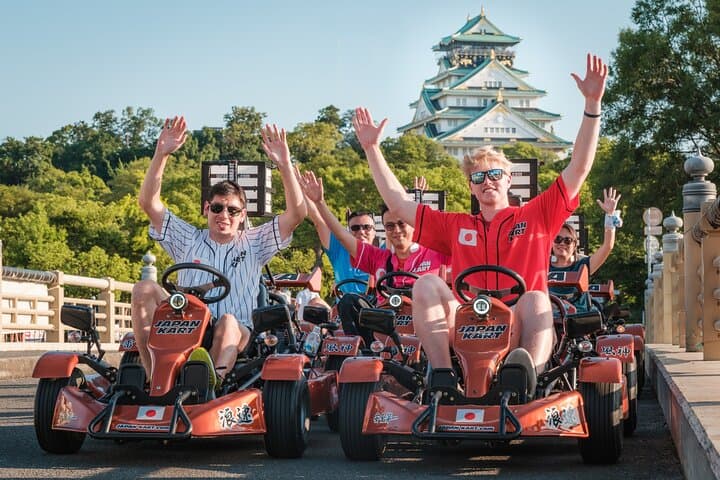

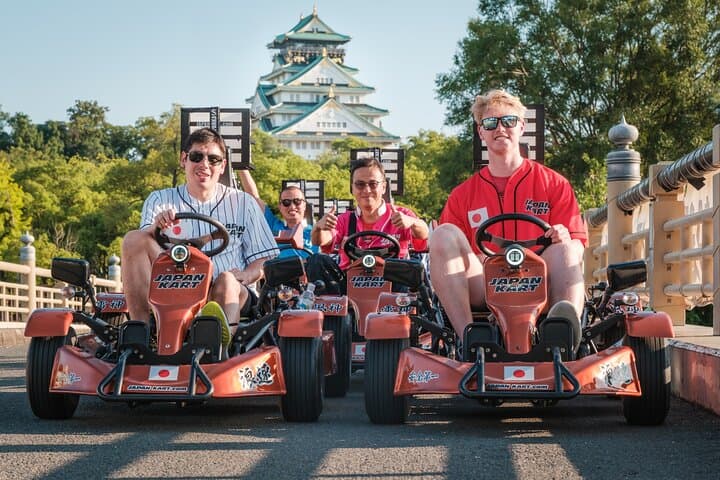
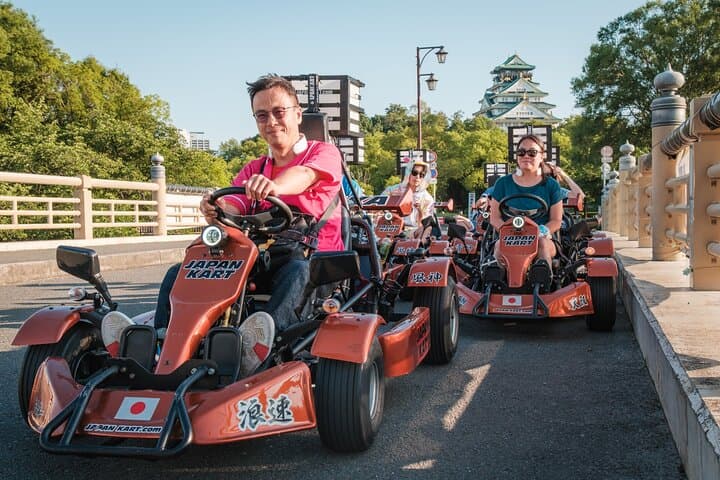
A line of low-slung go‑karts peels away from a shop a few blocks from Namba, engines murmuring beneath rented costumes as drivers ease onto Midosuji. The city’s neon and glass give way in minutes to the broad stone walls and reflective moats that surround Osaka Castle — a sudden shift from urban bustle to the kind of history you can throttle past.
A line of low-slung go‑karts peels away from a shop a few blocks from Namba, engines murmuring beneath rented costumes as drivers ease onto Midosuji. The city’s neon and glass give way in minutes to the broad stone walls and reflective moats that surround Osaka Castle — a sudden shift from urban bustle to the kind of history you can throttle past.
Osaka Castle, first raised by Toyotomi Hideyoshi in the late 16th century and rebuilt under the Tokugawa era, sits on granite foundations hewn from nearby quarries; the moat’s steady surface still divides old power from modern traffic. The route threads past landmarks — the Glico Man and Dotonbori’s food alleys to the south, Tsutenkaku’s tower to the north — offering a running map of Osaka’s commercial grit and samurai-era weight.
Culturally the ride is equal parts novelty and civic choreography: drivers share road space with commuters, obey signal lights, and keep the pace steady so the city remains intact and respectful. Operators provide costumes, safety briefings, and rain gear when needed, but the legal paperwork is nonnegotiable — bring an International Driving Permit under the 1949 Geneva Convention and your passport.
Practical side: plan two hours including orientation, arrive 15 minutes early, and wear closed-toe shoes. Expect urban speeds, tight turns near castle gates, and occasional traffic lights — this is an on-road, guided experience, not a racetrack. Follow the safety briefing, keep documents accessible, and treat the streets as you would any busy city: observant, courteous, and focused.