THE ADVENTURE COLLECTIVE® · Independent discovery and booking for outdoor travel

Leave the temple crowds behind and steer a modern ATV buggy onto the quiet tracks of the Siem Reap countryside. In about four hours you’ll cross rice fields, pass lakes and visit a rural monastery while local guides share cultural and practical insights.
Leave the temple crowds behind and steer a modern ATV buggy onto the quiet tracks of the Siem Reap countryside. In about four hours you’ll cross rice fields, pass lakes and visit a rural monastery while local guides share cultural and practical insights.
The engine hums and dust rises as you push off from a shaded village lane, the flat plains of Siem Reap spreading outward—rice paddies reflecting sky, a wooden monastery set quiet at the horizon. This is not Angkor’s stonework, but the everyday landscape that shaped it: low, open country threaded by dirt tracks, lakes and small forests where local life unfolds at a slow, deliberate pace.
Verified experiences and guided adventures in the surrounding area.
Operated by Cambodian Villages Buggy Adventures · Siem Reap, Siem Reap Province
The engine hums and dust rises as you push off from a shaded village lane, the flat plains of Siem Reap spreading outward—rice paddies reflecting sky, a wooden monastery set quiet at the horizon. This is not Angkor’s stonework, but the everyday landscape that shaped it: low, open country threaded by dirt tracks, lakes and small forests where local life unfolds at a slow, deliberate pace.
The Siem Reap countryside grew around the Khmer Empire’s water-management networks; today those same irrigated plains feed rice paddies and support villages you’ll pass. Geologically the area is a broad alluvial basin; expect flat terrain and soft earth that turns silty in the wet season. Culturally, your guide will point out village markets, temples and the day-to-day rhythms of farming communities—reminders that this region is lived in, not staged for tourists.
Practical guidance: tours run roughly four hours and use fully automatic ATV buggies with instructors on hand, so prior experience isn’t required. The route mixes compact dirt, rutted service roads and short forest tracks; elevation gain is negligible but surfaces can be dusty or muddy depending on the monsoon. Bring closed-toe shoes, long pants, sun protection and a light rain jacket in wet months. Start early or late afternoon to avoid midday heat, carry water, and follow your guide’s instructions—locals value discretion, so avoid driving across planted fields and ask before photographing private property. Helmets and safety briefings are provided; the pace is adventurous without technical climbing or long hikes, making this a practical way to see rural Cambodia with minimal exertion and maximum local contact.
easy.
4 hours.
Minimal fitness needed; riders should be able to sit, steer and follow instructions for several hours.
No—tours include a safety briefing and basic driving instruction; guides remain nearby and the buggies are automatic.
Many operators allow children but policies vary—check age limits with the provider and expect a requirement that a responsible adult accompanies minors.
Information indicates accessible options for some areas, but terrain away from tarmac can be uneven—check with the operator about specific accessibility needs.
Bring a small, secure dry bag for your camera/phone and ask permission before photographing locals; consider a wrist strap or lanyard to prevent drops.
The Siem Reap plain was shaped by centuries of Khmer hydraulic engineering that supported Angkor’s rice economy; many villages still work the same irrigation networks used historically.
Keep to established tracks to avoid damaging rice paddies and wetlands, pack out all trash, and support operators who practice low-impact routes and respect local property.
Cambodian Villages Buggy Adventures operates guided outdoor trips and adventures with an emphasis on safety, stewardship, and memorable experiences.
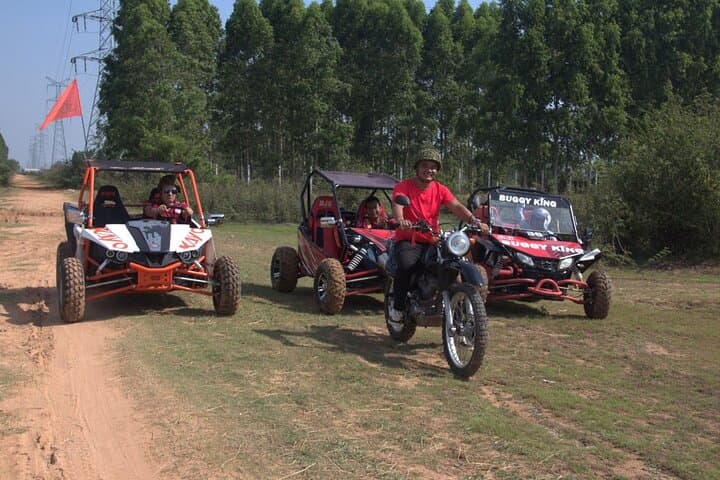
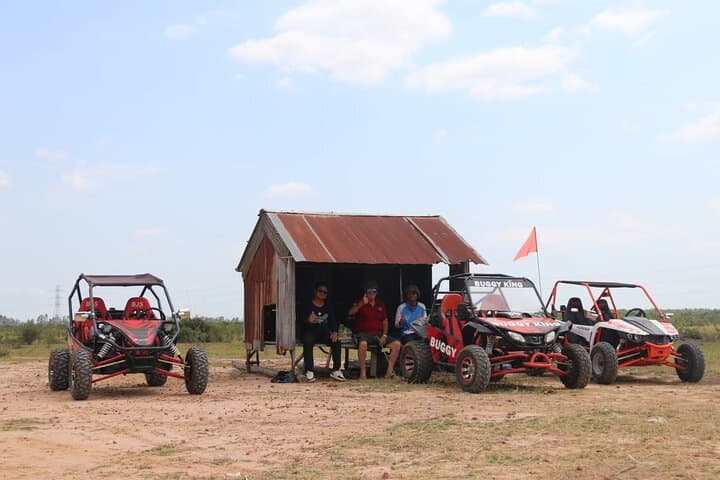
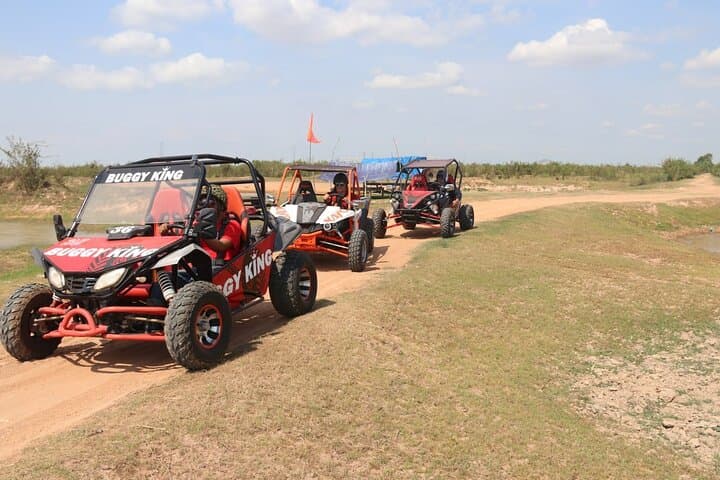
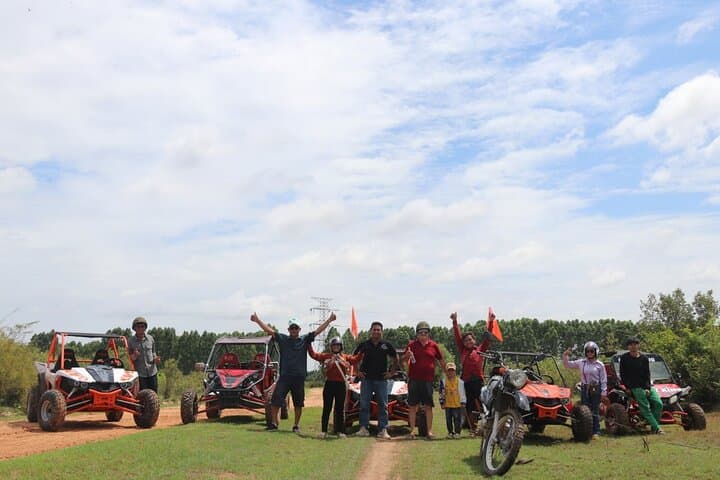
The engine hums and dust rises as you push off from a shaded village lane, the flat plains of Siem Reap spreading outward—rice paddies reflecting sky, a wooden monastery set quiet at the horizon. This is not Angkor’s stonework, but the everyday landscape that shaped it: low, open country threaded by dirt tracks, lakes and small forests where local life unfolds at a slow, deliberate pace.
The engine hums and dust rises as you push off from a shaded village lane, the flat plains of Siem Reap spreading outward—rice paddies reflecting sky, a wooden monastery set quiet at the horizon. This is not Angkor’s stonework, but the everyday landscape that shaped it: low, open country threaded by dirt tracks, lakes and small forests where local life unfolds at a slow, deliberate pace.
The Siem Reap countryside grew around the Khmer Empire’s water-management networks; today those same irrigated plains feed rice paddies and support villages you’ll pass. Geologically the area is a broad alluvial basin; expect flat terrain and soft earth that turns silty in the wet season. Culturally, your guide will point out village markets, temples and the day-to-day rhythms of farming communities—reminders that this region is lived in, not staged for tourists.
Practical guidance: tours run roughly four hours and use fully automatic ATV buggies with instructors on hand, so prior experience isn’t required. The route mixes compact dirt, rutted service roads and short forest tracks; elevation gain is negligible but surfaces can be dusty or muddy depending on the monsoon. Bring closed-toe shoes, long pants, sun protection and a light rain jacket in wet months. Start early or late afternoon to avoid midday heat, carry water, and follow your guide’s instructions—locals value discretion, so avoid driving across planted fields and ask before photographing private property. Helmets and safety briefings are provided; the pace is adventurous without technical climbing or long hikes, making this a practical way to see rural Cambodia with minimal exertion and maximum local contact.