THE ADVENTURE COLLECTIVE® · Independent discovery and booking for outdoor travel

Follow a private route from Bucharest along the Transfăgărășan—one of Europe’s most dramatic roads—stopping at Poenari Fortress, Vidraru Dam and glacier-carved Bâlea Lake. Expect steep climbs, soaring passes and sudden alpine weather.
Follow a private route from Bucharest along the Transfăgărășan—one of Europe’s most dramatic roads—stopping at Poenari Fortress, Vidraru Dam and glacier-carved Bâlea Lake. Expect steep climbs, soaring passes and sudden alpine weather.
You climb out of Bucharest before dawn and the city’s flat silhouette gives way to folds of dark forest and then, gradually, to craggy limestone that seems to challenge the road itself.
Verified experiences and guided adventures in the surrounding area.
Operated by AmberOdysseys · Bâlea Lake (Făgăraș Mountains), Sibiu County
You climb out of Bucharest before dawn and the city’s flat silhouette gives way to folds of dark forest and then, gradually, to craggy limestone that seems to challenge the road itself.
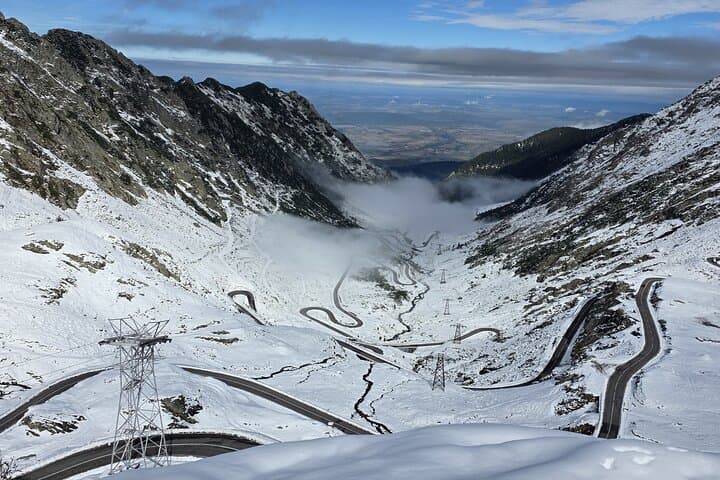
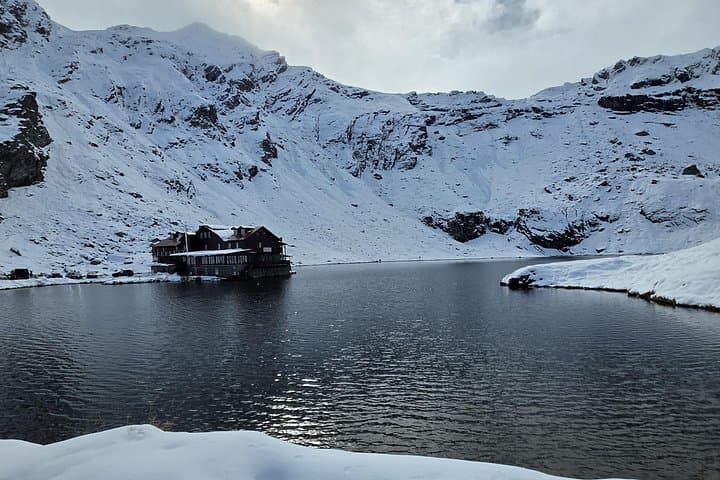
The Transfăgărășan pushes through the Făgăraș Mountains with hairpin turns and exposed viewpoints; wind and alpine sun sculpt the scene, and the tarmac dares you to keep pace. Midway, Vidraru Dam crouches over the Argeș River—an industrial scar turned dramatic reservoir—while higher, Bâlea Lake lies like a cold eye at 2,034 m.
History here is blunt: Ceaușescu ordered the road in the 1970s as a strategic corridor; before that the land held medieval routes and the stone bones of Poenari Fortress, rebuilt by Vlad the Impaler in the 15th century, guarding the Argeș Valley from a rocky perch reached by 1,480 steps.
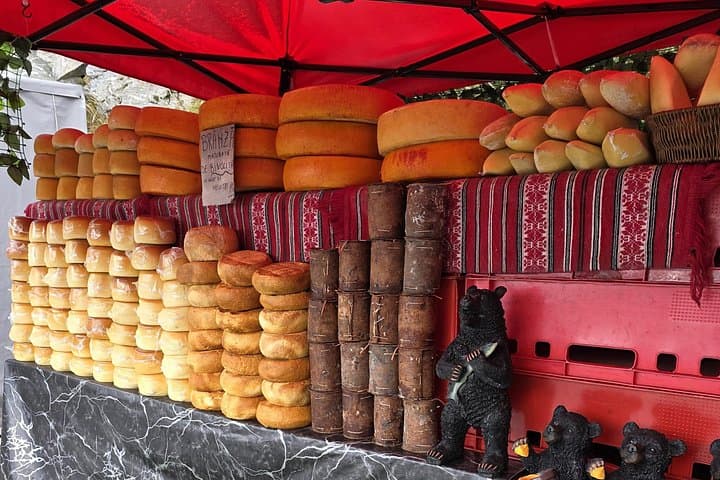
Geology explains the views: glaciated hollows, steep schist and limestone faces, and cirque basins that collect the blue of mountain lakes. Local villages keep a pastoral rhythm—sheep bells and smoked cheese still set the weekday tempo.
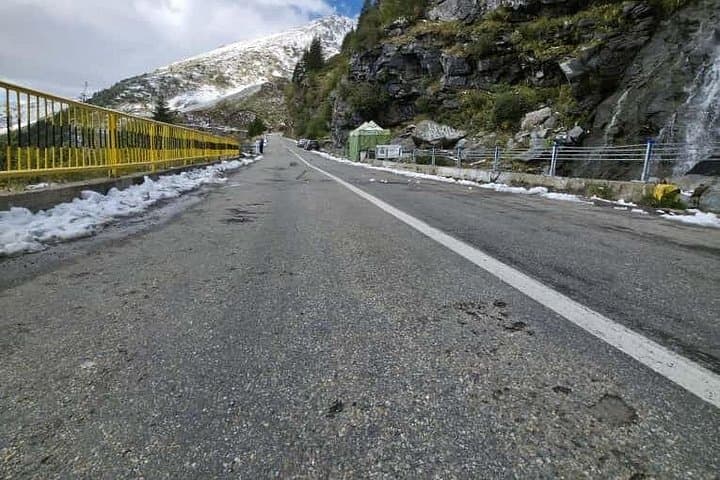
Practical guidance is plain. The road is typically open June–October; expect narrow lanes, sudden weather shifts, and sections without guardrails. Wear sturdy shoes for the fortress steps, bring layers for 1,500–2,000 m of elevation change, and carry water—services are limited outside the main stops. If you want photos of the dam and mirror-still lake, aim for morning light or a late-afternoon descent when crowds ease and the mountains slow their applause.
moderate.
10 hours.
Moderate fitness—comfortable walking, several flights of steps, and tolerance for long vehicle time are required
The road is typically open from late June through October; snow closes the high pass the rest of the year and some dates vary by season and maintenance.
The climb is steep—about 1,480 steps on uneven stone—so allow 30–60 minutes depending on fitness and take breaks as needed.
This private tour usually covers transport only; admissions and meals are often not included—confirm with the operator before booking.
Children and older adults can join but should cope with vehicle time, winding roads, and the fortress steps; discuss mobility needs with the provider for alternatives.
The Transfăgărășan was built between 1970–1974 as a military-access road under Nicolae Ceaușescu; Poenari Fortress dates to the medieval era and was reinforced by Vlad the Impaler in the 15th century.
High-altitude meadows are fragile—stick to trails and parking areas; increased tourism has prompted seasonal access limits to reduce erosion and disturbance.
AmberOdysseys operates guided outdoor trips and adventures with an emphasis on safety, stewardship, and memorable experiences.
You climb out of Bucharest before dawn and the city’s flat silhouette gives way to folds of dark forest and then, gradually, to craggy limestone that seems to challenge the road itself.
You climb out of Bucharest before dawn and the city’s flat silhouette gives way to folds of dark forest and then, gradually, to craggy limestone that seems to challenge the road itself.
The Transfăgărășan pushes through the Făgăraș Mountains with hairpin turns and exposed viewpoints; wind and alpine sun sculpt the scene, and the tarmac dares you to keep pace. Midway, Vidraru Dam crouches over the Argeș River—an industrial scar turned dramatic reservoir—while higher, Bâlea Lake lies like a cold eye at 2,034 m.
History here is blunt: Ceaușescu ordered the road in the 1970s as a strategic corridor; before that the land held medieval routes and the stone bones of Poenari Fortress, rebuilt by Vlad the Impaler in the 15th century, guarding the Argeș Valley from a rocky perch reached by 1,480 steps.
Geology explains the views: glaciated hollows, steep schist and limestone faces, and cirque basins that collect the blue of mountain lakes. Local villages keep a pastoral rhythm—sheep bells and smoked cheese still set the weekday tempo.
Practical guidance is plain. The road is typically open June–October; expect narrow lanes, sudden weather shifts, and sections without guardrails. Wear sturdy shoes for the fortress steps, bring layers for 1,500–2,000 m of elevation change, and carry water—services are limited outside the main stops. If you want photos of the dam and mirror-still lake, aim for morning light or a late-afternoon descent when crowds ease and the mountains slow their applause.