THE ADVENTURE COLLECTIVE® · Independent discovery and booking for outdoor travel

A self-guided audio drive turns the Road to Hana from a logistics problem into an immersive island journey. Follow GPS-activated narration to waterfalls, black-sand beaches, and hidden fruit stands—at your own pace, with practical tips for safety and timing.
A self-guided audio drive turns the Road to Hana from a logistics problem into an immersive island journey. Follow GPS-activated narration to waterfalls, black-sand beaches, and hidden fruit stands—at your own pace, with practical tips for safety and timing.
The road tightens and the ocean drops away in a ribbon of turquoise far below. Your car rounds a blind hairpin and the GPS pings — a voice slides into the cabin with a little aloha, a story about the next pullout, and directions that feel tuned to the road instead of the other way around. This is the Road to Hana: a day-long coastal odyssey where waterfalls insist on being noticed and banyan trees seem to have been standing since the first canoe landed.
Verified experiences and guided adventures in the surrounding area.
Operated by Shaka Guide Apps · Hana, Hawaii
The road tightens and the ocean drops away in a ribbon of turquoise far below. Your car rounds a blind hairpin and the GPS pings — a voice slides into the cabin with a little aloha, a story about the next pullout, and directions that feel tuned to the road instead of the other way around. This is the Road to Hana: a day-long coastal odyssey where waterfalls insist on being noticed and banyan trees seem to have been standing since the first canoe landed.
Geologically, the highway traces the island's eastern shoulder where lava flows met the sea, then retreated, leaving cliffs interrupted by plunging streams. Rainfall here can exceed ten times that of leeward Maui, which is why the drive is a succession of microclimates — wet rainforest gullies, misted ridge lines, and suddenly, bright, wind-scoured shoreline. Culturally, the route threads through land tied to Hawaiian food systems and ceremony; taro lo‘i and family-owned banana bread stands sit within sight of sacred pools and historic fishponds.
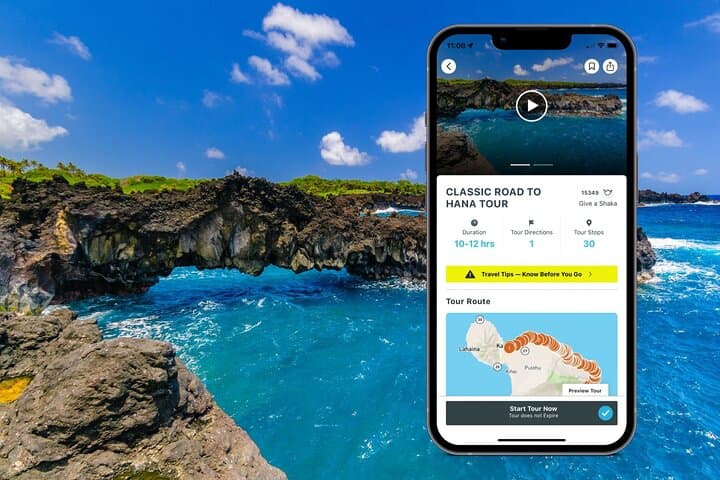
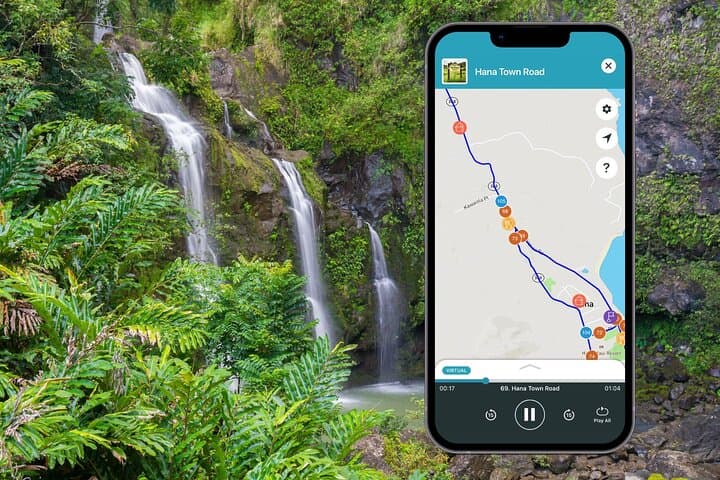
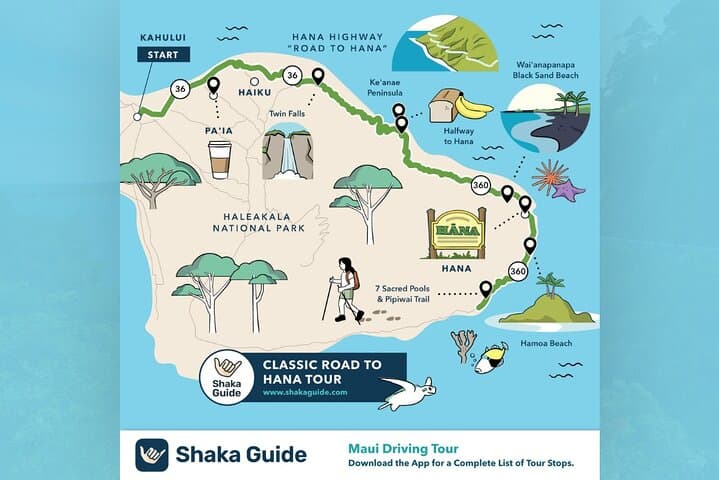
Shaka Guide's Classic audio tour turns the technical tedium of navigating one-lane bridges and tight turns into a narrated field guide. The app provides turn-by-turn cues, parking suggestions, and context: who the banyan tree planter was, why a black sand beach is black, and where to safely access a swim hole. That local voice matters when you want to choose between the popular stops — Twin Falls, Waiʻanapanapa State Park, and Oheʻo Gulch — and lesser-known pockets like a roadside fruit stand or a shaded arboretum.
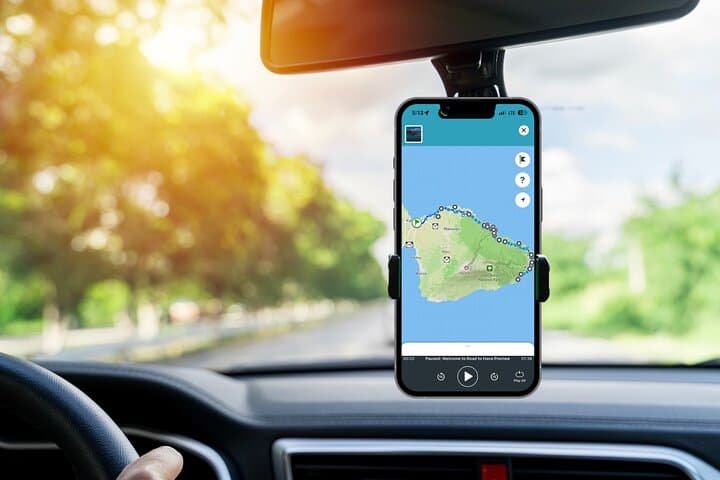
Practical sense is as important as curiosity. Start early — traffic and tours build after mid-morning. Fuel up in Paia; cell service disappears in stretches, so download the audio and maps over Wi-Fi before you go. Expect a full 10–12 hour day if you hit key stops and hike a few short trails; the route is forgiving but can be slippery after rain, and some popular pools require a short scramble.
Be a responsible visitor: stay on marked paths at delicate black-sand beaches, avoid cliff edges at red sand coves, and respect private driveways. If swimming, check conditions and currents — many pools are safe, some are deceptively shallow or undercut. A lightweight rain shell, sturdy shoes, a charged phone, and patience are the simplest requisites for a successful trip.
With the app as your guide, the Road to Hana becomes less about checking boxes and more about deciding which view to linger over, which banana bread to taste, and which story you want to bring home — told in the voice of someone who knows why this road still commands attention.
moderate.
10–12 hours.
Moderate fitness for short hikes, stairs, and slippery terrain; able to get in and out of a car many times during the day.
No permit is required for the public Hana Highway; this Shaka Guide product is self-guided audio you use in your own vehicle.
Plan 10–12 hours to experience main highlights with short hikes and swims; a nonstop drive can be done quicker but misses most attractions.
Parts of the road are narrow with tight bridges; large RVs and buses may struggle. If driving a large vehicle, check clearance and consider a smaller rental car.
Yes — the Shaka Guide tour and maps can be downloaded over Wi‑Fi for offline use, which is recommended due to spotty cell coverage.
Follow app guidance to designated pullouts and parking at sites like Twin Falls, Waiʻanapanapa, and Oheʻo Gulch; avoid blocking private driveways.
Safety varies by season and recent weather; always assess currents and recent rain that can make pools hazardous and avoid undercut or fast-flowing sections.
Sections of the Hana region contain ancient Hawaiian settlements, taro lo‘i, and heiau sites; many stops on the route are near traditional agricultural lands and family homesteads.
The area is ecologically sensitive; stay on trails, pack out waste, and avoid disturbing native plants and archeological features to help protect fragile coastal and forest systems.
Shaka Guide Apps operates guided outdoor trips and adventures with an emphasis on safety, stewardship, and memorable experiences.
The road tightens and the ocean drops away in a ribbon of turquoise far below. Your car rounds a blind hairpin and the GPS pings — a voice slides into the cabin with a little aloha, a story about the next pullout, and directions that feel tuned to the road instead of the other way around. This is the Road to Hana: a day-long coastal odyssey where waterfalls insist on being noticed and banyan trees seem to have been standing since the first canoe landed.
The road tightens and the ocean drops away in a ribbon of turquoise far below. Your car rounds a blind hairpin and the GPS pings — a voice slides into the cabin with a little aloha, a story about the next pullout, and directions that feel tuned to the road instead of the other way around. This is the Road to Hana: a day-long coastal odyssey where waterfalls insist on being noticed and banyan trees seem to have been standing since the first canoe landed.
Geologically, the highway traces the island's eastern shoulder where lava flows met the sea, then retreated, leaving cliffs interrupted by plunging streams. Rainfall here can exceed ten times that of leeward Maui, which is why the drive is a succession of microclimates — wet rainforest gullies, misted ridge lines, and suddenly, bright, wind-scoured shoreline. Culturally, the route threads through land tied to Hawaiian food systems and ceremony; taro lo‘i and family-owned banana bread stands sit within sight of sacred pools and historic fishponds.
Shaka Guide's Classic audio tour turns the technical tedium of navigating one-lane bridges and tight turns into a narrated field guide. The app provides turn-by-turn cues, parking suggestions, and context: who the banyan tree planter was, why a black sand beach is black, and where to safely access a swim hole. That local voice matters when you want to choose between the popular stops — Twin Falls, Waiʻanapanapa State Park, and Oheʻo Gulch — and lesser-known pockets like a roadside fruit stand or a shaded arboretum.
Practical sense is as important as curiosity. Start early — traffic and tours build after mid-morning. Fuel up in Paia; cell service disappears in stretches, so download the audio and maps over Wi-Fi before you go. Expect a full 10–12 hour day if you hit key stops and hike a few short trails; the route is forgiving but can be slippery after rain, and some popular pools require a short scramble.
Be a responsible visitor: stay on marked paths at delicate black-sand beaches, avoid cliff edges at red sand coves, and respect private driveways. If swimming, check conditions and currents — many pools are safe, some are deceptively shallow or undercut. A lightweight rain shell, sturdy shoes, a charged phone, and patience are the simplest requisites for a successful trip.
With the app as your guide, the Road to Hana becomes less about checking boxes and more about deciding which view to linger over, which banana bread to taste, and which story you want to bring home — told in the voice of someone who knows why this road still commands attention.