THE ADVENTURE COLLECTIVE® · Independent discovery and booking for outdoor travel

Escape Marrakech for a full-day private drive over the Tizi n’Tichka pass to Aït Benhaddou and Ouarzazate. Experience UNESCO-listed kasbah architecture, movie sets at Atlas Studios, and dramatic Atlas Mountain scenery on a long but accessible cultural route.
Escape Marrakech for a full-day private drive over the Tizi n’Tichka pass to Aït Benhaddou and Ouarzazate. Experience UNESCO-listed kasbah architecture, movie sets at Atlas Studios, and dramatic Atlas Mountain scenery on a long but accessible cultural route.
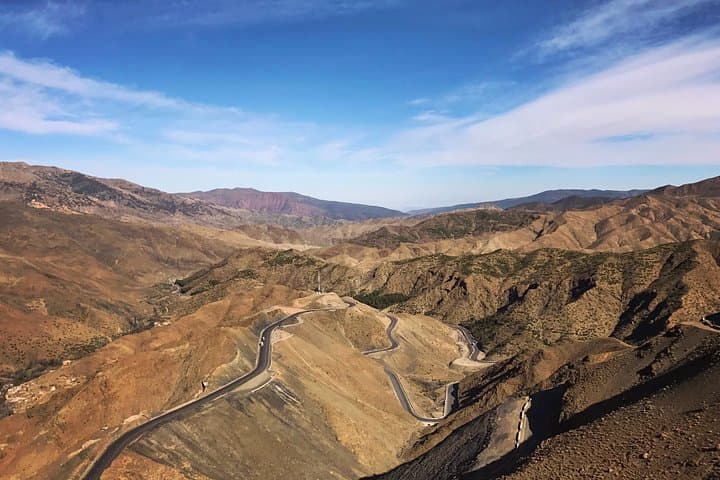
You pull away from Marrakech before dawn, the city light shrinking behind you as the road begins to climb. The car hums and the High Atlas rises, a ledger of folded stone and wind-sculpted scree; at Tizi n’Tichka the air thins to 2,260 m and the pass opens a raw panorama that reads like a location scout’s map.
Verified experiences and guided adventures in the surrounding area.
Operated by The Alternative Morocco · Ait Benhaddou, Marrakesh-Safi
You pull away from Marrakech before dawn, the city light shrinking behind you as the road begins to climb. The car hums and the High Atlas rises, a ledger of folded stone and wind-sculpted scree; at Tizi n’Tichka the air thins to 2,260 m and the pass opens a raw panorama that reads like a location scout’s map.
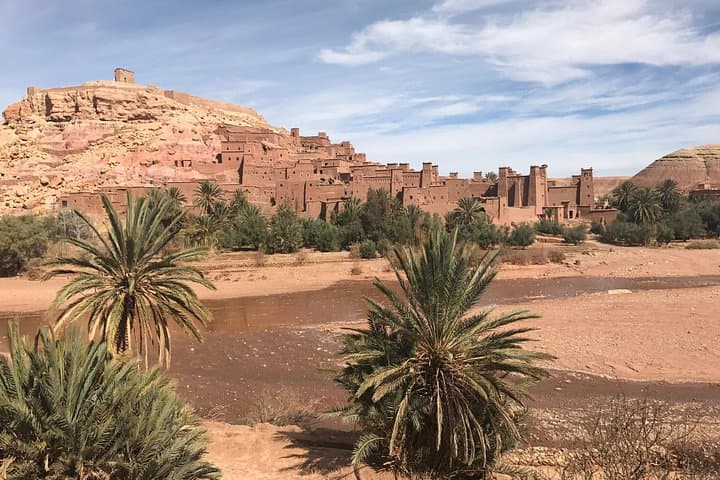
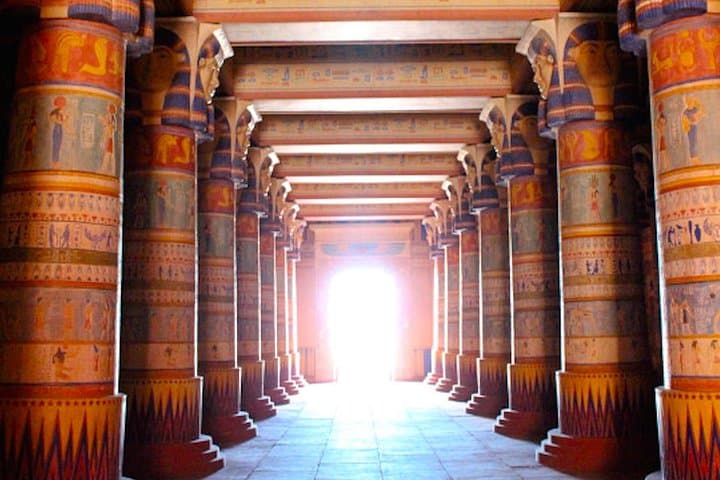
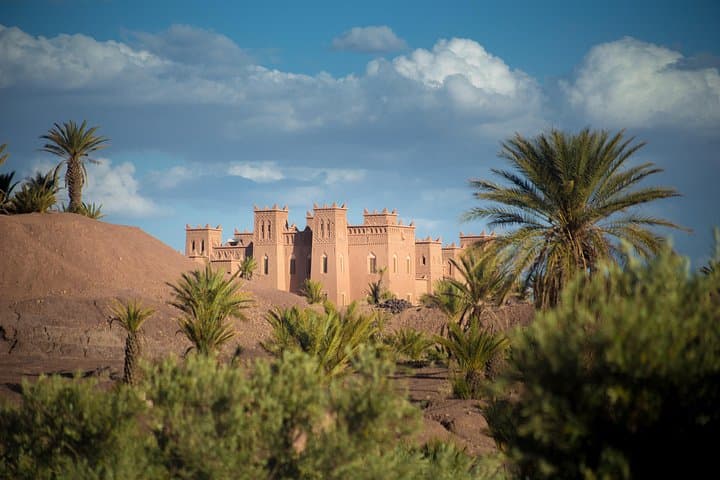
The route follows an old trans-Saharan caravan road—merchants, salt and spices once threaded this corridor between Marrakech and the desert. Aït Benhaddou itself is a living example of rammed-earth architecture: a clustered ksar of mud-brick houses and defensive towers that UNESCO protects and film crews repeatedly return to for its cinematic textures. Ouarzazate, the regional hub, earned its nickname “Gate of the Desert” and houses Atlas Studios, one of the world’s largest film complexes where practical sets and towering backlot facades still stand.
Geologically the area is where the High Atlas transitions to arid plateaus; you’ll notice red and ochre earth, stratified ridgelines, and sparse drought-adapted shrubs. Culturally, many residents speak Tamazight and maintain adobe-building traditions and small cooperative crafts.
Practical points: this is a long but low-impact day—expect roughly 12 hours total, with several hours of driving and guided walks on uneven, compacted clay and rocky lanes. Wear sturdy walking shoes, sun protection, and carry water; altitude at the pass can feel brisk in morning and evening. Bring cash for small restaurants and tips, and plan for early pickup from Marrakech. A private vehicle and local guide make the day efficient—arrive prepared and let the landscape and leaning kasbah façades tell their layered story.
easy.
12 hours.
Suitable for most fitness levels; expect long periods in a vehicle plus short, uneven walks.
The itinerary indicates admissions to Aït Benhaddou and Atlas Studios are included, but confirm with your operator when booking.
Pickups are typically from accommodation in Marrakech—provide your hotel address at booking for a morning pickup.
The vehicle and some surfaces are reported as wheelchair accessible, but the ksar’s alleys and rooftops are uneven and not suitable for wheelchairs.
A local lunch in Aït Benhaddou is part of the day; notify the operator of dietary restrictions ahead of time so they can arrange alternatives.
Aït Benhaddou grew as a fortified caravan stop on the route between sub-Saharan Africa and Marrakech; its earthen architecture and clan histories later drew film production to the area.
The mud-brick kasbahs are vulnerable to erosion; support local guides, avoid climbing fragile walls, and respect designated paths to minimize impact.
The Alternative Morocco operates guided outdoor trips and adventures with an emphasis on safety, stewardship, and memorable experiences.
You pull away from Marrakech before dawn, the city light shrinking behind you as the road begins to climb. The car hums and the High Atlas rises, a ledger of folded stone and wind-sculpted scree; at Tizi n’Tichka the air thins to 2,260 m and the pass opens a raw panorama that reads like a location scout’s map.
You pull away from Marrakech before dawn, the city light shrinking behind you as the road begins to climb. The car hums and the High Atlas rises, a ledger of folded stone and wind-sculpted scree; at Tizi n’Tichka the air thins to 2,260 m and the pass opens a raw panorama that reads like a location scout’s map.
The route follows an old trans-Saharan caravan road—merchants, salt and spices once threaded this corridor between Marrakech and the desert. Aït Benhaddou itself is a living example of rammed-earth architecture: a clustered ksar of mud-brick houses and defensive towers that UNESCO protects and film crews repeatedly return to for its cinematic textures. Ouarzazate, the regional hub, earned its nickname “Gate of the Desert” and houses Atlas Studios, one of the world’s largest film complexes where practical sets and towering backlot facades still stand.
Geologically the area is where the High Atlas transitions to arid plateaus; you’ll notice red and ochre earth, stratified ridgelines, and sparse drought-adapted shrubs. Culturally, many residents speak Tamazight and maintain adobe-building traditions and small cooperative crafts.
Practical points: this is a long but low-impact day—expect roughly 12 hours total, with several hours of driving and guided walks on uneven, compacted clay and rocky lanes. Wear sturdy walking shoes, sun protection, and carry water; altitude at the pass can feel brisk in morning and evening. Bring cash for small restaurants and tips, and plan for early pickup from Marrakech. A private vehicle and local guide make the day efficient—arrive prepared and let the landscape and leaning kasbah façades tell their layered story.