THE ADVENTURE COLLECTIVE® · Independent discovery and booking for outdoor travel

Take the wheel for a focused on-track session in Nago with a racing driver at your side. Short, intense laps and pro coaching make this a compact way to improve technique and taste true circuit driving.
Take the wheel for a focused on-track session in Nago with a racing driver at your side. Short, intense laps and pro coaching make this a compact way to improve technique and taste true circuit driving.
A low sun slants across black tarmac as you settle into a bucket seat—engine notes tighten like a coiled spring. For ten intense minutes the circuit in Nago transforms into a classroom of speed: straights that demand judgment, corners that test line and nerve, and a pro racer riding shotgun or coaching over the radio.
Verified experiences and guided adventures in the surrounding area.
A low sun slants across black tarmac as you settle into a bucket seat—engine notes tighten like a coiled spring. For ten intense minutes the circuit in Nago transforms into a classroom of speed: straights that demand judgment, corners that test line and nerve, and a pro racer riding shotgun or coaching over the radio.
Okinawa’s coastline and coral-rich reefs are the island’s better-known claims, but the island also has compact racing venues born in the post-war motorsport boom of Japan. The asphalt here sits on limestone that rises from ancient reef deposits; the track’s short lap times make it ideal for driver coaching and spirited laps without long transfer times.
Local culture blends Okinawan hospitality with a can-do motorsport ethic. You’ll find staff who translate technical feedback into bite-sized drills and small garages where mechanics tune brakes and suspension between runs.
Practical guidance: arrive early for safety briefings and gear checks; bring your valid driver’s license and ID. Expect a full booking and waiver process, a quick orientation on line choice and braking zones, and a brief vehicle check before you hit the circuit. Closed-toe shoes and a lightweight windbreaker are enough for most days; on wet days the track gets slick quickly, so temper speed and listen to your instructor.
Plan for 30–60 minutes total on-site for paperwork, briefing and debrief. The experience is short but intense—perfect for getting seat time, improving technique, or feeling what a racecar and a coach can teach in concentrated doses.
moderate.
10 minutes (on-track); 30–60 minutes total.
No special fitness required beyond basic mobility; expect brief climbs in and out of low seats and quick physical focus during runs.
No—most public driving sessions require only a valid road driver’s license; special competitive licenses are not needed for coached laps.
Some sessions allow a passenger or instructor; check the specific booking options and any weight or age restrictions ahead of time.
Operators typically run in light rain but may delay or cancel for heavy rain or unsafe conditions—confirm their weather policy when booking.
Many venues supply helmets and basic safety gear; confirm fit and sanitize policies, or bring a personal helmet if you prefer.
Okinawa’s motorsport sites grew in the late 20th century as island infrastructure adapted for recreational driving; tracks here are compact, reflecting limited flat land and a focus on technical driving.
Respect noise rules and designated parking; local operators often limit weekend hogging to reduce community noise and protect roadside vegetation.
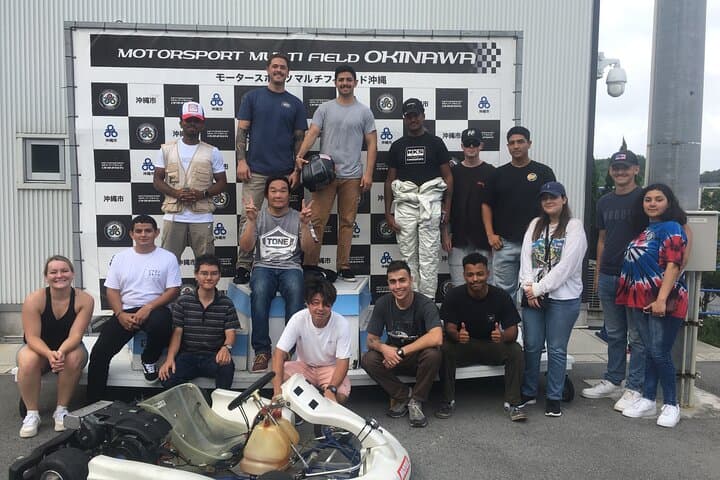
A low sun slants across black tarmac as you settle into a bucket seat—engine notes tighten like a coiled spring. For ten intense minutes the circuit in Nago transforms into a classroom of speed: straights that demand judgment, corners that test line and nerve, and a pro racer riding shotgun or coaching over the radio.
A low sun slants across black tarmac as you settle into a bucket seat—engine notes tighten like a coiled spring. For ten intense minutes the circuit in Nago transforms into a classroom of speed: straights that demand judgment, corners that test line and nerve, and a pro racer riding shotgun or coaching over the radio.
Okinawa’s coastline and coral-rich reefs are the island’s better-known claims, but the island also has compact racing venues born in the post-war motorsport boom of Japan. The asphalt here sits on limestone that rises from ancient reef deposits; the track’s short lap times make it ideal for driver coaching and spirited laps without long transfer times.
Local culture blends Okinawan hospitality with a can-do motorsport ethic. You’ll find staff who translate technical feedback into bite-sized drills and small garages where mechanics tune brakes and suspension between runs.
Practical guidance: arrive early for safety briefings and gear checks; bring your valid driver’s license and ID. Expect a full booking and waiver process, a quick orientation on line choice and braking zones, and a brief vehicle check before you hit the circuit. Closed-toe shoes and a lightweight windbreaker are enough for most days; on wet days the track gets slick quickly, so temper speed and listen to your instructor.
Plan for 30–60 minutes total on-site for paperwork, briefing and debrief. The experience is short but intense—perfect for getting seat time, improving technique, or feeling what a racecar and a coach can teach in concentrated doses.