THE ADVENTURE COLLECTIVE® · Independent discovery and booking for outdoor travel

Drive an electric Monster-Kart through Tokyo’s iconic districts: Shibuya, Harajuku and Omotesando. This guided, 60-minute street tour combines costume photo stops, city-paced thrills and strict IDP requirements—read on for what to bring and how to prepare.
Drive an electric Monster-Kart through Tokyo’s iconic districts: Shibuya, Harajuku and Omotesando. This guided, 60-minute street tour combines costume photo stops, city-paced thrills and strict IDP requirements—read on for what to bring and how to prepare.
The engine hums like a contained thunder as you slide into a low-slung black electric kart on a side street near Shibuya. Helmets click, guides check permits, and the guide car becomes a rolling anchor as the group peels onto avenues where neon stabs the twilight. Pedestrians flank the sidewalks; the crossing waits like a choreographed stage.
Verified experiences and guided adventures in the surrounding area.
Operated by モンスターカート · Tokyo, Tokyo
The engine hums like a contained thunder as you slide into a low-slung black electric kart on a side street near Shibuya. Helmets click, guides check permits, and the guide car becomes a rolling anchor as the group peels onto avenues where neon stabs the twilight. Pedestrians flank the sidewalks; the crossing waits like a choreographed stage.
Shibuya's rise from a small Edo-era junction to Tokyo's busiest intersection reflects the city's 20th-century push toward speed and spectacle. The streets you’ll traverse — Harajuku's fashion corridors, the glass-lined boulevards of Omotesando, the scramble at Shibuya — are built on layers of urban planning, commerce and youth culture more than geology, but the asphalt and concrete form a landscape all their own.
Expect a guided, 60-minute urban loop that emphasizes visuals and photo stops as much as steering. Guides brief riders on local traffic rules, hand signals and safety; authentic-style costumes add theatrical flair and make you visible in traffic.
Practical side: you must carry a physical International Driving Permit (or JAF-translated license for certain countries) plus your passport and home license. Tours run on electric karts, reducing local emissions and noise compared with combustion engines, but you still share narrow lanes with regular traffic — keep situational awareness high.
Plan to arrive early for document checks, wear closed-toe shoes and a light jacket for evening wind. Whether you’re aiming for cinematic photos at Shibuya Scramble or a fast-paced city lap, this is an urban ride that prioritizes legal compliance and street etiquette as much as adrenaline.
moderate.
60 minutes.
Suitable for travelers with basic mobility and moderate fitness—requires ability to sit upright, operate pedals and follow quick safety briefings.
Yes—participants must present a physical IDP issued under the 1949 Geneva Convention (booklet form) plus their original license and passport; some countries require a JAF translation instead.
You will not be allowed to drive and no refund will be issued; a rescheduling fee (2,000 JPY) may apply if you can return later to join a different time slot.
Standard tours run about 60 minutes and include a guided route through Harajuku, Omotesando and Shibuya, costume options, a guide vehicle, and photo stops at key landmarks.
Not after 3:00 PM on October 31 due to traffic restrictions—those tours follow an alternate Tokyo Tower route instead.
Shibuya evolved from a rural junction in the Edo period into a commercial and youth-culture hub in the 20th century; Shibuya Scramble Crossing became a global image of Tokyo’s urban intensity.
Karts are electric to reduce local emissions and noise; riders should respect traffic rules, avoid stopping in pedestrian zones and dispose of any waste responsibly.
モンスターカート operates guided outdoor trips and adventures with an emphasis on safety, stewardship, and memorable experiences.
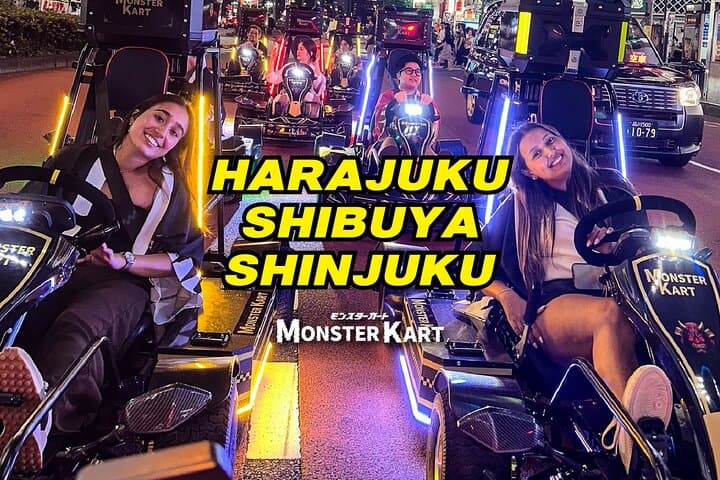
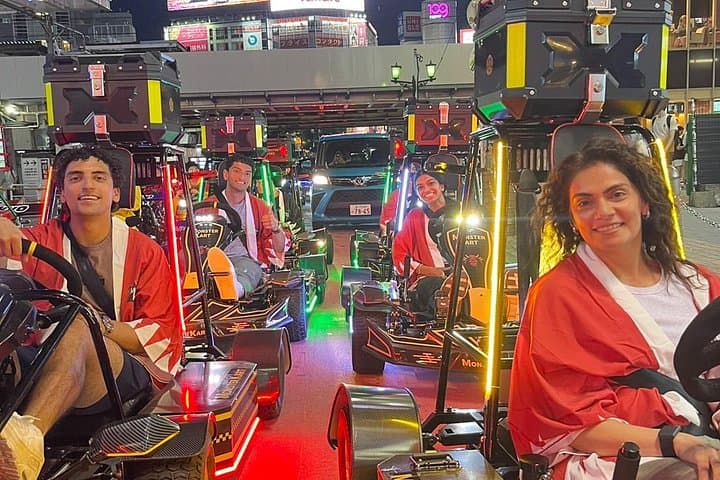
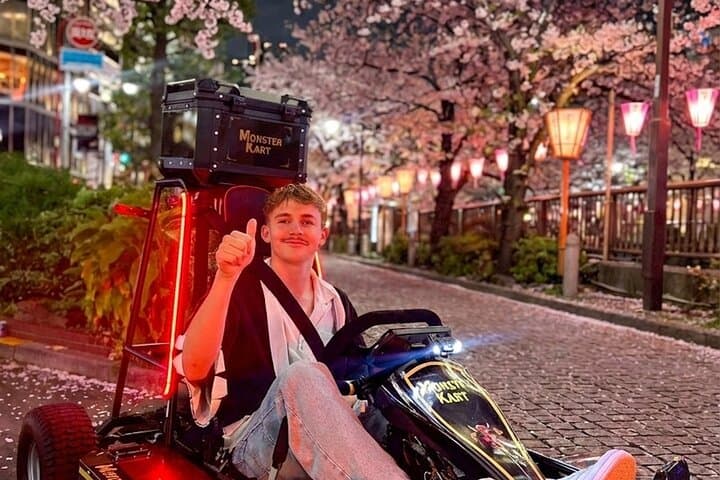
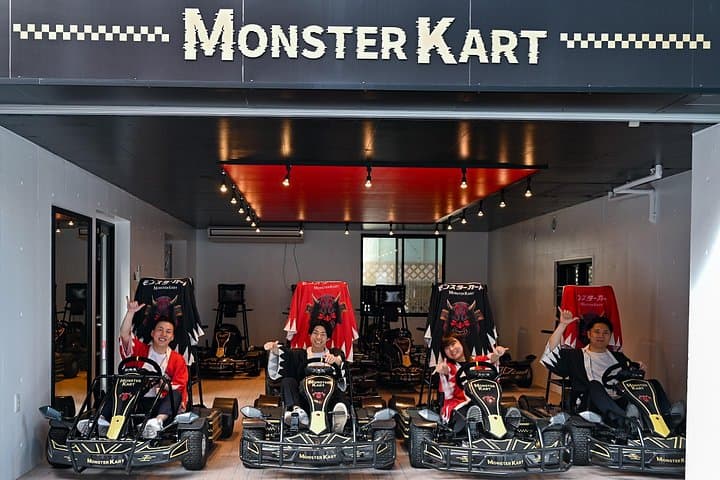
The engine hums like a contained thunder as you slide into a low-slung black electric kart on a side street near Shibuya. Helmets click, guides check permits, and the guide car becomes a rolling anchor as the group peels onto avenues where neon stabs the twilight. Pedestrians flank the sidewalks; the crossing waits like a choreographed stage.
The engine hums like a contained thunder as you slide into a low-slung black electric kart on a side street near Shibuya. Helmets click, guides check permits, and the guide car becomes a rolling anchor as the group peels onto avenues where neon stabs the twilight. Pedestrians flank the sidewalks; the crossing waits like a choreographed stage.
Shibuya's rise from a small Edo-era junction to Tokyo's busiest intersection reflects the city's 20th-century push toward speed and spectacle. The streets you’ll traverse — Harajuku's fashion corridors, the glass-lined boulevards of Omotesando, the scramble at Shibuya — are built on layers of urban planning, commerce and youth culture more than geology, but the asphalt and concrete form a landscape all their own.
Expect a guided, 60-minute urban loop that emphasizes visuals and photo stops as much as steering. Guides brief riders on local traffic rules, hand signals and safety; authentic-style costumes add theatrical flair and make you visible in traffic.
Practical side: you must carry a physical International Driving Permit (or JAF-translated license for certain countries) plus your passport and home license. Tours run on electric karts, reducing local emissions and noise compared with combustion engines, but you still share narrow lanes with regular traffic — keep situational awareness high.
Plan to arrive early for document checks, wear closed-toe shoes and a light jacket for evening wind. Whether you’re aiming for cinematic photos at Shibuya Scramble or a fast-paced city lap, this is an urban ride that prioritizes legal compliance and street etiquette as much as adrenaline.