THE ADVENTURE COLLECTIVE® · Independent discovery and booking for outdoor travel

Explore one of America’s most intact Georgian plantation houses along the Ashley River. This guided Drayton Hall tour combines architecture, cultural history, and riverside landscapes in a 3–4 hour visit.
Explore one of America’s most intact Georgian plantation houses along the Ashley River. This guided Drayton Hall tour combines architecture, cultural history, and riverside landscapes in a 3–4 hour visit.
You step out of Charleston’s hum and onto rutted Ashley River Road, the river air pulling at the edges of the house like a patient guide. Oak-shaded lawns open to a low‑slung Georgian façade that has watched tides and centuries; the house doesn’t demand attention so much as insist upon being understood.
Verified experiences and guided adventures in the surrounding area.
You step out of Charleston’s hum and onto rutted Ashley River Road, the river air pulling at the edges of the house like a patient guide. Oak-shaded lawns open to a low‑slung Georgian façade that has watched tides and centuries; the house doesn’t demand attention so much as insist upon being understood.
Built in the mid‑18th century, Drayton Hall is one of America’s best‑preserved Palladian plantations, a study in brick, timber, and restraint. The grounds sit on a low coastal plain where riverine soils and tidal creeks shaped how rice and indigo were grown and how lives were organized. Local knowledge—Gullah culture, colonial planters, and the long arc of preservation practice—threads through the tour, and guides typically address both architecture and the lives of the enslaved craftsmen whose work endures in the joinery and masonry.
Expect hands‑on closeness to period details: original floorboards, plaster repairs, and sightlines across the Ashley River that once determined plantation logistics. Birdsong and the river’s edge will feel like another participant, nudging attention to the landscape that sustained this place.
Practical guidance: the tour is mostly interpretive walking across lawns and uneven paths; allow 3–4 hours for guided time and independent exploration of grounds and museum exhibits. Wear sturdy shoes for wet grass and bring sun and insect protection in warm months. Photography is allowed in most exterior spaces but restricted inside certain rooms—ask the guide. Arrive early to avoid midday heat and to catch the best light for photos along the river.
easy.
3.5 hours.
Light walking fitness; able to manage short stretches of uneven terrain and some stairs inside historic structures
Guided visits and time on the grounds typically total about 3–4 hours; official tours are often scheduled for around 3.5 hours.
Some rooms are restricted to protect historic fabric; guides will point out accessible areas and explain conservation reasons.
Parts of the grounds and some exhibits are accessible, but the main house has historic stairs and uneven thresholds—contact the site for specific accommodation options.
Families are welcome; strollers are manageable outdoors but may be restricted inside the house due to tight spaces and preservation concerns.
Drayton Hall, completed mid‑18th century, is one of the nation’s oldest preserved plantation houses and was spared 19th‑century modernization—its preservation offers a direct window into colonial architecture and labor history.
The site is managed with a focus on preservation and interpretation; visitors are asked to stay on paths and respect restricted areas to protect fragile historic fabric and riparian habitats.
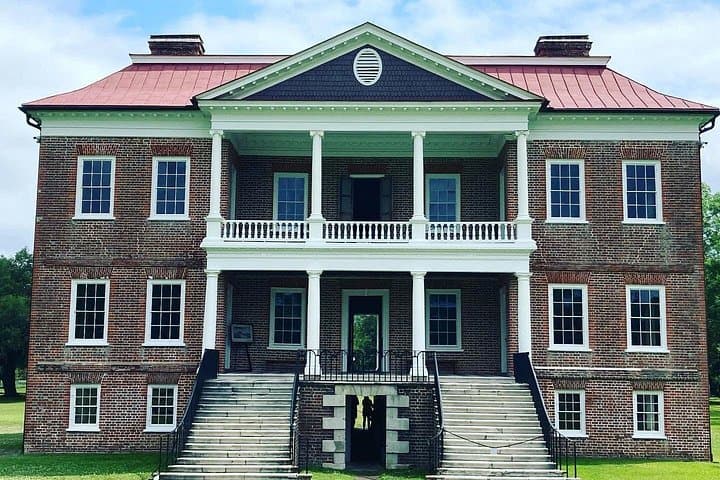
You step out of Charleston’s hum and onto rutted Ashley River Road, the river air pulling at the edges of the house like a patient guide. Oak-shaded lawns open to a low‑slung Georgian façade that has watched tides and centuries; the house doesn’t demand attention so much as insist upon being understood.
You step out of Charleston’s hum and onto rutted Ashley River Road, the river air pulling at the edges of the house like a patient guide. Oak-shaded lawns open to a low‑slung Georgian façade that has watched tides and centuries; the house doesn’t demand attention so much as insist upon being understood.
Built in the mid‑18th century, Drayton Hall is one of America’s best‑preserved Palladian plantations, a study in brick, timber, and restraint. The grounds sit on a low coastal plain where riverine soils and tidal creeks shaped how rice and indigo were grown and how lives were organized. Local knowledge—Gullah culture, colonial planters, and the long arc of preservation practice—threads through the tour, and guides typically address both architecture and the lives of the enslaved craftsmen whose work endures in the joinery and masonry.
Expect hands‑on closeness to period details: original floorboards, plaster repairs, and sightlines across the Ashley River that once determined plantation logistics. Birdsong and the river’s edge will feel like another participant, nudging attention to the landscape that sustained this place.
Practical guidance: the tour is mostly interpretive walking across lawns and uneven paths; allow 3–4 hours for guided time and independent exploration of grounds and museum exhibits. Wear sturdy shoes for wet grass and bring sun and insect protection in warm months. Photography is allowed in most exterior spaces but restricted inside certain rooms—ask the guide. Arrive early to avoid midday heat and to catch the best light for photos along the river.