THE ADVENTURE COLLECTIVE® · Independent discovery and booking for outdoor travel

A full-day loop from Durban that pairs scenic waterfalls and a moving heritage stop with a two-hour Drakensberg hike. Expect basalt cliffs, grassy ridgelines, and short interpretive stops at Howick Falls and the Mandela Capture Site.
A full-day loop from Durban that pairs scenic waterfalls and a moving heritage stop with a two-hour Drakensberg hike. Expect basalt cliffs, grassy ridgelines, and short interpretive stops at Howick Falls and the Mandela Capture Site.
Morning light lifts off Durban’s harbor as a small coach threads the rolling KwaZulu‑Natal Midlands, taking travelers toward the Drakensberg’s serrated skyline. First stop is Howick Falls, where water thunders nearly 95 metres into a misted gorge and the cliff faces seem to push cool air toward the viewing platform.
Verified experiences and guided adventures in the surrounding area.
Operated by African Sun Safaris · Howick, KwaZulu-Natal
Morning light lifts off Durban’s harbor as a small coach threads the rolling KwaZulu‑Natal Midlands, taking travelers toward the Drakensberg’s serrated skyline. First stop is Howick Falls, where water thunders nearly 95 metres into a misted gorge and the cliff faces seem to push cool air toward the viewing platform.
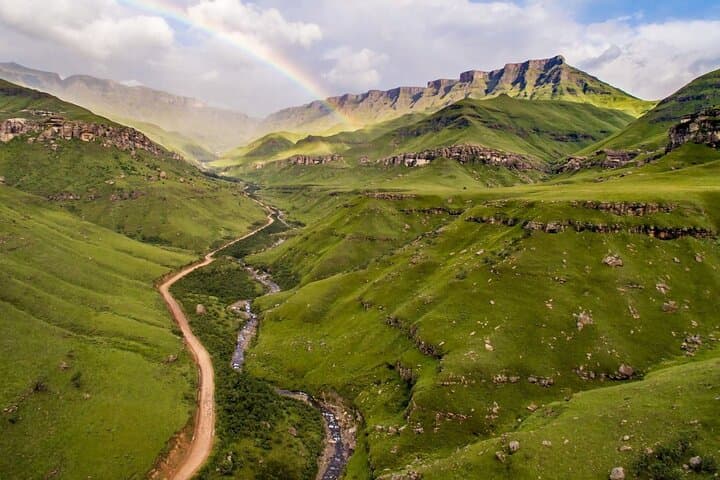
The route stitches together natural history and South Africa’s political memory: at the Mandela Capture Site visitors learn about the 1962 arrest that altered the country’s course, and the 50‑column steel sculpture materializes into Mandela’s profile as one crosses the garden. Geologically, the Drakensberg’s basalt escarpments record ancient volcanic flows; vegetation shifts from farmland to montane grassland, and paths follow streams that dare walkers onward.
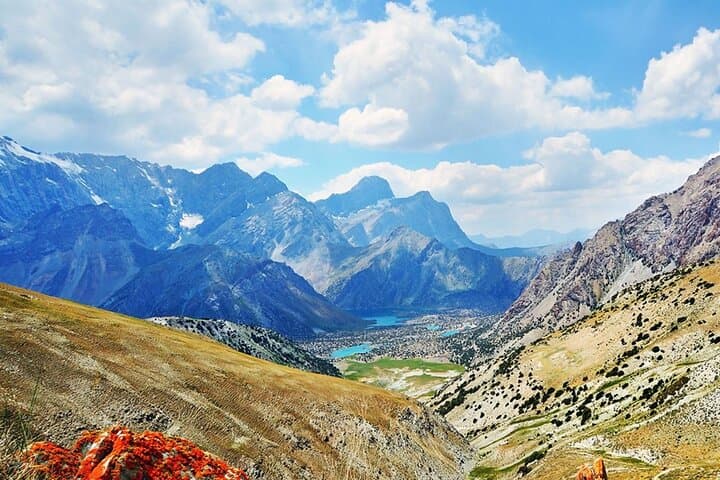
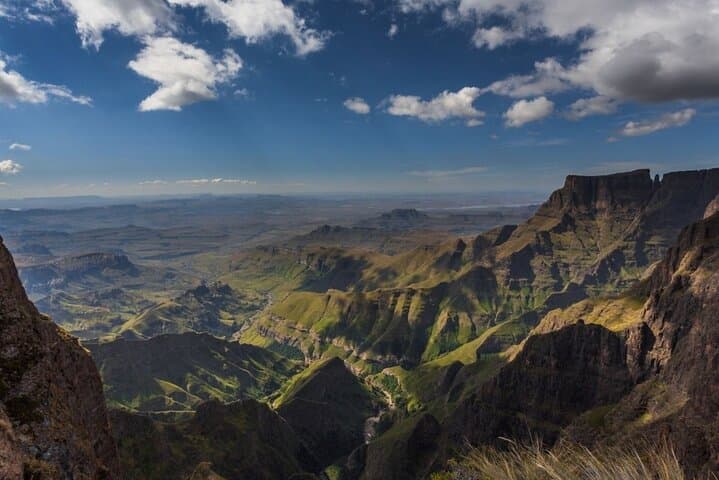
On arrival in the UNESCO‑listed Drakensberg, a two‑hour hike traverses well‑graded trails, river crossings, and open ridgelines. Hikers can expect 2–4 kilometres of walking with modest elevation gain, rocky sections and views that sweep across valleys and distant cliffs. If rock art sites appear, they offer tangible links to San ancestors who once painted here.
Practical notes: depart early from Durban, bring layered clothing for rapidly changing mountain weather, and pack water and sturdy shoes for uneven terrain. Guided stops include short interpretive talks; photography and brief picnics are common on the summit meadows. For timing, mid‑morning light highlights cliff faces while late afternoon returns are cooler. Respect fenced lookouts, follow Leave No Trace principles, and allow extra time for traffic returning to Durban. Local guides can adapt routes to suit fitness and curiosity levels.
moderate.
10 hours.
Moderate fitness for 2–4 km of hiking with some uneven ground and short climbs; comfortable with repeated standing and short walks.
The guided hike is roughly two hours on well-defined trails, typically 2–4 kilometres with modest elevation changes.
Yes, the tour departs from Durban by coach and returns the same day; check pickup details at booking.
The itinerary notes accessibility for a range of fitness levels, but the Drakensberg hike includes uneven terrain—parents and less-mobile guests should assess comfort with short hikes.
Admission to listed sites on the itinerary is included as part of the tour; confirm specifics with the operator at booking.
The Drakensberg region is UNESCO‑listed for its outstanding natural and cultural features, including ancient San rock art; the Mandela Capture Site preserves a pivotal moment in South Africa's modern history.
Grazing and invasive plants affect highland grasslands—stick to trails, pack out waste, and support local initiatives that protect fragile montane ecosystems.
African Sun Safaris operates guided outdoor trips and adventures with an emphasis on safety, stewardship, and memorable experiences.

Morning light lifts off Durban’s harbor as a small coach threads the rolling KwaZulu‑Natal Midlands, taking travelers toward the Drakensberg’s serrated skyline. First stop is Howick Falls, where water thunders nearly 95 metres into a misted gorge and the cliff faces seem to push cool air toward the viewing platform.
Morning light lifts off Durban’s harbor as a small coach threads the rolling KwaZulu‑Natal Midlands, taking travelers toward the Drakensberg’s serrated skyline. First stop is Howick Falls, where water thunders nearly 95 metres into a misted gorge and the cliff faces seem to push cool air toward the viewing platform.
The route stitches together natural history and South Africa’s political memory: at the Mandela Capture Site visitors learn about the 1962 arrest that altered the country’s course, and the 50‑column steel sculpture materializes into Mandela’s profile as one crosses the garden. Geologically, the Drakensberg’s basalt escarpments record ancient volcanic flows; vegetation shifts from farmland to montane grassland, and paths follow streams that dare walkers onward.
On arrival in the UNESCO‑listed Drakensberg, a two‑hour hike traverses well‑graded trails, river crossings, and open ridgelines. Hikers can expect 2–4 kilometres of walking with modest elevation gain, rocky sections and views that sweep across valleys and distant cliffs. If rock art sites appear, they offer tangible links to San ancestors who once painted here.
Practical notes: depart early from Durban, bring layered clothing for rapidly changing mountain weather, and pack water and sturdy shoes for uneven terrain. Guided stops include short interpretive talks; photography and brief picnics are common on the summit meadows. For timing, mid‑morning light highlights cliff faces while late afternoon returns are cooler. Respect fenced lookouts, follow Leave No Trace principles, and allow extra time for traffic returning to Durban. Local guides can adapt routes to suit fitness and curiosity levels.