THE ADVENTURE COLLECTIVE® · Independent discovery and booking for outdoor travel

A single-day circuit from Durban that pairs dramatic geology with modern history: stand at Howick Falls, visit the Nelson Mandela Capture Site, then trace the foothills of the Drakensberg on short walking trails. Expect a long but accessible day that blends landscapes, culture and practical exploration.
A single-day circuit from Durban that pairs dramatic geology with modern history: stand at Howick Falls, visit the Nelson Mandela Capture Site, then trace the foothills of the Drakensberg on short walking trails. Expect a long but accessible day that blends landscapes, culture and practical exploration.
You set out at first light from Durban, the city dropping behind you as lowland farms give way to rolling hills. The road tightens through the Midlands Meander and, by mid-morning, the river’s voice grows louder—Howick Falls thundered into a deep green bowl, water daring you to step closer and feel the spray.
Verified experiences and guided adventures in the surrounding area.
Operated by African Saf Tours · Howick, KwaZulu-Natal
You set out at first light from Durban, the city dropping behind you as lowland farms give way to rolling hills. The road tightens through the Midlands Meander and, by mid-morning, the river’s voice grows louder—Howick Falls thundered into a deep green bowl, water daring you to step closer and feel the spray.
History presses quietly at the Nelson Mandela Capture Site: a sculptural silhouette marks the spot where Mandela was arrested in 1962. The visitor centre lays out the chain of events that reshaped South Africa, and the landscape—open grassland and ridge lines—reminds you why this ground mattered strategically and culturally.
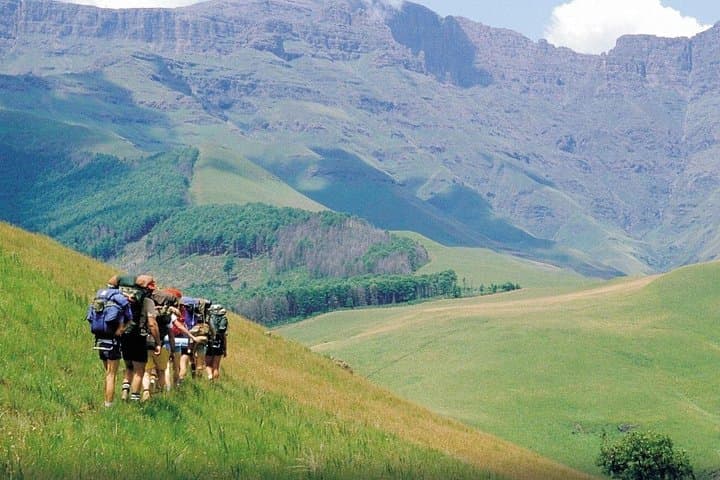
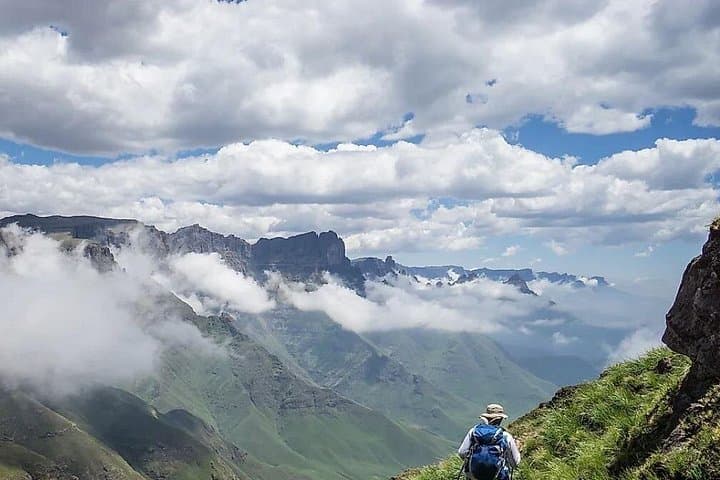
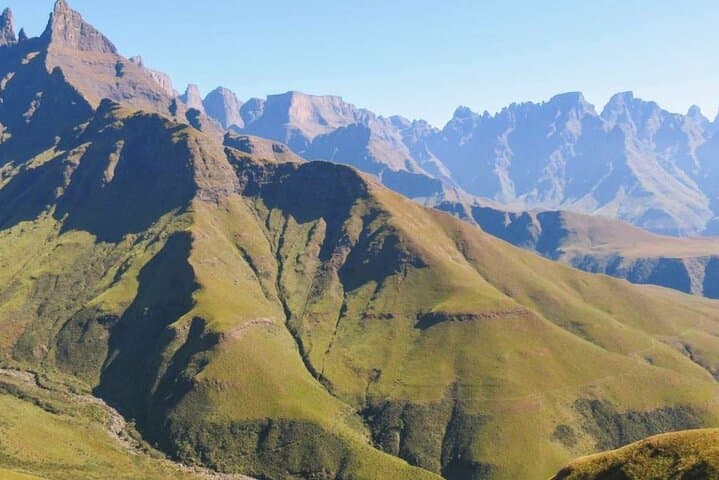
Further inland the Drakensberg rises, its basalt cliffs and folded sandstone telling a geological story of ancient seas and tectonic uplift. Short walking trails lead to outlooks where sheer faces and grassy amphitheatres hold wind and light like a brushstroke. Local Zulu place names and farmstead settlements speak to a living cultural landscape shaped by both colonial history and indigenous lifeways.
Practical guidance: expect a long day (about 10 hours) with several short walks—trail surfaces vary from paved viewpoints to uneven alpine footpaths. Wear sturdy shoes with traction, carry sun protection and a refillable water bottle, and layer for wind at higher elevations. Photography windows are best mid-morning at Howick and late afternoon in the Drakensberg when the light sculpts the ridgelines. Respect marked trails, the memorial site, and local communities—leave no trace and leave time to savor a roadside tea or Midlands artisan stop on the return to Durban.
moderate.
10 hours.
Suitable for most fitness levels; able to handle multiple short walks, some on uneven ground and mild elevation change.
The full-day tour is approximately 10 hours with several hours spent driving between Durban, Howick, the Capture Site and the Drakensberg; expect multiple short stopovers for walks and viewpoints.
Short paved viewpoints are accessible, but the Drakensberg walking trails include uneven surfaces; the tour operator notes it is suitable for all fitness levels but check individual mobility needs with the provider.
Yes—entrance to the Nelson Mandela Capture Site visitor centre is included in the itinerary description.
The cancellation policy allows refunds if cancelled 24 hours prior; weather usually affects comfort rather than cancellation, but bring layers and waterproofs for wind and rain.
The Nelson Mandela Capture Site marks Mandela’s 1962 arrest; the Drakensberg long formed a cultural and physical boundary between KwaZulu‑Natal and Lesotho.
The Drakensberg contains important montane grasslands susceptible to erosion and invasive plants—stick to trails, pack out waste, and support local conservation groups when possible.
African Saf Tours operates guided outdoor trips and adventures with an emphasis on safety, stewardship, and memorable experiences.

You set out at first light from Durban, the city dropping behind you as lowland farms give way to rolling hills. The road tightens through the Midlands Meander and, by mid-morning, the river’s voice grows louder—Howick Falls thundered into a deep green bowl, water daring you to step closer and feel the spray.
You set out at first light from Durban, the city dropping behind you as lowland farms give way to rolling hills. The road tightens through the Midlands Meander and, by mid-morning, the river’s voice grows louder—Howick Falls thundered into a deep green bowl, water daring you to step closer and feel the spray.
History presses quietly at the Nelson Mandela Capture Site: a sculptural silhouette marks the spot where Mandela was arrested in 1962. The visitor centre lays out the chain of events that reshaped South Africa, and the landscape—open grassland and ridge lines—reminds you why this ground mattered strategically and culturally.
Further inland the Drakensberg rises, its basalt cliffs and folded sandstone telling a geological story of ancient seas and tectonic uplift. Short walking trails lead to outlooks where sheer faces and grassy amphitheatres hold wind and light like a brushstroke. Local Zulu place names and farmstead settlements speak to a living cultural landscape shaped by both colonial history and indigenous lifeways.
Practical guidance: expect a long day (about 10 hours) with several short walks—trail surfaces vary from paved viewpoints to uneven alpine footpaths. Wear sturdy shoes with traction, carry sun protection and a refillable water bottle, and layer for wind at higher elevations. Photography windows are best mid-morning at Howick and late afternoon in the Drakensberg when the light sculpts the ridgelines. Respect marked trails, the memorial site, and local communities—leave no trace and leave time to savor a roadside tea or Midlands artisan stop on the return to Durban.