THE ADVENTURE COLLECTIVE® · Independent discovery and booking for outdoor travel

Leave Bucharest behind for a full day among Carpathian hills: explore Bran Castle’s stone rooms, stroll Brașov’s medieval core, and learn which parts of the Dracula story are legend. This practical guide covers what to expect, timing, and useful tips for the day trip.
Leave Bucharest behind for a full day among Carpathian hills: explore Bran Castle’s stone rooms, stroll Brașov’s medieval core, and learn which parts of the Dracula story are legend. This practical guide covers what to expect, timing, and useful tips for the day trip.
A morning on the road from Bucharest dissolves the city’s edge: the highway opens into rolling farmland and the Carpathian foothills rise like a promise. By late morning the bus winds into a forested pass and Bran Castle appears—stone towers and narrow windows cutting a silhouette against the pale sky—inviting a brisk, exploratory pace.
Verified experiences and guided adventures in the surrounding area.
Operated by Iconic Tours · Bran, Brașov County
A morning on the road from Bucharest dissolves the city’s edge: the highway opens into rolling farmland and the Carpathian foothills rise like a promise. By late morning the bus winds into a forested pass and Bran Castle appears—stone towers and narrow windows cutting a silhouette against the pale sky—inviting a brisk, exploratory pace.
Bran’s keep sits on a rocky outcrop where medieval trade routes once funneled goods and ideas through Transylvania. The castle’s popular link to Vlad Țepeș is more folklore than full-time residence; the build and defenses reflect Saxon and Wallachian tensions of the 14th–17th centuries. The surrounding geology—karst limestone and steep valleys—shapes the view: cliffs, exposed bedrock and dense beech stands that turn audibly in wind.
A short drive brings travelers to Brașov’s cobbled square, its Gothic Black Church and compact streets indicating centuries of Saxon urban planning and mountain commerce. Local cafés pour strong coffee; small craft shops sell smoked cheese and woven goods.
Practical guide: plan a full day—expect ~10 hours total including round-trip transport (Bucharest↔Bran ~3 hours each way depending on traffic). Castle entry is typically paid on-site; buy tickets online in high season. Wear supportive shoes—stone staircases and narrow passages demand sure footing—and layers for variable mountain air. Carry local currency (Romanian leu) for small vendors and consider an early pickup to beat mid-day crowds. The trip blends accessible walking with cultural depth—good for travelers who want compact history framed by wild, shifting hills.
easy.
10 hours.
Basic mobility and the ability to walk on uneven surfaces for short periods; stairs inside castle.
No—entry fees are typically paid on-site or via the castle’s ticketing system; the tour provides transportation and commentary.
Expect roughly 2.5–3.5 hours each way depending on traffic; the full tour runs about 10 hours including stops.
Yes—stops include cafes and public restrooms in Bran and Brașov; bring cash for small purchases.
The coach transfer is comfortable, but Bran Castle has narrow stairways and uneven floors which may limit access for some visitors.
Bran Castle’s dramatic silhouette owes more to strategic medieval defense and 19th-century restorations than to a permanent residence of Vlad Țepeș; nearby Brașov grew as a fortified Saxon trading hub.
Visitor pressure in summer can strain local trails and village services—stay on marked paths, support local vendors, and pack out waste.
Iconic Tours operates guided outdoor trips and adventures with an emphasis on safety, stewardship, and memorable experiences.
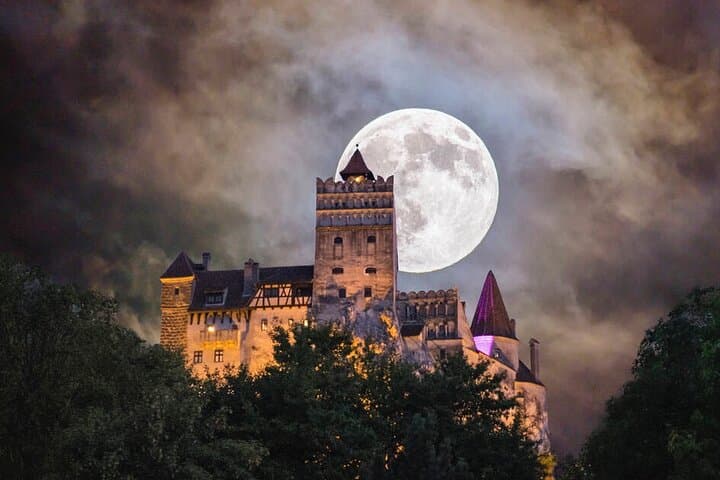
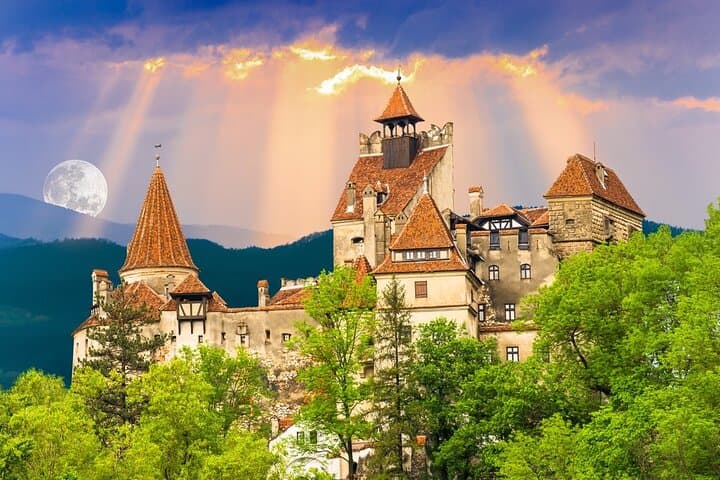
A morning on the road from Bucharest dissolves the city’s edge: the highway opens into rolling farmland and the Carpathian foothills rise like a promise. By late morning the bus winds into a forested pass and Bran Castle appears—stone towers and narrow windows cutting a silhouette against the pale sky—inviting a brisk, exploratory pace.
A morning on the road from Bucharest dissolves the city’s edge: the highway opens into rolling farmland and the Carpathian foothills rise like a promise. By late morning the bus winds into a forested pass and Bran Castle appears—stone towers and narrow windows cutting a silhouette against the pale sky—inviting a brisk, exploratory pace.
Bran’s keep sits on a rocky outcrop where medieval trade routes once funneled goods and ideas through Transylvania. The castle’s popular link to Vlad Țepeș is more folklore than full-time residence; the build and defenses reflect Saxon and Wallachian tensions of the 14th–17th centuries. The surrounding geology—karst limestone and steep valleys—shapes the view: cliffs, exposed bedrock and dense beech stands that turn audibly in wind.
A short drive brings travelers to Brașov’s cobbled square, its Gothic Black Church and compact streets indicating centuries of Saxon urban planning and mountain commerce. Local cafés pour strong coffee; small craft shops sell smoked cheese and woven goods.
Practical guide: plan a full day—expect ~10 hours total including round-trip transport (Bucharest↔Bran ~3 hours each way depending on traffic). Castle entry is typically paid on-site; buy tickets online in high season. Wear supportive shoes—stone staircases and narrow passages demand sure footing—and layers for variable mountain air. Carry local currency (Romanian leu) for small vendors and consider an early pickup to beat mid-day crowds. The trip blends accessible walking with cultural depth—good for travelers who want compact history framed by wild, shifting hills.