THE ADVENTURE COLLECTIVE® · Independent discovery and booking for outdoor travel

Glide along Curaçao’s reef on an underwater scooter at Director's Bay—see farther, stay longer, and explore walls and ledges with guided DPV support. Read on for what to expect and how to prepare.
Glide along Curaçao’s reef on an underwater scooter at Director's Bay—see farther, stay longer, and explore walls and ledges with guided DPV support. Read on for what to expect and how to prepare.
The scooter's soft hum pushes you forward as turquoise light strips through the water; reef ridges slide past like a living map. At Director's Bay the current teases you seaward and the DPV (diver propulsion vehicle) lets you answer that call—covering more reef, finding drop-offs, and spending longer time at interesting features because your air lasts.
Verified experiences and guided adventures in the surrounding area.
Operated by Scuba Diving in Curacao · Willemstad, Curaçao
The scooter's soft hum pushes you forward as turquoise light strips through the water; reef ridges slide past like a living map. At Director's Bay the current teases you seaward and the DPV (diver propulsion vehicle) lets you answer that call—covering more reef, finding drop-offs, and spending longer time at interesting features because your air lasts.
Director's Bay sits on Curaçao’s fringing reef system carved from ancient limestone and coral growth. The reef here shows classic Caribbean structure: shallow patch reefs, deeper ledges, and corals built on volcanic foundations that rise from the seabed. Curaçao’s maritime culture—Papiamentu-speaking fishers, Dutch colonial ports—has long leaned on these waters for food and transport, and modern dive operators now protect and interpret that heritage for visitors.
Locally you’ll notice small reefs that hold garden eels, nurse sharks in sand channels, and schools of angelfish patrolling coral heads. The DPV experience changes the rhythm of a dive: it’s less about finning and more about reading current, maintaining trim, and letting the scooter do the work so you can look for macro life and survey walls.
Practical guidance: arrive well-rested and hydrated for the two-hour session, attend the pre-dive DPV briefing (propulsion handling and emergency stops), and rely on the center’s valet service to manage cylinders and gear. Equalize early on descent, stay close to your buddy, and conserve energy—DPVs extend range but require situational awareness around reef and other divers. This is a focused, efficient way to see more of Curaçao’s reefs in a single dive.
moderate.
2 hours.
Moderate fitness—able to handle open-water conditions, manage basic scuba skills, and control buoyancy while using a DPV.
Most operators require at least basic open-water experience and competency in buoyancy; some offer guided options for less experienced divers—check with the operator in advance.
The activity window is two hours total including briefing and surface time; typical bottom time with a DPV can be 40–60 minutes depending on depth and air consumption.
Yes, with instructor supervision—DPVs have a short handling learning curve, and guides provide practice before the dive to ensure comfort and safety.
This activity is not recommended for pregnant travelers or people with serious cardiovascular or spinal conditions; consult your doctor and the operator’s health rules prior to booking.
Curaçao’s reefs have sustained local fishing communities for centuries; Willemstad’s Dutch colonial port historically exported salt and trade goods that linked island culture to the Caribbean and Europe.
Many dive operators on Curaçao follow reef‑friendly practices—use mooring buoys instead of anchors, avoid touching coral, and favor reef‑safe sunscreens to minimize ecological impact.
Scuba Diving in Curacao operates guided outdoor trips and adventures with an emphasis on safety, stewardship, and memorable experiences.
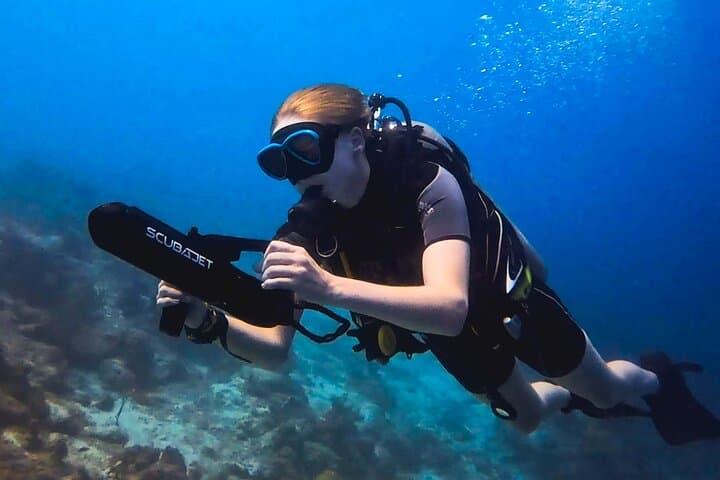

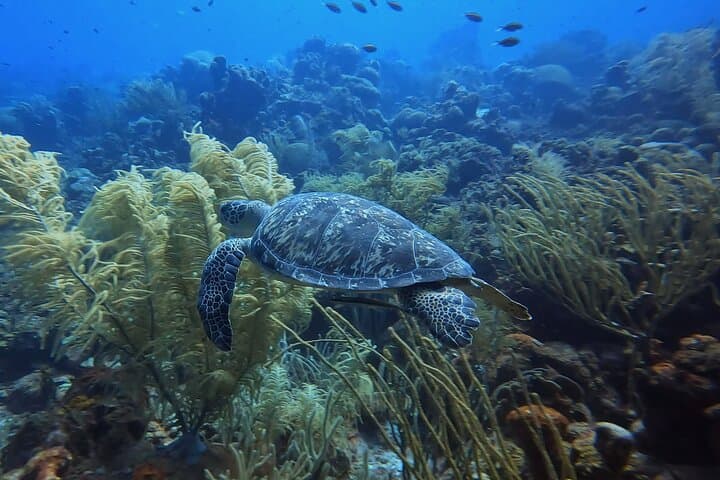

The scooter's soft hum pushes you forward as turquoise light strips through the water; reef ridges slide past like a living map. At Director's Bay the current teases you seaward and the DPV (diver propulsion vehicle) lets you answer that call—covering more reef, finding drop-offs, and spending longer time at interesting features because your air lasts.
The scooter's soft hum pushes you forward as turquoise light strips through the water; reef ridges slide past like a living map. At Director's Bay the current teases you seaward and the DPV (diver propulsion vehicle) lets you answer that call—covering more reef, finding drop-offs, and spending longer time at interesting features because your air lasts.
Director's Bay sits on Curaçao’s fringing reef system carved from ancient limestone and coral growth. The reef here shows classic Caribbean structure: shallow patch reefs, deeper ledges, and corals built on volcanic foundations that rise from the seabed. Curaçao’s maritime culture—Papiamentu-speaking fishers, Dutch colonial ports—has long leaned on these waters for food and transport, and modern dive operators now protect and interpret that heritage for visitors.
Locally you’ll notice small reefs that hold garden eels, nurse sharks in sand channels, and schools of angelfish patrolling coral heads. The DPV experience changes the rhythm of a dive: it’s less about finning and more about reading current, maintaining trim, and letting the scooter do the work so you can look for macro life and survey walls.
Practical guidance: arrive well-rested and hydrated for the two-hour session, attend the pre-dive DPV briefing (propulsion handling and emergency stops), and rely on the center’s valet service to manage cylinders and gear. Equalize early on descent, stay close to your buddy, and conserve energy—DPVs extend range but require situational awareness around reef and other divers. This is a focused, efficient way to see more of Curaçao’s reefs in a single dive.