THE ADVENTURE COLLECTIVE® · Independent discovery and booking for outdoor travel

Explore downtown Tucson on a guided mural and history walking tour that blends street art, local stories, and a stop for tea and pastry. Perfect for visitors and locals wanting context behind the city’s most striking public art.
Explore downtown Tucson on a guided mural and history walking tour that blends street art, local stories, and a stop for tea and pastry. Perfect for visitors and locals wanting context behind the city’s most striking public art.
The tour begins in the courtyard of the historic Congress Hotel, where the air smells faintly of coffee and pastry and downtown Tucson hums with a steady, sun-warmed rhythm. Guides steer the group into alleyways and broad avenues alike, stopping at walls that dare you to look closer—murals that shout local pride, portraits that fold personal histories into public space.
Verified experiences and guided adventures in the surrounding area.
The tour begins in the courtyard of the historic Congress Hotel, where the air smells faintly of coffee and pastry and downtown Tucson hums with a steady, sun-warmed rhythm. Guides steer the group into alleyways and broad avenues alike, stopping at walls that dare you to look closer—murals that shout local pride, portraits that fold personal histories into public space.
Tucson’s streets are layered with history: Spanish presidios, 19th-century rail hubs and the clay soils of the Sonoran Basin beneath your feet. The murals themselves are a contemporary chapter of that story—community-driven works that reflect Indigenous, Mexican and Anglo influences and the city’s evolving cultural identity. Architecturally, you’ll pass restored train terminals and Spanish Colonial Revival façades whose tilework and domes point to Tucson’s long colonial legacy.
Culturally, the walk is equal parts art appreciation and urban anthropology. Guides share why specific pieces were commissioned, who painted them and how neighborhoods rallied to preserve or reimagine public space. Expect practical local intel too: the best spots for photos, a recommended café for afterward, and how to read mural iconography tied to local events.
Practical guidance: the route covers roughly 1.5–2 miles on mostly flat city sidewalks; wear supportive shoes and dress for sun—shade is intermittent. A pastry and tea stop breaks the walk about midway; bring a refillable water bottle, sunscreen and a phone charged for photos. Tours move at an easy pace but include several standing stops for stories and Q&A—ideal for visitors and residents looking to connect with Tucson’s living street art scene.
easy.
2–3 hours.
Suitable for most fitness levels; requires walking 1.5–2 miles on even sidewalks
The tour runs about 2.5 hours and covers roughly 1.5–2 miles on mostly flat sidewalks with several short stops.
Yes; the pace is gentle and stops are frequent, but participants should be able to walk short distances and stand for commentary.
A hand-crafted tea or coffee and a fresh pastry are provided at the first stop; additional purchases are optional.
Tours can be canceled for extreme weather; check with the operator in advance—refund policies may be strict.
Downtown Tucson grew from a Spanish presidio and later a railroad hub; many restored buildings reflect early 20th-century boom-era architecture.
Murals are community assets—respect private walls and avoid touching paint; support local businesses and guides who help fund preservation efforts.
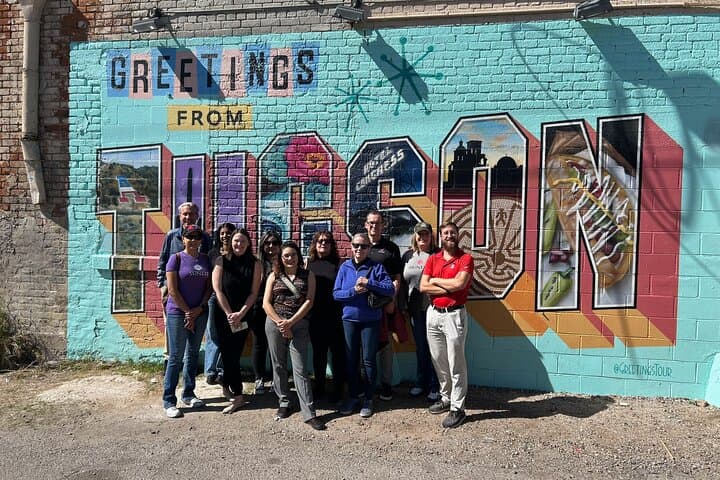
The tour begins in the courtyard of the historic Congress Hotel, where the air smells faintly of coffee and pastry and downtown Tucson hums with a steady, sun-warmed rhythm. Guides steer the group into alleyways and broad avenues alike, stopping at walls that dare you to look closer—murals that shout local pride, portraits that fold personal histories into public space.
The tour begins in the courtyard of the historic Congress Hotel, where the air smells faintly of coffee and pastry and downtown Tucson hums with a steady, sun-warmed rhythm. Guides steer the group into alleyways and broad avenues alike, stopping at walls that dare you to look closer—murals that shout local pride, portraits that fold personal histories into public space.
Tucson’s streets are layered with history: Spanish presidios, 19th-century rail hubs and the clay soils of the Sonoran Basin beneath your feet. The murals themselves are a contemporary chapter of that story—community-driven works that reflect Indigenous, Mexican and Anglo influences and the city’s evolving cultural identity. Architecturally, you’ll pass restored train terminals and Spanish Colonial Revival façades whose tilework and domes point to Tucson’s long colonial legacy.
Culturally, the walk is equal parts art appreciation and urban anthropology. Guides share why specific pieces were commissioned, who painted them and how neighborhoods rallied to preserve or reimagine public space. Expect practical local intel too: the best spots for photos, a recommended café for afterward, and how to read mural iconography tied to local events.
Practical guidance: the route covers roughly 1.5–2 miles on mostly flat city sidewalks; wear supportive shoes and dress for sun—shade is intermittent. A pastry and tea stop breaks the walk about midway; bring a refillable water bottle, sunscreen and a phone charged for photos. Tours move at an easy pace but include several standing stops for stories and Q&A—ideal for visitors and residents looking to connect with Tucson’s living street art scene.