THE ADVENTURE COLLECTIVE® · Independent discovery and booking for outdoor travel

Explore Tucson’s founding streets on a two-hour guided walk through El Presidio and downtown. Hear 4,000 years of Indigenous and colonial history, Henry Trost architecture, and local tales that bring the desert city to life.
Explore Tucson’s founding streets on a two-hour guided walk through El Presidio and downtown. Hear 4,000 years of Indigenous and colonial history, Henry Trost architecture, and local tales that bring the desert city to life.
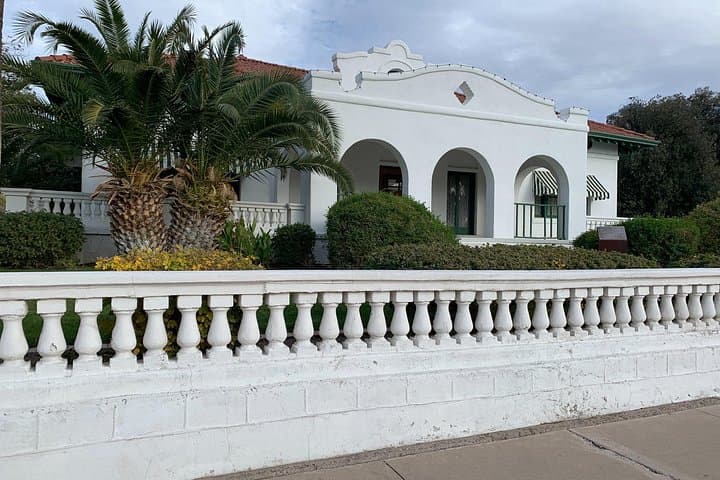
You step off the sidewalk into a city that still argues with the desert — adobe walls radiating heat, palm fronds scratching a slow rhythm, and a guide who makes buildings speak. The Downtown Tucson and El Presidio walking tour moves at a conversational pace, threading through 18th- and 19th-century streets where Spanish colonial foundations meet mid-century storefronts.
Verified experiences and guided adventures in the surrounding area.
Operated by Strolls and Stories Tours · Tucson, Arizona
You step off the sidewalk into a city that still argues with the desert — adobe walls radiating heat, palm fronds scratching a slow rhythm, and a guide who makes buildings speak. The Downtown Tucson and El Presidio walking tour moves at a conversational pace, threading through 18th- and 19th-century streets where Spanish colonial foundations meet mid-century storefronts.
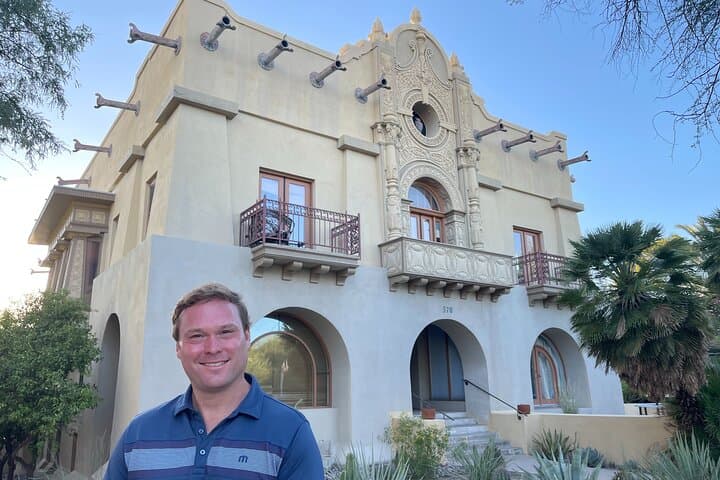
This route traces Tucson’s origins as the 1775 Spanish Presidio and points to evidence of 4,000 years of Indigenous occupancy. Stone and mud adobe reveal practical geology — sun‑dried bricks shaped for shade and thermal mass — while Trost-designed facades show an early 20th‑century pivot to regional modernism. Cultural beats arrive in small doses: the El Presidio neighborhood’s social clubs, the Steinfeld Mansion’s merchant legacy, and El Charro Café’s culinary longevity.
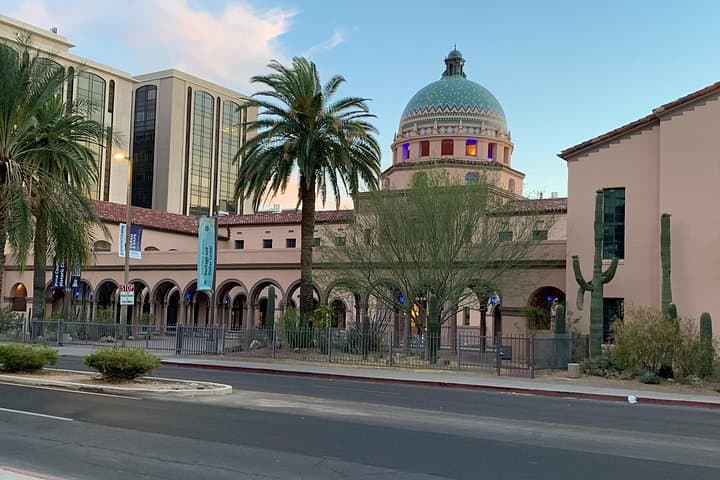
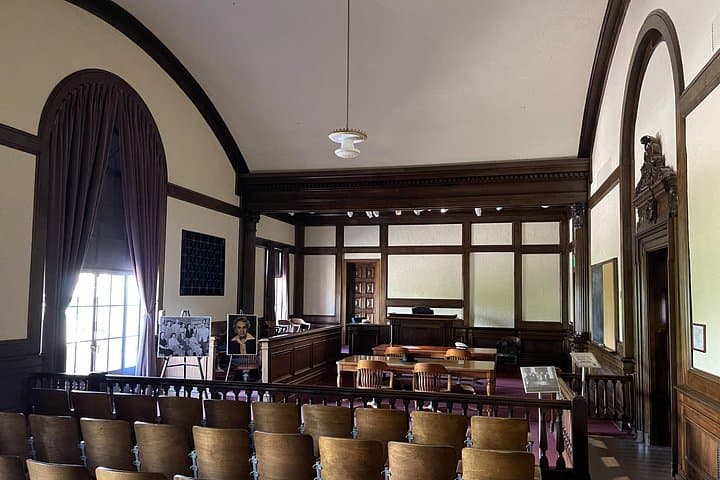
Expect a mix of on‑street storytelling and short stops inside plazas or outside notable buildings. The tour often pauses at the Historic Pima County Courthouse to recount the Dillinger capture and at murals that mark Tucson’s evolving public art scene. Creatures of the city — quail and sparrows — dart like punctuation through tales of commerce and conflict.
Practical guidance: bring a refillable water bottle and sun protection; sidewalks are mostly flat but can be uneven near older structures. Morning or late-afternoon start times beat both heat and tourist crowds. The tour is accessible to most fitness levels, family-friendly, and offers a compact primer on how climate, commerce, and culture shaped one of the Southwest’s oldest continuously inhabited places.
easy.
2 hours.
Suitable for most fitness levels; light walking on paved surfaces with short standing stops.
The tour assembles in central downtown Tucson — your booking confirmation lists the exact public meeting spot near the courthouse or a named plaza.
The route is generally stroller-friendly with mostly paved sidewalks; accessibility depends on curb cuts at some historic blocks — contact the operator to confirm specific needs.
Tours run in most weather; for full refunds cancel at least 24 hours in advance. In extreme heat guides may adjust pace or recommend earlier start times.
The tour primarily passes by landmarks with a few brief interior or courtyard visits (e.g., Pima County Courthouse) noted in the itinerary.
Tucson began as the Spanish Presidio of San Augustin in 1775 but rests on millennia of Indigenous occupation; downtown layers Spanish, Mexican, territorial and 20th‑century American development.
Downtown preservation efforts focus on maintaining historic adobe facades and adaptive reuse to reduce demolition; visitors can support sustainability by staying on sidewalks, avoiding climbing on structures, and conserving water in the desert city.
Strolls and Stories Tours operates guided outdoor trips and adventures with an emphasis on safety, stewardship, and memorable experiences.
You step off the sidewalk into a city that still argues with the desert — adobe walls radiating heat, palm fronds scratching a slow rhythm, and a guide who makes buildings speak. The Downtown Tucson and El Presidio walking tour moves at a conversational pace, threading through 18th- and 19th-century streets where Spanish colonial foundations meet mid-century storefronts.
You step off the sidewalk into a city that still argues with the desert — adobe walls radiating heat, palm fronds scratching a slow rhythm, and a guide who makes buildings speak. The Downtown Tucson and El Presidio walking tour moves at a conversational pace, threading through 18th- and 19th-century streets where Spanish colonial foundations meet mid-century storefronts.
This route traces Tucson’s origins as the 1775 Spanish Presidio and points to evidence of 4,000 years of Indigenous occupancy. Stone and mud adobe reveal practical geology — sun‑dried bricks shaped for shade and thermal mass — while Trost-designed facades show an early 20th‑century pivot to regional modernism. Cultural beats arrive in small doses: the El Presidio neighborhood’s social clubs, the Steinfeld Mansion’s merchant legacy, and El Charro Café’s culinary longevity.
Expect a mix of on‑street storytelling and short stops inside plazas or outside notable buildings. The tour often pauses at the Historic Pima County Courthouse to recount the Dillinger capture and at murals that mark Tucson’s evolving public art scene. Creatures of the city — quail and sparrows — dart like punctuation through tales of commerce and conflict.
Practical guidance: bring a refillable water bottle and sun protection; sidewalks are mostly flat but can be uneven near older structures. Morning or late-afternoon start times beat both heat and tourist crowds. The tour is accessible to most fitness levels, family-friendly, and offers a compact primer on how climate, commerce, and culture shaped one of the Southwest’s oldest continuously inhabited places.