THE ADVENTURE COLLECTIVE® · Independent discovery and booking for outdoor travel

Walk downtown Tucson with historian Jim Turner as your audio guide. This self-guided GPS tour moves from the Presidio through Main Avenue’s historic mansions, offering architecture, local lore, and practical tips for a 60–75 minute stroll.
Walk downtown Tucson with historian Jim Turner as your audio guide. This self-guided GPS tour moves from the Presidio through Main Avenue’s historic mansions, offering architecture, local lore, and practical tips for a 60–75 minute stroll.
Begin on the sunlit flagstones outside the Presidio San Agustín del Tucson Museum and let the pavement become a timeline. The VoiceMap audio tour, narrated by historian Jim Turner, guides walkers past brick and adobe façades, shaded courtyard thresholds, and the broad porches of Main Avenue mansions—each stop an architectural sentence in Tucson’s story.
Verified experiences and guided adventures in the surrounding area.
Operated by VoiceMap Audio Tours · Tucson, Arizona
Begin on the sunlit flagstones outside the Presidio San Agustín del Tucson Museum and let the pavement become a timeline. The VoiceMap audio tour, narrated by historian Jim Turner, guides walkers past brick and adobe façades, shaded courtyard thresholds, and the broad porches of Main Avenue mansions—each stop an architectural sentence in Tucson’s story.
This route traces layers of human occupation: Hohokam and prehistoric communities gave way to Spanish military planning in the late 1700s when the presidio anchored a settlement. Geology shows in the baked-clay adobe and locally fired brick; the Sonoran Desert’s climate shaped porches, deep eaves, and courtyards designed for summer shade. Culturally, the walk threads Mexican, Anglo, and indigenous influences—stop at El Charro Café to hear about foodways as civic memory.
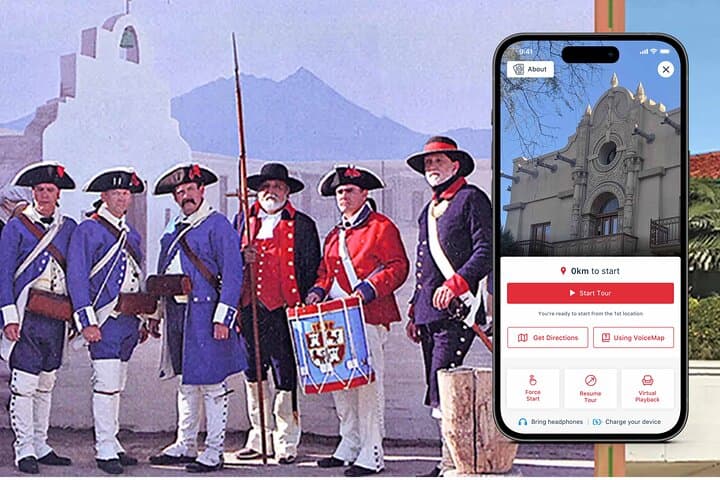
Practical guidance follows the narration: the tour is self-paced and GPS-triggered, running roughly 60–75 minutes if you keep moving, longer if you linger at museums, cafés, and galleries. Download the VoiceMap app and enter your tour code before you leave to ensure offline playback; headphones are essential for clear audio amid city noise. Wear comfortable shoes—the route is flat but covers several blocks of urban sidewalk—and carry water in warmer months. Start early to avoid midafternoon heat and to see light fall across carved woodwork and stucco.
The experience is urban, historical, and tactile—an invitation to read the city’s built fabric while getting the practical, turn-by-turn directions that make self-guided exploration simple and reliable.
easy.
1–1.25 hours.
Suitable for most fitness levels; requires steady walking on paved sidewalks for an hour or more.
Plan for 60–75 minutes of walking; allow extra time if you stop at museums, shops, or cafés.
No—download the tour in the VoiceMap app beforehand for offline audio and maps.
The tour starts outside the Presidio San Agustín del Tucson Museum and ends in front of El Charro Café.
The walk follows city sidewalks and is generally stroller-friendly; accessibility can vary by exact curb cuts—check local crossings.
Downtown grew around the Presidio San Agustín, a Spanish fort established in the late 1700s that anchored Tucson’s transformation from a village to a territorial town.
Preservation efforts focus on maintaining adobe structures and historic facades; visitors can help by staying on sidewalks, avoiding photographing private interiors, and supporting local conservation groups.
VoiceMap Audio Tours operates guided outdoor trips and adventures with an emphasis on safety, stewardship, and memorable experiences.
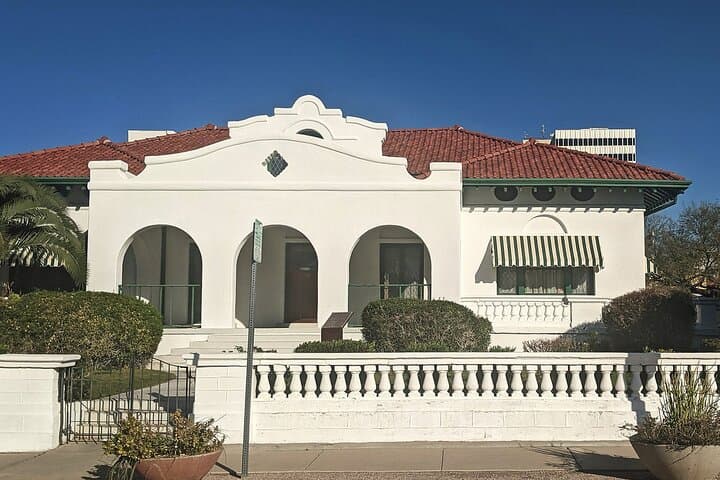
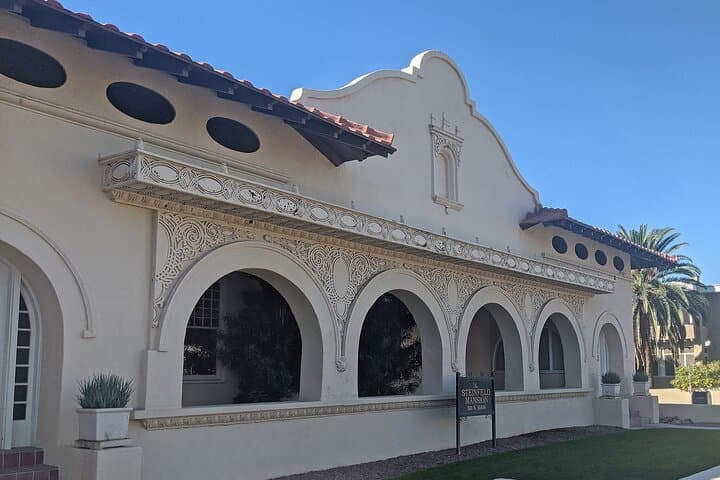
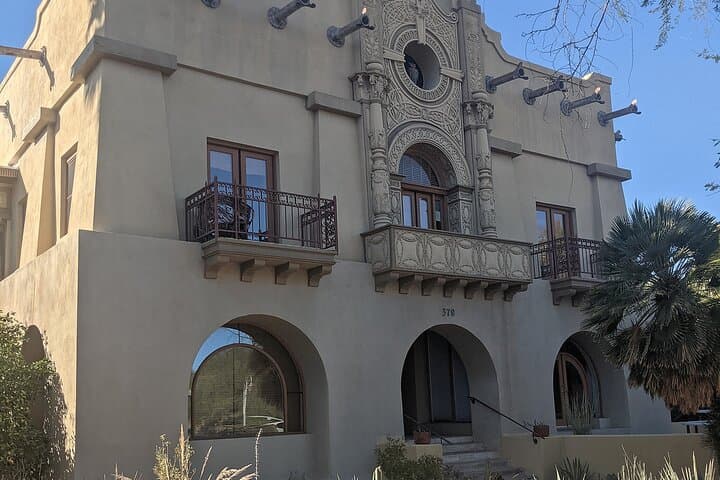
Begin on the sunlit flagstones outside the Presidio San Agustín del Tucson Museum and let the pavement become a timeline. The VoiceMap audio tour, narrated by historian Jim Turner, guides walkers past brick and adobe façades, shaded courtyard thresholds, and the broad porches of Main Avenue mansions—each stop an architectural sentence in Tucson’s story.
Begin on the sunlit flagstones outside the Presidio San Agustín del Tucson Museum and let the pavement become a timeline. The VoiceMap audio tour, narrated by historian Jim Turner, guides walkers past brick and adobe façades, shaded courtyard thresholds, and the broad porches of Main Avenue mansions—each stop an architectural sentence in Tucson’s story.
This route traces layers of human occupation: Hohokam and prehistoric communities gave way to Spanish military planning in the late 1700s when the presidio anchored a settlement. Geology shows in the baked-clay adobe and locally fired brick; the Sonoran Desert’s climate shaped porches, deep eaves, and courtyards designed for summer shade. Culturally, the walk threads Mexican, Anglo, and indigenous influences—stop at El Charro Café to hear about foodways as civic memory.
Practical guidance follows the narration: the tour is self-paced and GPS-triggered, running roughly 60–75 minutes if you keep moving, longer if you linger at museums, cafés, and galleries. Download the VoiceMap app and enter your tour code before you leave to ensure offline playback; headphones are essential for clear audio amid city noise. Wear comfortable shoes—the route is flat but covers several blocks of urban sidewalk—and carry water in warmer months. Start early to avoid midafternoon heat and to see light fall across carved woodwork and stucco.
The experience is urban, historical, and tactile—an invitation to read the city’s built fabric while getting the practical, turn-by-turn directions that make self-guided exploration simple and reliable.