THE ADVENTURE COLLECTIVE® · Independent discovery and booking for outdoor travel

Explore downtown Tampa on a 90–120 minute walking tour that visits Fort Brooke’s historic site, the University of Tampa’s Plant Hall, the 1926 Tampa Theatre, and the Riverwalk. Expect flat, accessible sidewalks, frequent interpretive stops, and a strong sense of local history.
Explore downtown Tampa on a 90–120 minute walking tour that visits Fort Brooke’s historic site, the University of Tampa’s Plant Hall, the 1926 Tampa Theatre, and the Riverwalk. Expect flat, accessible sidewalks, frequent interpretive stops, and a strong sense of local history.
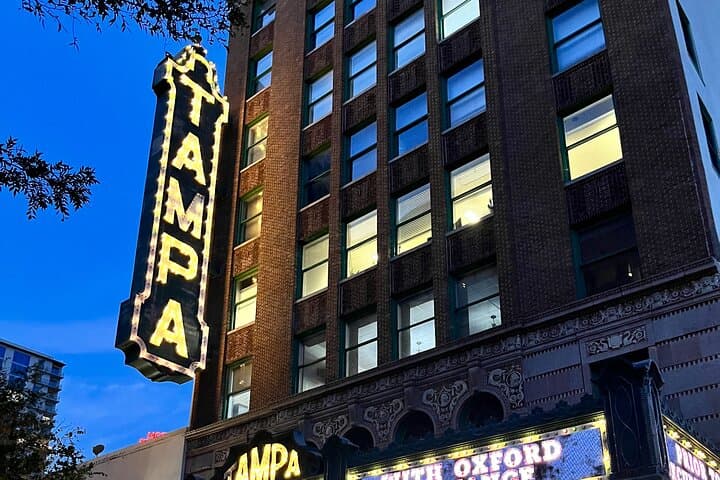
The group gathers under the shade of southern live oaks, the Hillsborough River glinting like a strip of pewter that dares you to look longer. On this 90–120 minute walk, downtown Tampa unfolds block by block: the castellated mass of Plant Hall perched at the University of Tampa, the ornate marquee of the 1926 Tampa Theatre, and the broad green of Curtis Hixon Park leading to a riverside promenade.
Verified experiences and guided adventures in the surrounding area.
Operated by The Official Downtown Tampa Ghost Tour · Tampa, Florida
The group gathers under the shade of southern live oaks, the Hillsborough River glinting like a strip of pewter that dares you to look longer. On this 90–120 minute walk, downtown Tampa unfolds block by block: the castellated mass of Plant Hall perched at the University of Tampa, the ornate marquee of the 1926 Tampa Theatre, and the broad green of Curtis Hixon Park leading to a riverside promenade.
This area reads as layered history. Fort Brooke’s 19th‑century footprint gave the city its military and commercial origins; Henry B. Plant’s railway and steamship investments reshaped Tampa into a Gulf Coast hub, and early 20th‑century theaters and hotels signal the city’s growth into a modern port. Geologically, the low coastal plain and tidal Hillsborough shaped settlement patterns—wetlands were filled, and the river channel today frames civic spaces. Culturally, downtown mixes Cuban and Spanish influences with more recent revitalization efforts around the Riverwalk.
Practical guidance: expect mostly flat, paved sidewalks and a moderate urban stroll with frequent stops for interpretation. Bring a refillable water bottle, sun protection, and comfortable walking shoes; the Tampa streetcar runs nearby and offers a free, convenient meeting point at Fort Brooke Garage. Tours are stroller and wheelchair accessible—check weather and sunscreen in summer, and plan for occasional summer showers.
By the end you’ll have walked the spine of Tampa’s civic life—where currents, architecture, and commerce push the city forward—and left with a clearer sense of how a river and a few determined entrepreneurs shaped the place you’ve just explored.
easy.
1.5–2 hours.
Suitable for most fitness levels; requires standing and walking up to two hours on flat urban sidewalks.
The tour runs approximately 90–120 minutes, depending on group pace and time spent at stops.
Yes—sidewalks and primary stops are accessible, and the operator notes wheelchair and stroller accessibility.
Meet at the Fort Brooke Garage (Streetcar stop #11) in front of the Downtown YMCA; the free Tampa Streetcar is a convenient connector.
No—this is an exterior and interpretive walking tour; admissions to indoor attractions are not included.
Fort Brooke established the federal military presence that directed early settlement; Henry B. Plant’s investments in rail and steamship lines turned Tampa into a commercial gateway in the late 19th century.
The Riverwalk and park restorations focus on shoreline stabilization and native plantings; visitors are encouraged to stay on paths and pack out litter to protect river habitats.
The Official Downtown Tampa Ghost Tour operates guided outdoor trips and adventures with an emphasis on safety, stewardship, and memorable experiences.
The group gathers under the shade of southern live oaks, the Hillsborough River glinting like a strip of pewter that dares you to look longer. On this 90–120 minute walk, downtown Tampa unfolds block by block: the castellated mass of Plant Hall perched at the University of Tampa, the ornate marquee of the 1926 Tampa Theatre, and the broad green of Curtis Hixon Park leading to a riverside promenade.
The group gathers under the shade of southern live oaks, the Hillsborough River glinting like a strip of pewter that dares you to look longer. On this 90–120 minute walk, downtown Tampa unfolds block by block: the castellated mass of Plant Hall perched at the University of Tampa, the ornate marquee of the 1926 Tampa Theatre, and the broad green of Curtis Hixon Park leading to a riverside promenade.
This area reads as layered history. Fort Brooke’s 19th‑century footprint gave the city its military and commercial origins; Henry B. Plant’s railway and steamship investments reshaped Tampa into a Gulf Coast hub, and early 20th‑century theaters and hotels signal the city’s growth into a modern port. Geologically, the low coastal plain and tidal Hillsborough shaped settlement patterns—wetlands were filled, and the river channel today frames civic spaces. Culturally, downtown mixes Cuban and Spanish influences with more recent revitalization efforts around the Riverwalk.
Practical guidance: expect mostly flat, paved sidewalks and a moderate urban stroll with frequent stops for interpretation. Bring a refillable water bottle, sun protection, and comfortable walking shoes; the Tampa streetcar runs nearby and offers a free, convenient meeting point at Fort Brooke Garage. Tours are stroller and wheelchair accessible—check weather and sunscreen in summer, and plan for occasional summer showers.
By the end you’ll have walked the spine of Tampa’s civic life—where currents, architecture, and commerce push the city forward—and left with a clearer sense of how a river and a few determined entrepreneurs shaped the place you’ve just explored.