THE ADVENTURE COLLECTIVE® · Independent discovery and booking for outdoor travel

Walk San Francisco’s CBD with a guide who folds history, design and public art into a 2½-hour route from Mechanics Monument Plaza to SFMOMA. Learn how seismic geology, civic investment and recent park projects shape the look and use of the downtown core.
Walk San Francisco’s CBD with a guide who folds history, design and public art into a 2½-hour route from Mechanics Monument Plaza to SFMOMA. Learn how seismic geology, civic investment and recent park projects shape the look and use of the downtown core.
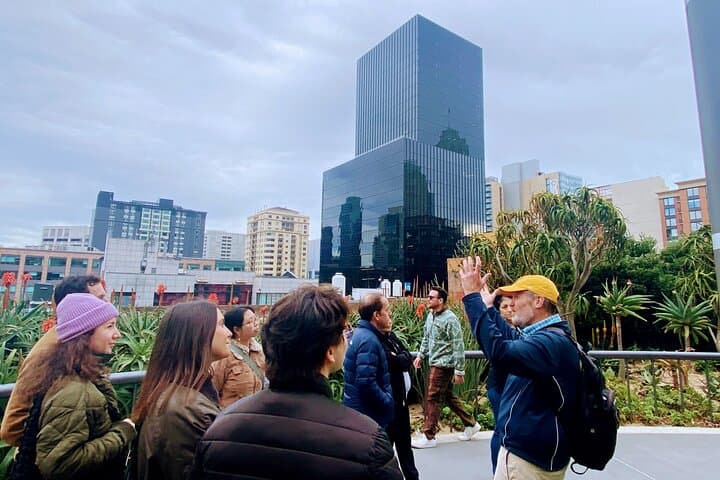
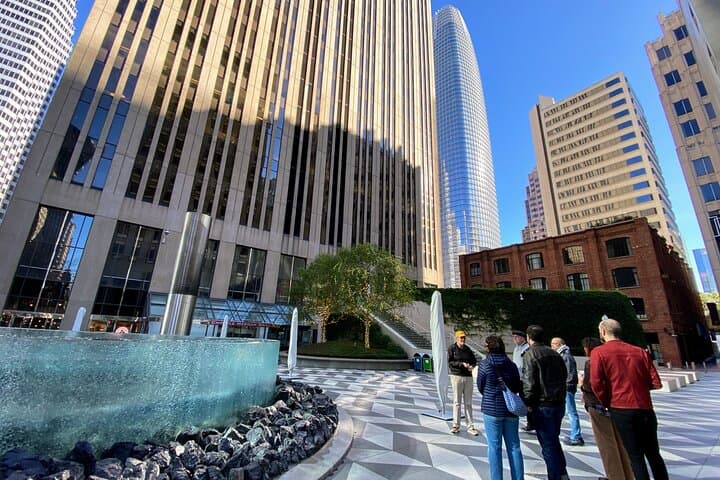
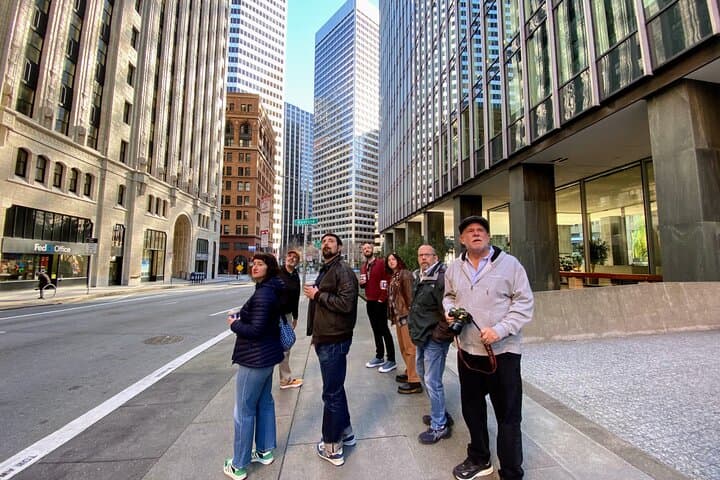
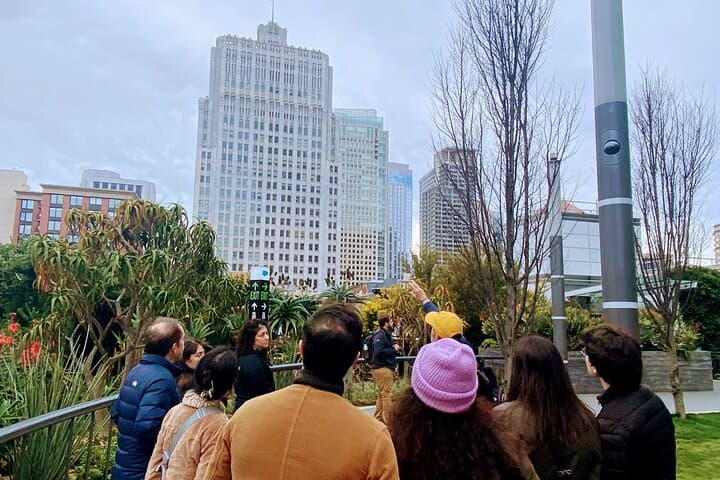
You meet your guide in front of Mechanics Monument Plaza, the roar of Market Street at your back and a skyline that keeps changing as you walk. Glass towers reflect older masonry façades; steel-sculpted artworks punctuate plazas; the rooftop garden at the Salesforce Transit Center peeks above the bustle like a suspended meadow. The tour moves deliberately through downtown's civic spine, giving the city’s public art and architecture room to breathe.
Verified experiences and guided adventures in the surrounding area.
Operated by igniTours · San Francisco, California
You meet your guide in front of Mechanics Monument Plaza, the roar of Market Street at your back and a skyline that keeps changing as you walk. Glass towers reflect older masonry façades; steel-sculpted artworks punctuate plazas; the rooftop garden at the Salesforce Transit Center peeks above the bustle like a suspended meadow. The tour moves deliberately through downtown's civic spine, giving the city’s public art and architecture room to breathe.
This part of San Francisco grew fast during the Gold Rush and again during the postwar commercial boom, so downtown stitches together 19th‑century bank buildings and late‑20th‑century glass towers. Geologically the city sits on folded bedrock and fill—downtown blocks are close to reclaimed baylands—so many buildings respond to seismic realities with reinforced frames and retrofits you’ll learn about. Culturally, an aggressive public art program and recent park projects, notably Salesforce Park’s 5½ acres, have reframed streets as civic spaces rather than mere conduits.
Expect roughly 1.5–2 miles of pavement walking over 2½ hours with minimal elevation gain (under 100 ft). The guide points out landmark pieces by George Rickey, Jenny Holzer, and Frank Stella, explains municipal art funding, and drops you at SFMOMA where you can continue on your own. Practical notes: comfortable shoes, layered clothing, and a charged phone for photos and transit. Midweek mornings are quieter; summer weekends draw crowds. The experience is largely accessible, informative, and geared to people who want context with their city stroll.
easy.
2–3 hours.
Suitable for most fitness levels; requires standing and walking for the duration.
Yes—most surfaces and plazas on the route are wheelchair accessible; inform the operator of any needs when booking.
SFMOMA admission is not included by default, but the guide can arrange and drop you at the museum to continue on your own.
Shared tours are capped around 15 people and are conducted in English.
Expect about 1.5–2 miles of walking with under 100 feet of cumulative elevation gain—mostly flat city streets and plazas.
Downtown reflects rapid 19th‑century commercial growth and later 20th‑century modernist and corporate architecture; many bank façades and civic artworks date to those waves.
City-led programs maintain public art and green roofs like Salesforce Park; using transit and staying on paved paths helps reduce wear on planted areas.
igniTours operates guided outdoor trips and adventures with an emphasis on safety, stewardship, and memorable experiences.
You meet your guide in front of Mechanics Monument Plaza, the roar of Market Street at your back and a skyline that keeps changing as you walk. Glass towers reflect older masonry façades; steel-sculpted artworks punctuate plazas; the rooftop garden at the Salesforce Transit Center peeks above the bustle like a suspended meadow. The tour moves deliberately through downtown's civic spine, giving the city’s public art and architecture room to breathe.
You meet your guide in front of Mechanics Monument Plaza, the roar of Market Street at your back and a skyline that keeps changing as you walk. Glass towers reflect older masonry façades; steel-sculpted artworks punctuate plazas; the rooftop garden at the Salesforce Transit Center peeks above the bustle like a suspended meadow. The tour moves deliberately through downtown's civic spine, giving the city’s public art and architecture room to breathe.
This part of San Francisco grew fast during the Gold Rush and again during the postwar commercial boom, so downtown stitches together 19th‑century bank buildings and late‑20th‑century glass towers. Geologically the city sits on folded bedrock and fill—downtown blocks are close to reclaimed baylands—so many buildings respond to seismic realities with reinforced frames and retrofits you’ll learn about. Culturally, an aggressive public art program and recent park projects, notably Salesforce Park’s 5½ acres, have reframed streets as civic spaces rather than mere conduits.
Expect roughly 1.5–2 miles of pavement walking over 2½ hours with minimal elevation gain (under 100 ft). The guide points out landmark pieces by George Rickey, Jenny Holzer, and Frank Stella, explains municipal art funding, and drops you at SFMOMA where you can continue on your own. Practical notes: comfortable shoes, layered clothing, and a charged phone for photos and transit. Midweek mornings are quieter; summer weekends draw crowds. The experience is largely accessible, informative, and geared to people who want context with their city stroll.