THE ADVENTURE COLLECTIVE® · Independent discovery and booking for outdoor travel

Walk through Johannesburg’s center with a guide who links gold-rush geology to constitutional history. This 2–3 hour downtown tour includes lunch, bottled water and stops in Braamfontein, Newtown and Constitution Hill.
Walk through Johannesburg’s center with a guide who links gold-rush geology to constitutional history. This 2–3 hour downtown tour includes lunch, bottled water and stops in Braamfontein, Newtown and Constitution Hill.
You step off the tram, the city unfolding in hard-edged blocks of stone and glass, and the guide threads you through alleys where political slogans still mark the walls. Streets smell of frying oil and strong coffee; traffic hums like a distant tide. This is downtown Johannesburg—raw, layered and insistently alive.
Verified experiences and guided adventures in the surrounding area.
Operated by Honest Travel Experience · Johannesburg, Gauteng
You step off the tram, the city unfolding in hard-edged blocks of stone and glass, and the guide threads you through alleys where political slogans still mark the walls. Streets smell of frying oil and strong coffee; traffic hums like a distant tide. This is downtown Johannesburg—raw, layered and insistently alive.
The tour moves from Braamfontein’s reinvigorated side streets toward Newtown and Constitution Hill, tracing the arc from 1886 gold rush boomtown to the site of South Africa’s highest court. Architecture here is pragmatic: Edwardian market halls repurposed for theatre, industrial bridges crossing railway arteries, and memorials that map apartheid’s legal geography. Geology underfoot is the same Witwatersrand ridge that made the city—quartz reefs that birthed a metropolis.
Cultural threads are immediate: market stalls selling local braai spices, township jazz whispered in a doorway, and the Market Theatre’s legacy of resistance. Guides balance hard history with on-the-street context, answering why inequality and migration shaped this fabric.
Practical guidance: wear comfortable, closed-toe shoes for uneven sidewalks; carry a refillable water bottle (lunch and bottled water included); bring a light layer for early morning or windy days. The route is largely flat but active urban walking—expect 2–3 hours on foot with short vehicle transfers. Photography is welcome but be respectful around sensitive memorial sites and private property. Safety is managed by sticking with the group, following the guide’s lead, and keeping valuables secure. By the time lunch arrives, you’ll have a clearer sense of what made Johannesburg, and what keeps it changing.
easy.
2–3 hours.
Suitable for most fitness levels; participants should be able to stand and walk on city streets for up to three hours.
Yes—lunch and bottled water are included with the tour; the menu reflects local flavors and modest portions suitable for a midday stop.
The tour notes wheelchair accessibility for surfaces visited, but contact the operator ahead to confirm suitable transfer arrangements and meeting points.
Full refunds are available if you cancel at least 24 hours before the scheduled departure time; no refund within 24 hours.
Guides prioritize safety by keeping groups together, using daytime routes in active districts, and providing context about perceived risks—follow their instructions and avoid wandering after hours.
Johannesburg expanded rapidly after the 1886 Witwatersrand gold discovery; many downtown sites reflect industrial growth and the later struggle for constitutional rights.
Support local businesses and guides to keep tourism revenue in the community, and avoid single-use plastics—litter and informal dumping are local environmental concerns.
Honest Travel Experience operates guided outdoor trips and adventures with an emphasis on safety, stewardship, and memorable experiences.
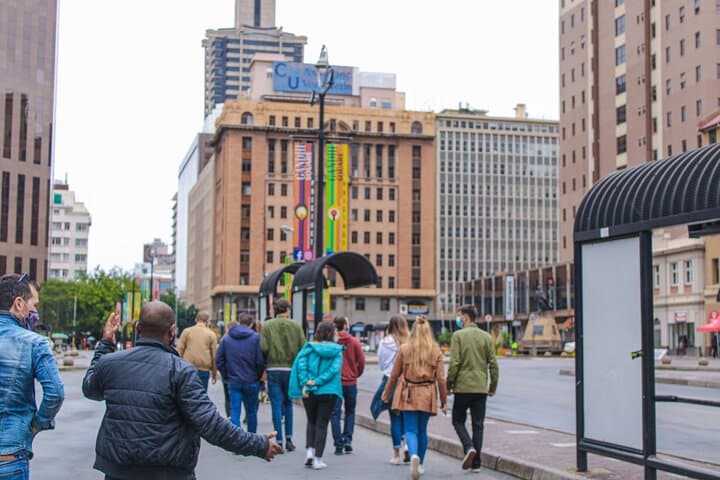
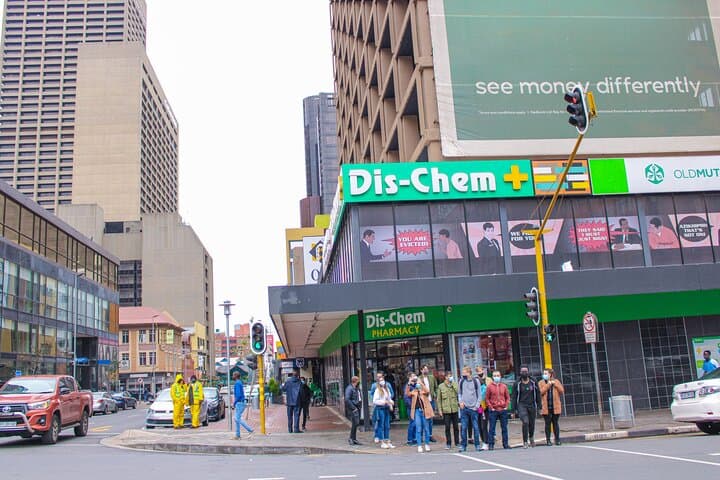
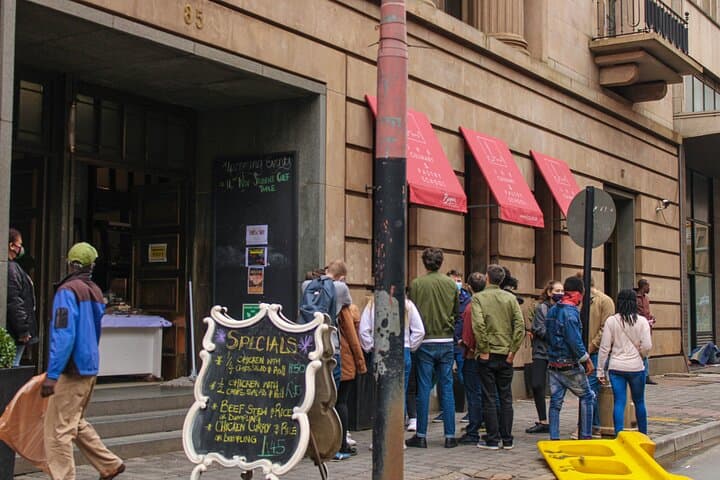
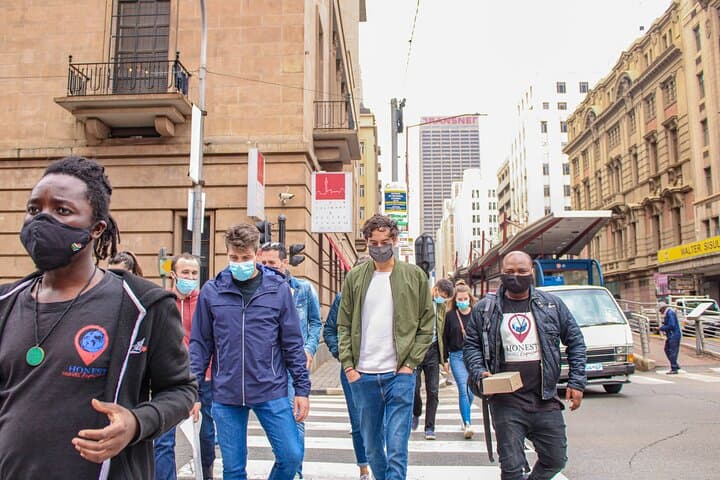
You step off the tram, the city unfolding in hard-edged blocks of stone and glass, and the guide threads you through alleys where political slogans still mark the walls. Streets smell of frying oil and strong coffee; traffic hums like a distant tide. This is downtown Johannesburg—raw, layered and insistently alive.
You step off the tram, the city unfolding in hard-edged blocks of stone and glass, and the guide threads you through alleys where political slogans still mark the walls. Streets smell of frying oil and strong coffee; traffic hums like a distant tide. This is downtown Johannesburg—raw, layered and insistently alive.
The tour moves from Braamfontein’s reinvigorated side streets toward Newtown and Constitution Hill, tracing the arc from 1886 gold rush boomtown to the site of South Africa’s highest court. Architecture here is pragmatic: Edwardian market halls repurposed for theatre, industrial bridges crossing railway arteries, and memorials that map apartheid’s legal geography. Geology underfoot is the same Witwatersrand ridge that made the city—quartz reefs that birthed a metropolis.
Cultural threads are immediate: market stalls selling local braai spices, township jazz whispered in a doorway, and the Market Theatre’s legacy of resistance. Guides balance hard history with on-the-street context, answering why inequality and migration shaped this fabric.
Practical guidance: wear comfortable, closed-toe shoes for uneven sidewalks; carry a refillable water bottle (lunch and bottled water included); bring a light layer for early morning or windy days. The route is largely flat but active urban walking—expect 2–3 hours on foot with short vehicle transfers. Photography is welcome but be respectful around sensitive memorial sites and private property. Safety is managed by sticking with the group, following the guide’s lead, and keeping valuables secure. By the time lunch arrives, you’ll have a clearer sense of what made Johannesburg, and what keeps it changing.