THE ADVENTURE COLLECTIVE® · Independent discovery and booking for outdoor travel

Roll off Ubud’s rim and coast through jungle lanes, coffee plantations and rice terraces on a guided downhill ride from Kintamani. Expect cultural stops, a coffee tasting, and 2.5 hours of mostly downhill cycling with local lunch included.
Roll off Ubud’s rim and coast through jungle lanes, coffee plantations and rice terraces on a guided downhill ride from Kintamani. Expect cultural stops, a coffee tasting, and 2.5 hours of mostly downhill cycling with local lunch included.
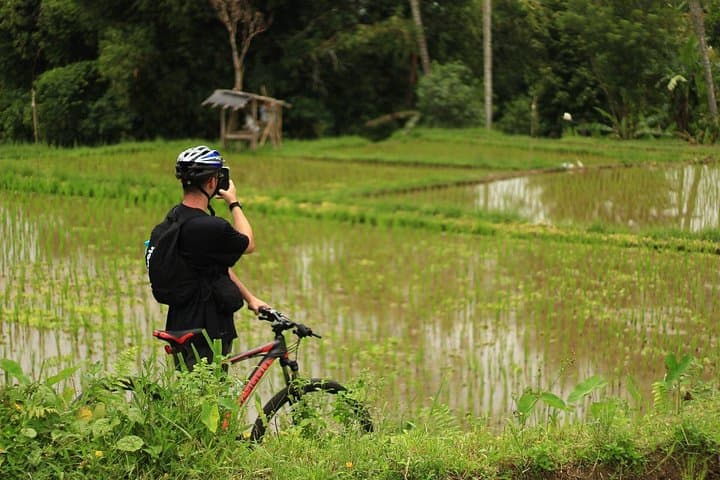
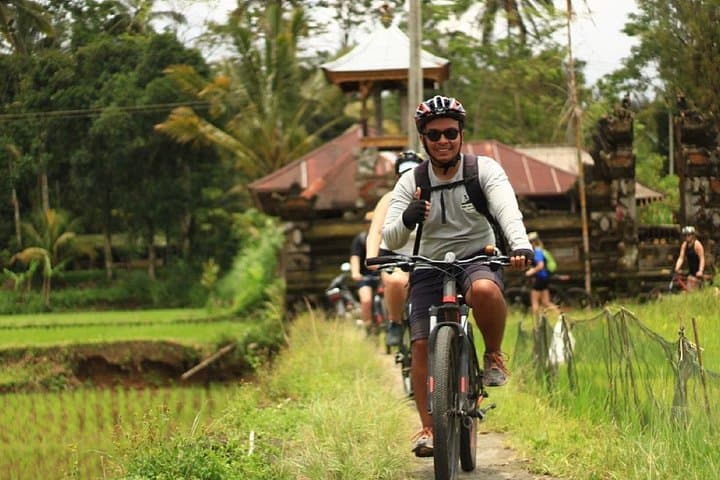
The ride begins when the valley is still cool and the road smells of wet earth and coffee. Rolled out from an Ubud pickup, you crest the rim country above Kintamani and pause for a view of the jagged volcano before the bikes are readied. For the next 2.5 hours the world leans downhill: narrow lanes threaded through coconut palms, farm tracks that drop into rice paddies, and the occasional village where roosters and scooters compete for space.
Verified experiences and guided adventures in the surrounding area.
Operated by The Trip Bali · Ubud, Bali
The ride begins when the valley is still cool and the road smells of wet earth and coffee. Rolled out from an Ubud pickup, you crest the rim country above Kintamani and pause for a view of the jagged volcano before the bikes are readied. For the next 2.5 hours the world leans downhill: narrow lanes threaded through coconut palms, farm tracks that drop into rice paddies, and the occasional village where roosters and scooters compete for space.
This corridor north of Ubud sits on recent volcanic soils from Mount Batur; terraced rice fields and subak irrigation channels reflect centuries of Balinese agrarian practice and Hindu temple stewardship. Small family compounds along the route offer a window into daily life—traditional bale houses, offerings at shrines, and coffee-processing huts where Luwak and Arabica blends are prepared.
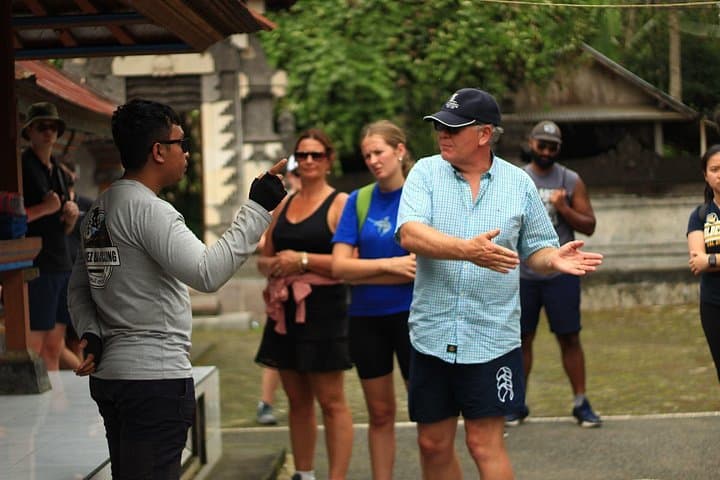
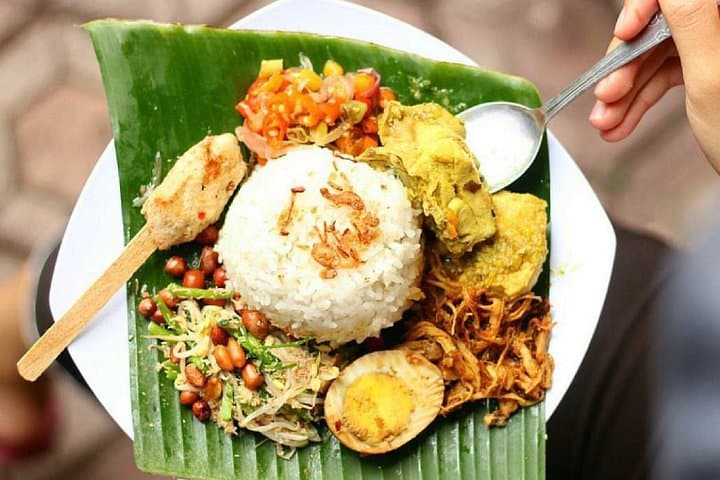
Practical details are straightforward: expect roughly 15–25 km of mostly downhill riding with several hundred meters of net descent over paved and compact dirt surfaces. Guides typically provide helmets and a short safety briefing; basic bike-handling and confident braking on mixed surfaces are important. The tour includes breakfast at a local house, a coffee plantation stop, a visit to a family compound and a buffet lunch with Nasi Campur. Start early to avoid midday heat and traffic; carry a refillable water bottle, light layers for cooler mornings, sunscreen and a small repair kit. Roads can be slippery after rain—choose wider tires and check brakes before you descend. The experience balances easy pace cultural stops with the focused attention required on winding rural descents.
moderate.
6 hours.
Moderate—comfortable sitting and pedaling for 2–3 hours, able to handle descents and short climbs
Yes—operators typically supply helmets and bicycles; confirm sizes at booking and request infant seats if needed.
The route is marketed as suitable for most fitness levels, but riders should be comfortable braking and maneuvering on narrow downhill roads.
Guides usually speak English and Bahasa Indonesia; multilingual guides may be available on request.
Breakfast and a buffet-style Balinese lunch (often Nasi Campur), plus bottled water; dietary requests can usually be accommodated with advance notice.
The area’s terraced rice fields are managed through the centuries-old subak system tied to Balinese Hindu irrigation temples, reflecting communal water governance.
Stay on designated lanes and avoid stepping into terraces; local guides encourage supporting village economies and minimizing plastic waste.
The Trip Bali operates guided outdoor trips and adventures with an emphasis on safety, stewardship, and memorable experiences.
The ride begins when the valley is still cool and the road smells of wet earth and coffee. Rolled out from an Ubud pickup, you crest the rim country above Kintamani and pause for a view of the jagged volcano before the bikes are readied. For the next 2.5 hours the world leans downhill: narrow lanes threaded through coconut palms, farm tracks that drop into rice paddies, and the occasional village where roosters and scooters compete for space.
The ride begins when the valley is still cool and the road smells of wet earth and coffee. Rolled out from an Ubud pickup, you crest the rim country above Kintamani and pause for a view of the jagged volcano before the bikes are readied. For the next 2.5 hours the world leans downhill: narrow lanes threaded through coconut palms, farm tracks that drop into rice paddies, and the occasional village where roosters and scooters compete for space.
This corridor north of Ubud sits on recent volcanic soils from Mount Batur; terraced rice fields and subak irrigation channels reflect centuries of Balinese agrarian practice and Hindu temple stewardship. Small family compounds along the route offer a window into daily life—traditional bale houses, offerings at shrines, and coffee-processing huts where Luwak and Arabica blends are prepared.
Practical details are straightforward: expect roughly 15–25 km of mostly downhill riding with several hundred meters of net descent over paved and compact dirt surfaces. Guides typically provide helmets and a short safety briefing; basic bike-handling and confident braking on mixed surfaces are important. The tour includes breakfast at a local house, a coffee plantation stop, a visit to a family compound and a buffet lunch with Nasi Campur. Start early to avoid midday heat and traffic; carry a refillable water bottle, light layers for cooler mornings, sunscreen and a small repair kit. Roads can be slippery after rain—choose wider tires and check brakes before you descend. The experience balances easy pace cultural stops with the focused attention required on winding rural descents.