THE ADVENTURE COLLECTIVE® · Independent discovery and booking for outdoor travel

Make the journey between Dover and London more than a transfer: a private minibus option adds curated photo stops, local insight, and accessible transport between the Port of Dover and major airports. Learn what to expect and how to plan your timing.
Make the journey between Dover and London more than a transfer: a private minibus option adds curated photo stops, local insight, and accessible transport between the Port of Dover and major airports. Learn what to expect and how to plan your timing.
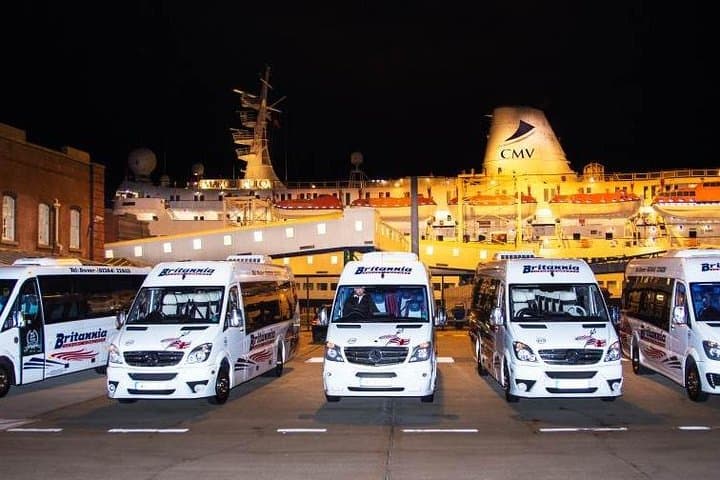
You step off the ferry or cruise ship and the Channel air pulls you toward the white edge of England: the cliffs cut a clean line against a low sky while a driver in a polished minibus waits to move you onward.
Verified experiences and guided adventures in the surrounding area.
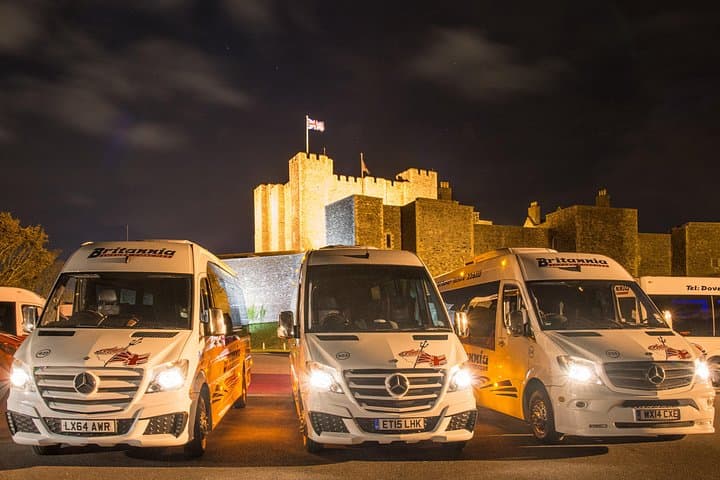
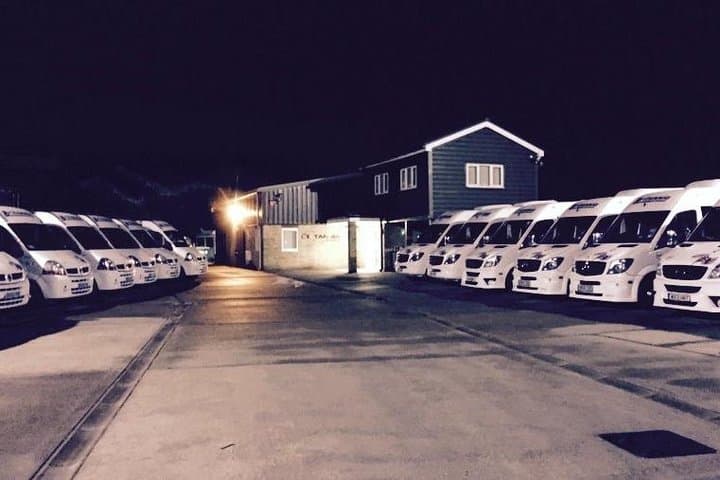
Operated by Britannia Coaches · Dover, England
You step off the ferry or cruise ship and the Channel air pulls you toward the white edge of England: the cliffs cut a clean line against a low sky while a driver in a polished minibus waits to move you onward.
This private Dover–London transfer doubles as a gentle introduction (or farewell) to Kent: short photo stops at the White Cliffs, a slow drive past Dover Castle’s stone keep, and local commentary that threads in centuries of coastal defense and maritime trade. Geologically, the cliffs are Cretaceous chalk—porous, bright, and eroding slowly under the action of sea and weather, which gives the coastline its dramatic profiles.
Culturally, Dover is both port and community: a working ferry terminal, a WWII crossroads, and a string of seaside villages where fishing boats still check the nets. Drivers with local knowledge can point out St Margaret’s Bay, the WWII tunnels beneath the castle, and quieter viewpoints like Samphire Hoe, built from Channel Tunnel spoil.
Practicalities: expect a 2–4 hour window for direct transfers with optional sightseeing stops; London airports are roughly 120–130 km away depending on route and traffic. Vehicles are air-conditioned, wheelchair-accessible on request, and operated by a family-run company with cleanliness measures in place. Book transfers with flight and ship details, allow extra buffer for customs and traffic, and pack a passport, a light layer for coastal wind, and a charged phone for photos and logistics.
easy.
2–4 hours.
Suitable for all fitness levels; the activity is seated transport with short standing/photo stops
Yes—drivers can incorporate brief stops at highlights like the White Cliffs, Dover Castle, or St Margaret’s Bay within the 2–4 hour window if scheduled.
Wheelchair-accessible vehicles are available on request; notify the operator at booking so they can provide suitable equipment and space.
Typical driving time is 2–3 hours to central London depending on traffic; to Heathrow or Gatwick expect 2–4 hours depending on route and congestion.
Full refund is available if you cancel at least 24 hours before departure; cancellations inside that window may not be refunded—check your booking confirmation for details.
Dover has been a defensive gateway for centuries—its castle and wartime tunnels reflect strategic importance from medieval sieges to WWII evacuations.
The chalk cliffs are subject to erosion and fragile habitats; stick to marked paths, avoid cliff edges, and follow local signage to reduce impact.
Britannia Coaches operates guided outdoor trips and adventures with an emphasis on safety, stewardship, and memorable experiences.

You step off the ferry or cruise ship and the Channel air pulls you toward the white edge of England: the cliffs cut a clean line against a low sky while a driver in a polished minibus waits to move you onward.
You step off the ferry or cruise ship and the Channel air pulls you toward the white edge of England: the cliffs cut a clean line against a low sky while a driver in a polished minibus waits to move you onward.
This private Dover–London transfer doubles as a gentle introduction (or farewell) to Kent: short photo stops at the White Cliffs, a slow drive past Dover Castle’s stone keep, and local commentary that threads in centuries of coastal defense and maritime trade. Geologically, the cliffs are Cretaceous chalk—porous, bright, and eroding slowly under the action of sea and weather, which gives the coastline its dramatic profiles.
Culturally, Dover is both port and community: a working ferry terminal, a WWII crossroads, and a string of seaside villages where fishing boats still check the nets. Drivers with local knowledge can point out St Margaret’s Bay, the WWII tunnels beneath the castle, and quieter viewpoints like Samphire Hoe, built from Channel Tunnel spoil.
Practicalities: expect a 2–4 hour window for direct transfers with optional sightseeing stops; London airports are roughly 120–130 km away depending on route and traffic. Vehicles are air-conditioned, wheelchair-accessible on request, and operated by a family-run company with cleanliness measures in place. Book transfers with flight and ship details, allow extra buffer for customs and traffic, and pack a passport, a light layer for coastal wind, and a charged phone for photos and logistics.