THE ADVENTURE COLLECTIVE® · Independent discovery and booking for outdoor travel

Ride a camel at sunset, dine on Berber flatbread around a campfire, and sleep under Sahara stars on a two-day overnight from Douz. This accessible desert camp pairs gentle trekking with authentic local hospitality.
Ride a camel at sunset, dine on Berber flatbread around a campfire, and sleep under Sahara stars on a two-day overnight from Douz. This accessible desert camp pairs gentle trekking with authentic local hospitality.
The sun tilts low over vast ridges of wind-sculpted sand as you swing into the saddle of a patient camel — the dunes around Douz breathe heat and silence, then exhale a cool twilight. Footsteps of the camel mark a slow, steady rhythm while the horizon turns copper and purple; later, the Milky Way spreads so bright it seems to press down on the campfire.
Verified experiences and guided adventures in the surrounding area.
Operated by SAHARANSKY · Douz, Kebili Governorate
The sun tilts low over vast ridges of wind-sculpted sand as you swing into the saddle of a patient camel — the dunes around Douz breathe heat and silence, then exhale a cool twilight. Footsteps of the camel mark a slow, steady rhythm while the horizon turns copper and purple; later, the Milky Way spreads so bright it seems to press down on the campfire.
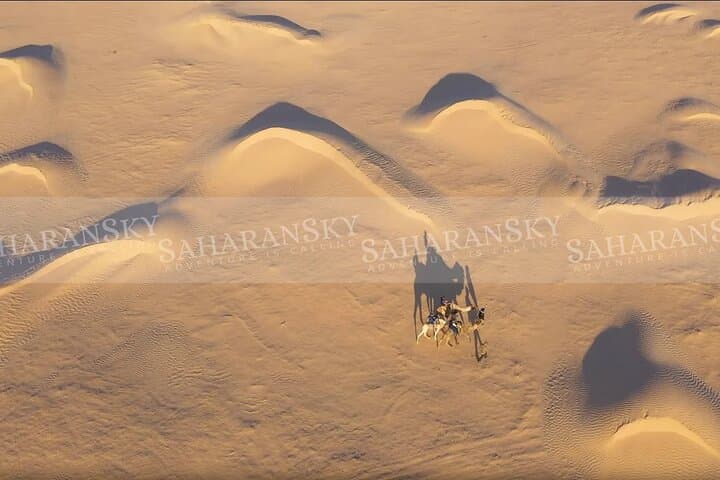
Douz sits on the southern edge of the Tunisian Sahara and has long been a caravan gateway between oases. Geologically, the Sahara here is a mosaic of aeolian dunes and interdunal flats with nearby salt pans that mirror the sky. Culturally, the region is shaped by Berber and Bedouin traditions — expect flatbread cooked over coals, oral stories, and a style of hospitality tied to long desert travel.
Practically, this two-day experience pairs a sunset camel trek with an overnight in a simple desert camp and a sunrise return ride to Douz. Camels are led by local cameleers; tents are basic but sheltered from wind. Temperatures swing dramatically between day and night, and sand makes traction uneven on foot. Bring sun protection, layered insulation for night, and a small daypack for water and personal items.
Timing matters: sunset and sunrise rides offer the best light and cooler temperatures. Respect local customs — modest dress and asking before photographing people. The desert is fragile; stick to established paths, minimize waste, and drink plenty of water. For travelers seeking quiet, clear skies, and a gentle introduction to Sahara travel, the Douz overnight camel camp is an accessible, memorable way to experience the desert’s scale and silence.
easy.
2 days.
Suitable for most people with basic mobility; ability to mount a camel and sit for 1–3 hours is required
The riding itself is low-impact and suitable for most fitness levels; expect periods of mounting and sitting for up to a few hours with occasional short walks.
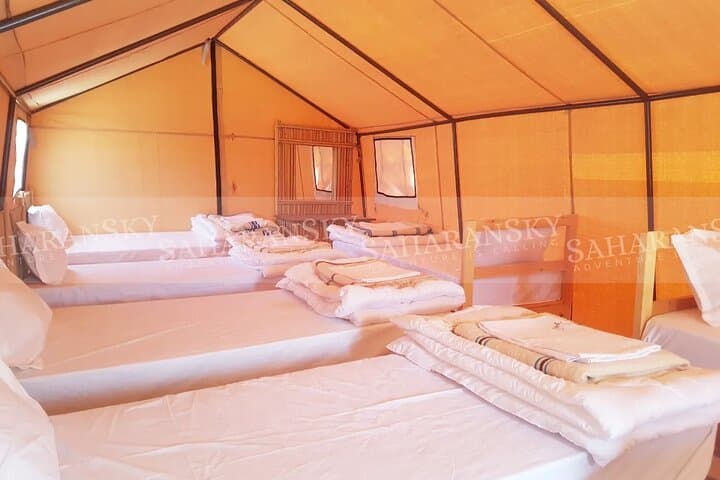
Overnight accommodation is a basic desert camp with tents or shared sleeping areas, bedding provided but minimal — bring a light sleeping liner for comfort if desired.
A traditional Berber dinner and breakfast are provided; notify the operator of dietary restrictions at booking so they can attempt to accommodate them.
Expect limited or no electricity and patchy mobile signal; the experience emphasizes disconnecting, though some camps may offer charging for a fee.
Douz is historically known as the ‘Gateway to the Sahara’ and has been a trading and nomadic travel hub connecting southern Tunisia to deeper desert routes.
The Sahara’s dune systems are fragile; avoid creating new tracks, minimize plastic use, and support local guides who practice low-impact camping.
SAHARANSKY operates guided outdoor trips and adventures with an emphasis on safety, stewardship, and memorable experiences.
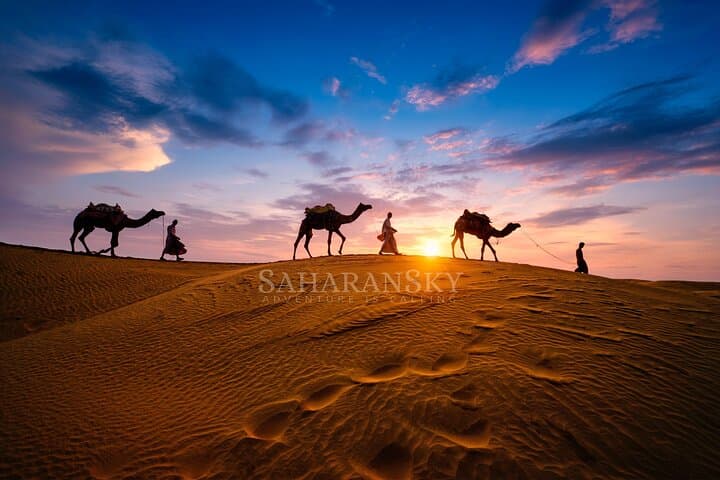
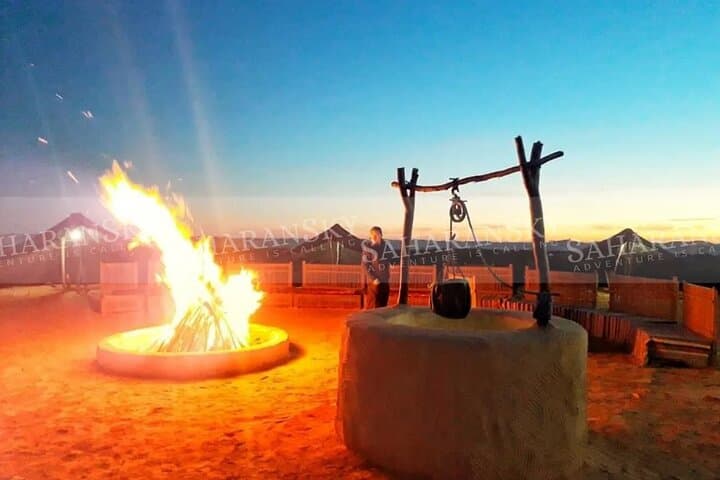
The sun tilts low over vast ridges of wind-sculpted sand as you swing into the saddle of a patient camel — the dunes around Douz breathe heat and silence, then exhale a cool twilight. Footsteps of the camel mark a slow, steady rhythm while the horizon turns copper and purple; later, the Milky Way spreads so bright it seems to press down on the campfire.
The sun tilts low over vast ridges of wind-sculpted sand as you swing into the saddle of a patient camel — the dunes around Douz breathe heat and silence, then exhale a cool twilight. Footsteps of the camel mark a slow, steady rhythm while the horizon turns copper and purple; later, the Milky Way spreads so bright it seems to press down on the campfire.
Douz sits on the southern edge of the Tunisian Sahara and has long been a caravan gateway between oases. Geologically, the Sahara here is a mosaic of aeolian dunes and interdunal flats with nearby salt pans that mirror the sky. Culturally, the region is shaped by Berber and Bedouin traditions — expect flatbread cooked over coals, oral stories, and a style of hospitality tied to long desert travel.
Practically, this two-day experience pairs a sunset camel trek with an overnight in a simple desert camp and a sunrise return ride to Douz. Camels are led by local cameleers; tents are basic but sheltered from wind. Temperatures swing dramatically between day and night, and sand makes traction uneven on foot. Bring sun protection, layered insulation for night, and a small daypack for water and personal items.
Timing matters: sunset and sunrise rides offer the best light and cooler temperatures. Respect local customs — modest dress and asking before photographing people. The desert is fragile; stick to established paths, minimize waste, and drink plenty of water. For travelers seeking quiet, clear skies, and a gentle introduction to Sahara travel, the Douz overnight camel camp is an accessible, memorable way to experience the desert’s scale and silence.