THE ADVENTURE COLLECTIVE® · Independent discovery and booking for outdoor travel

Set off from Porto’s Pier C aboard a classic Hallberg-Rassy motor-sailer for two hours on the Douro. Glide beneath Arrábida and Dom Luís I bridges, pass port wine cellars on Gaia’s banks, and finish at the fishing parish of Afurada.
Set off from Porto’s Pier C aboard a classic Hallberg-Rassy motor-sailer for two hours on the Douro. Glide beneath Arrábida and Dom Luís I bridges, pass port wine cellars on Gaia’s banks, and finish at the fishing parish of Afurada.
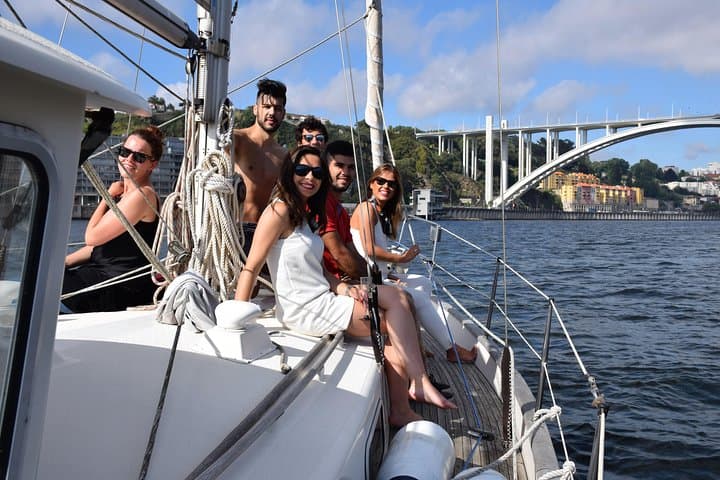
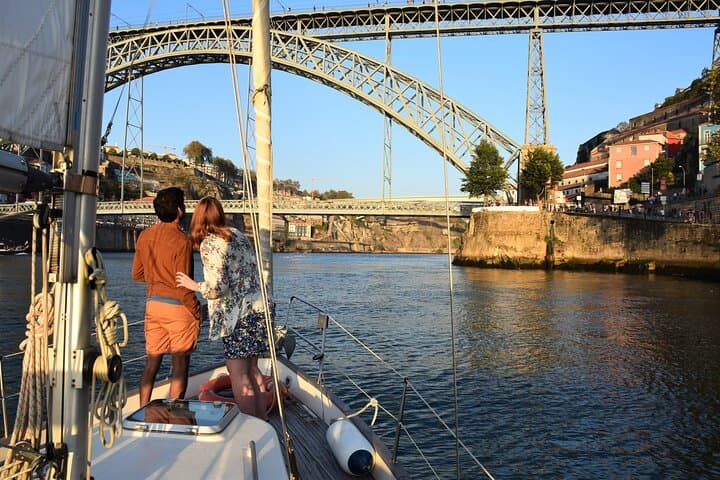
Morning light glances off tile roofs as the Argonauta eases out from Pier C, its white hull cutting a path past the stacked façades of the Ribeira. You feel the river pull you downstream: Dom Luís I’s iron arch and the low sweep of Arrábida bridge frame the city while port houses slide past at eye level — the Dalva of the Douro made visible from the water.
Verified experiences and guided adventures in the surrounding area.
Operated by Mar Douro · Porto, Porto District
Morning light glances off tile roofs as the Argonauta eases out from Pier C, its white hull cutting a path past the stacked façades of the Ribeira. You feel the river pull you downstream: Dom Luís I’s iron arch and the low sweep of Arrábida bridge frame the city while port houses slide past at eye level — the Dalva of the Douro made visible from the water.
The Douro is a working river with deep history: centuries of barge traffic that hauled Port wine from the upper valleys now share the channel with leisure craft. Geologically, the river carves through schist and granite as it reaches the Atlantic, creating steep terraces upstream that gave rise to the wine estates that built Porto’s economy. On the river banks, Vila Nova de Gaia’s cellars and Afurada’s fishing parish keep local maritime culture alive.
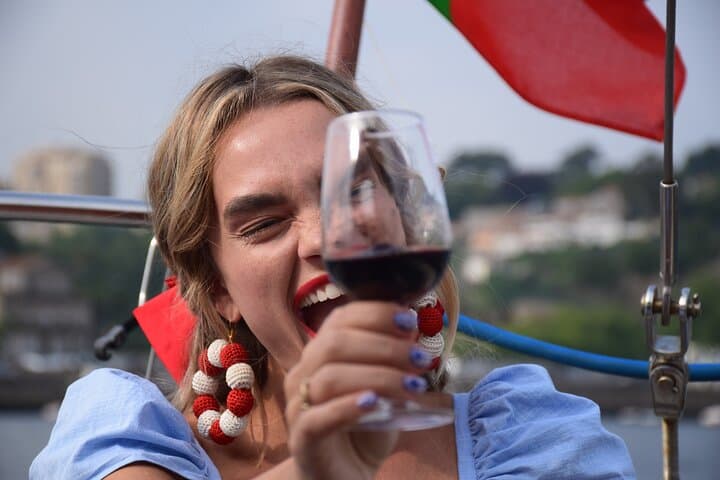
This 31-foot Hallberg-Rassy motor-sailer tour is direct and social: small groups, a local captain, bottled water and a tasting of Port wine punctuate the two-hour loop. Expect steady, low chop, photo-friendly angles of the Dom Luís I and Arrábida bridges, and the chance to disembark at Douro Marina to explore Afurada’s fish taverns.
Practical edge: wear non-slip footwear (no heels), dress in layers for wind off the river, and bring sun protection and a camera with a polarizer for better water shots. Peak light is early morning or late afternoon. The cruise is suitable for most fitness levels, wheelchair-accessible boarding at some piers, and allows snacks and drinks onboard — keep trash packed out to protect the river.
easy.
2 hours.
Suitable for most fitness levels; boarding requires light stepping on/off the dock.
Boarding and disembarking take place at Pier C in central Porto, returning to the same point; the itinerary finishes at Douro Marina near Afurada for optional onshore time.
Yes — snacks and drinks are allowed; the tour also provides bottled water and a Port wine tasting during the cruise.
Yes; the cruise is family-friendly, offers infant seats, and is described as physically easy, though children should be supervised on deck.
Operators may cancel for unsafe conditions; in that case you'll be offered a full refund if canceled at least 24 hours before departure or when weather prevents sailing.
The Douro was the historic artery for Port wine shipments: rabelo boats once carried casks from the vineyards upstream to Gaia’s cellars that aged and exported the wine.
The Douro estuary faces pressure from urban runoff and tourism; visitors are encouraged to avoid single-use plastics and to follow ‘leave no trace’ practices on board.
Mar Douro operates guided outdoor trips and adventures with an emphasis on safety, stewardship, and memorable experiences.
Morning light glances off tile roofs as the Argonauta eases out from Pier C, its white hull cutting a path past the stacked façades of the Ribeira. You feel the river pull you downstream: Dom Luís I’s iron arch and the low sweep of Arrábida bridge frame the city while port houses slide past at eye level — the Dalva of the Douro made visible from the water.
Morning light glances off tile roofs as the Argonauta eases out from Pier C, its white hull cutting a path past the stacked façades of the Ribeira. You feel the river pull you downstream: Dom Luís I’s iron arch and the low sweep of Arrábida bridge frame the city while port houses slide past at eye level — the Dalva of the Douro made visible from the water.
The Douro is a working river with deep history: centuries of barge traffic that hauled Port wine from the upper valleys now share the channel with leisure craft. Geologically, the river carves through schist and granite as it reaches the Atlantic, creating steep terraces upstream that gave rise to the wine estates that built Porto’s economy. On the river banks, Vila Nova de Gaia’s cellars and Afurada’s fishing parish keep local maritime culture alive.
This 31-foot Hallberg-Rassy motor-sailer tour is direct and social: small groups, a local captain, bottled water and a tasting of Port wine punctuate the two-hour loop. Expect steady, low chop, photo-friendly angles of the Dom Luís I and Arrábida bridges, and the chance to disembark at Douro Marina to explore Afurada’s fish taverns.
Practical edge: wear non-slip footwear (no heels), dress in layers for wind off the river, and bring sun protection and a camera with a polarizer for better water shots. Peak light is early morning or late afternoon. The cruise is suitable for most fitness levels, wheelchair-accessible boarding at some piers, and allows snacks and drinks onboard — keep trash packed out to protect the river.