THE ADVENTURE COLLECTIVE® · Independent discovery and booking for outdoor travel

Two guided dives around Elba’s protected reefs deliver close encounters with groupers, amberjack and barracuda. This four-hour boat outing includes a nitrox second dive to increase bottom time and a guided surface interval between sites.
Two guided dives around Elba’s protected reefs deliver close encounters with groupers, amberjack and barracuda. This four-hour boat outing includes a nitrox second dive to increase bottom time and a guided surface interval between sites.
Sunlight cuts through water like a wide, cool corridor as the dive boat eases away from Portoferraio’s harbor. Divers suit up on deck, masks fogging and regulators clicking; within minutes the first descent opens onto sculpted rock walls, sponges and schools of fish that treat the current as a highway.
Verified experiences and guided adventures in the surrounding area.
Operated by Bolle d'Azoto Elba · Portoferraio, Tuscany
Sunlight cuts through water like a wide, cool corridor as the dive boat eases away from Portoferraio’s harbor. Divers suit up on deck, masks fogging and regulators clicking; within minutes the first descent opens onto sculpted rock walls, sponges and schools of fish that treat the current as a highway.
This two-dive excursion visits sites inside the Tuscan Archipelago National Park, including the protected Scoglietto di Portoferraio, where seabed morphology—ancient granite outcrops and sand channels—creates pockets of biodiversity. The archipelago’s geology is a chapter of Mediterranean tectonics: hard igneous outcrops ringed by softer sediments and seagrass meadows. Human history is present too—centuries of fishing, Napoleonic-era harbors and local mariner culture influence how crews operate and where boats moor.
Expect an instructor-led briefing, two guided dives (second on nitrox to extend bottom time), and relaxed surface intervals with snacks and short swims. Marine life is demonstrable: dusky groupers, amberjack and the occasional barracuda patrol reefs; smaller life—morays and wrasse—populate crevices. The guide manages depths, timing and safety; divers should have an Open Water certification and recent experience.
Practical tips: arrive with certification and logbook, use reef-safe sunscreen, hydrate before boarding, and follow the guide’s ascent profiles. Boat decks can be slick—nonmarking soles help. For photographers, plan shutter and exposure for blue water shooting; for all divers, respect the protected zones and avoid touching habitat. The day is compact—about four hours from port to return—offering focused, repeatable dives in one of Europe’s clearest Mediterranean pockets.
moderate.
4 hours.
Comfortable swimmer in good health; able to carry basic scuba gear and perform surface swims during intervals
Yes. This trip is for certified divers only; you must present your Open Water (or higher) certification card and a recent logbook if requested.
Nitrox is used for the second dive to extend bottom time; many operators offer guidance but prefer divers to hold a nitrox endorsement—check with the operator before booking.
Common sightings include dusky grouper, amberjack (ricciola), barracuda, wrasse and moray eels, with frequent schools of snapper and smaller reef fish.
Full refund is typically available if the operator cancels due to weather; guests should cancel at least 24 hours in advance for a refund per the standard policy.
Elba’s harbors and shorelines have long supported Mediterranean fishing communities and were later famous as Napoleon’s place of exile; local maritime traditions still shape dive logistics and boat culture.
Many dive sites fall within the Tuscan Archipelago National Park or integral reserves—use mooring buoys, avoid contact with fauna and follow guide instructions to minimize impact.
Bolle d'Azoto Elba operates guided outdoor trips and adventures with an emphasis on safety, stewardship, and memorable experiences.


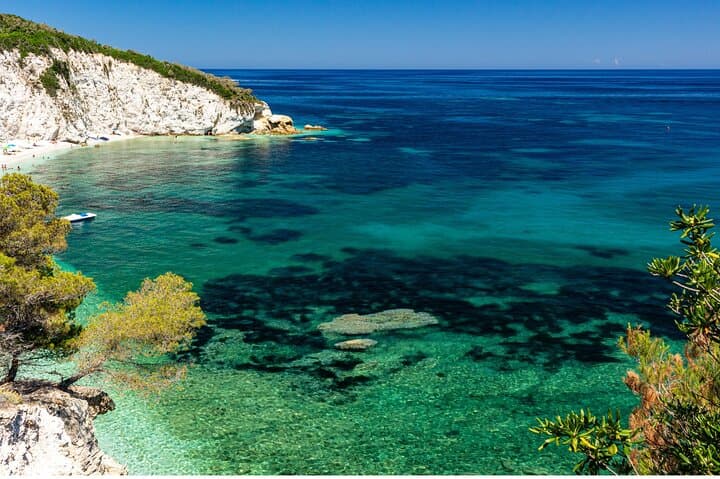
Sunlight cuts through water like a wide, cool corridor as the dive boat eases away from Portoferraio’s harbor. Divers suit up on deck, masks fogging and regulators clicking; within minutes the first descent opens onto sculpted rock walls, sponges and schools of fish that treat the current as a highway.
Sunlight cuts through water like a wide, cool corridor as the dive boat eases away from Portoferraio’s harbor. Divers suit up on deck, masks fogging and regulators clicking; within minutes the first descent opens onto sculpted rock walls, sponges and schools of fish that treat the current as a highway.
This two-dive excursion visits sites inside the Tuscan Archipelago National Park, including the protected Scoglietto di Portoferraio, where seabed morphology—ancient granite outcrops and sand channels—creates pockets of biodiversity. The archipelago’s geology is a chapter of Mediterranean tectonics: hard igneous outcrops ringed by softer sediments and seagrass meadows. Human history is present too—centuries of fishing, Napoleonic-era harbors and local mariner culture influence how crews operate and where boats moor.
Expect an instructor-led briefing, two guided dives (second on nitrox to extend bottom time), and relaxed surface intervals with snacks and short swims. Marine life is demonstrable: dusky groupers, amberjack and the occasional barracuda patrol reefs; smaller life—morays and wrasse—populate crevices. The guide manages depths, timing and safety; divers should have an Open Water certification and recent experience.
Practical tips: arrive with certification and logbook, use reef-safe sunscreen, hydrate before boarding, and follow the guide’s ascent profiles. Boat decks can be slick—nonmarking soles help. For photographers, plan shutter and exposure for blue water shooting; for all divers, respect the protected zones and avoid touching habitat. The day is compact—about four hours from port to return—offering focused, repeatable dives in one of Europe’s clearest Mediterranean pockets.