THE ADVENTURE COLLECTIVE® · Independent discovery and booking for outdoor travel

Two guided dives off the rocky shores of Cascais let certified divers explore reefs, caves and kelp gardens in under three hours. Expect guided briefings, variable visibility, and close encounters with octopus and groupers.
Two guided dives off the rocky shores of Cascais let certified divers explore reefs, caves and kelp gardens in under three hours. Expect guided briefings, variable visibility, and close encounters with octopus and groupers.
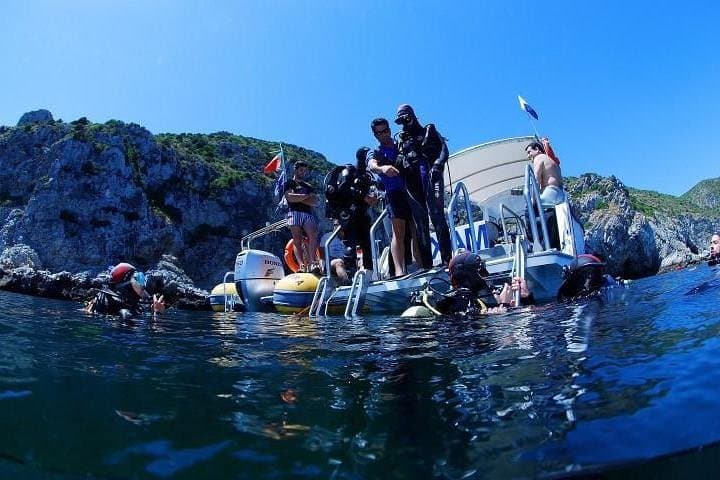
The boat eases out of Cascais harbor and the Atlantic opens like a living map: wind-scoured cliffs to starboard, a ribbon of white surf around granite headlands to port. You feel the swell flexing beneath the hull, the ocean already shaping the rhythm of the day as guides prepare tanks and brief the route.
Verified experiences and guided adventures in the surrounding area.
Operated by Portugal Dive · Cascais, Lisbon
The boat eases out of Cascais harbor and the Atlantic opens like a living map: wind-scoured cliffs to starboard, a ribbon of white surf around granite headlands to port. You feel the swell flexing beneath the hull, the ocean already shaping the rhythm of the day as guides prepare tanks and brief the route.
Cascais grew from a working fishing port into a seaside retreat, but its coastline remains honest—steep rock shelves, reefed outcrops and pocketed caves carved by centuries of waves. Geology here alternates between resilient granite headlands and eroded sedimentary benches; underwater, that translates to ledges, swim-throughs and kelp-draped boulder fields that host small reefs.
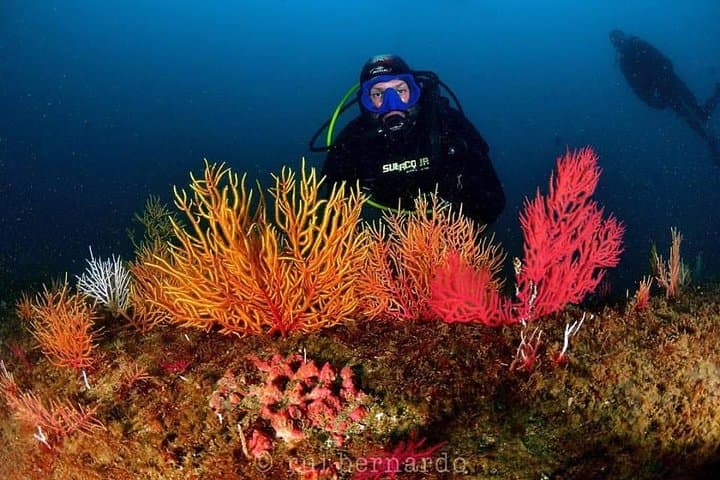
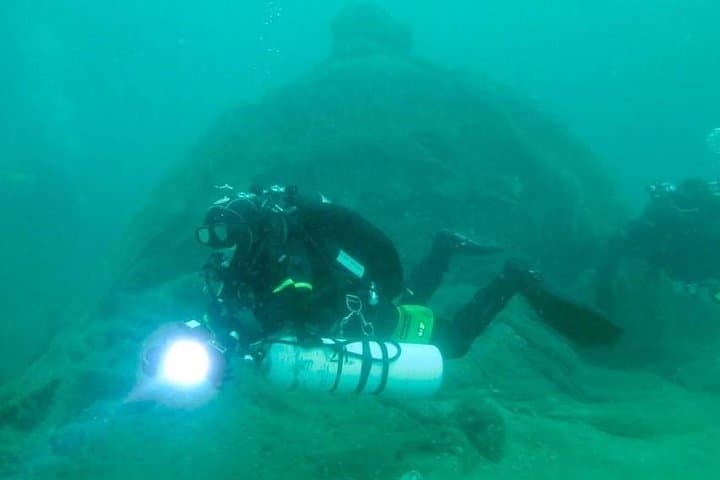
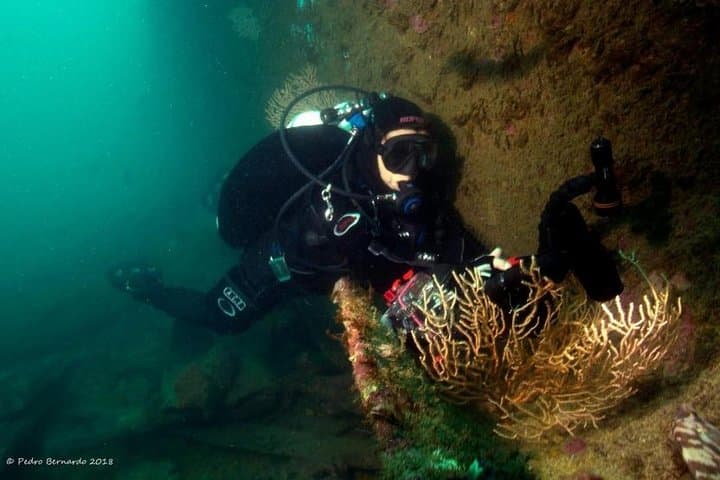
This trip is built for certified divers: expect two dives within a roughly three-hour window, guided briefings, and surface intervals between descents. Typical dive profiles in the area are 10–30 m depths with visibility commonly 5–20 m depending on season and swell. Marine life is compact and lively—octopus, groupers, razorfish and schooling sardines are regulars.
Practical edge: bring your certification card, a dive computer, and a well-fitting suit for Atlantic temperatures (14–22 °C seasonally). Pay attention to briefings about currents and buoyancy—rocky reefs can be fragile. If you’re new to the region, ask the operator about preferred sites (Boca do Inferno and nearby reefs each offer different terrain) and confirm shore vs. boat entry. Respect local conservation rules: photograph, don’t touch. When you surface, the town’s cafés and fish tavernas make it easy to swap logs and photos while the ocean rearranges itself for the next ebb.
moderate.
3 hours.
Moderate fitness; comfortable with repeated descents, surface swims and moving gear on a small boat.
Yes—this double-dive experience is designed for certified divers; if you are not certified ask about supervised try-dives offered separately.
Water typically ranges 14–22 °C depending on season; visibility usually 5–20 m but can vary with swell and plankton.
Sites near Cascais commonly range from 10–30 m; guides choose profiles based on conditions and participant experience.
Basic scuba equipment is usually provided (tanks, regulators, BCDs); confirm any personal gear you prefer to use beforehand.
Cascais evolved from a fishing harbor to a royal and tourist enclave; its maritime culture still shapes local seafood, boat traffic and coastal access points.
Much of the coast sits inside the Sintra‑Cascais protected landscapes; divers are asked to avoid contact with flora and fauna and follow guide instructions to minimize impact.
Portugal Dive operates guided outdoor trips and adventures with an emphasis on safety, stewardship, and memorable experiences.
The boat eases out of Cascais harbor and the Atlantic opens like a living map: wind-scoured cliffs to starboard, a ribbon of white surf around granite headlands to port. You feel the swell flexing beneath the hull, the ocean already shaping the rhythm of the day as guides prepare tanks and brief the route.
The boat eases out of Cascais harbor and the Atlantic opens like a living map: wind-scoured cliffs to starboard, a ribbon of white surf around granite headlands to port. You feel the swell flexing beneath the hull, the ocean already shaping the rhythm of the day as guides prepare tanks and brief the route.
Cascais grew from a working fishing port into a seaside retreat, but its coastline remains honest—steep rock shelves, reefed outcrops and pocketed caves carved by centuries of waves. Geology here alternates between resilient granite headlands and eroded sedimentary benches; underwater, that translates to ledges, swim-throughs and kelp-draped boulder fields that host small reefs.
This trip is built for certified divers: expect two dives within a roughly three-hour window, guided briefings, and surface intervals between descents. Typical dive profiles in the area are 10–30 m depths with visibility commonly 5–20 m depending on season and swell. Marine life is compact and lively—octopus, groupers, razorfish and schooling sardines are regulars.
Practical edge: bring your certification card, a dive computer, and a well-fitting suit for Atlantic temperatures (14–22 °C seasonally). Pay attention to briefings about currents and buoyancy—rocky reefs can be fragile. If you’re new to the region, ask the operator about preferred sites (Boca do Inferno and nearby reefs each offer different terrain) and confirm shore vs. boat entry. Respect local conservation rules: photograph, don’t touch. When you surface, the town’s cafés and fish tavernas make it easy to swap logs and photos while the ocean rearranges itself for the next ebb.