THE ADVENTURE COLLECTIVE® · Independent discovery and booking for outdoor travel

Explore a rare underwater Roman resort on a double dive from Baia. Guided routes take certified divers past mosaics, columns, and statues in shallow, well-preserved ruins just off the Gulf of Pozzuoli.
Explore a rare underwater Roman resort on a double dive from Baia. Guided routes take certified divers past mosaics, columns, and statues in shallow, well-preserved ruins just off the Gulf of Pozzuoli.
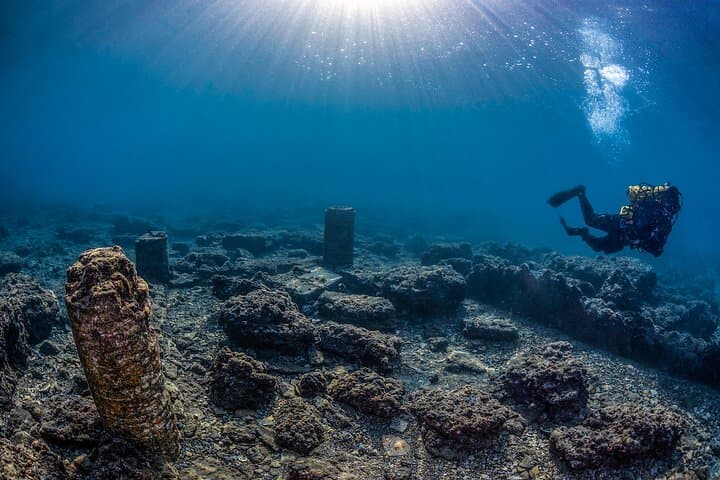
You step off the quay at the Port of Baia with salt on your lips and a harbor wind that seems to push you toward the water. The crew greets you at the Subaia hub, gear is checked, and in less than ten minutes the boat nudges into the blue. At depths of 5–10 meters, columns, mosaics, and marble fragments sit quietly beneath the surface; the sea pulls light across them like a slow shutter.
Verified experiences and guided adventures in the surrounding area.
Operated by SuBaia Diving Center · Baia (Bacoli), Campania
You step off the quay at the Port of Baia with salt on your lips and a harbor wind that seems to push you toward the water. The crew greets you at the Subaia hub, gear is checked, and in less than ten minutes the boat nudges into the blue. At depths of 5–10 meters, columns, mosaics, and marble fragments sit quietly beneath the surface; the sea pulls light across them like a slow shutter.
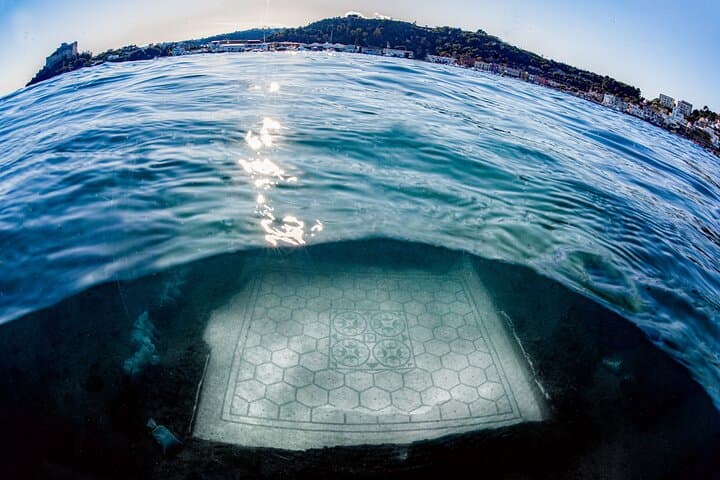
This coastline was once the playground of Rome’s elite. Baia (Baiae) was a thermal resort whose villas and temples gradually sank through bradyseism—Earth’s slow rise and fall—leaving an underwater complex rare in both preservation and scale. Geology here is active: volcanic tuff, submerged quarries, and thermal vents shaped both land and legend. Culturally, the park bridges classical archaeology and modern conservation, with guided dives designed to minimize contact with fragile surfaces.
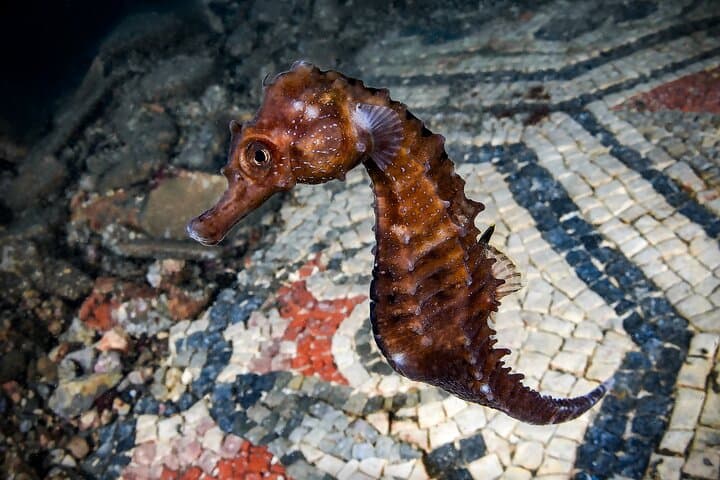
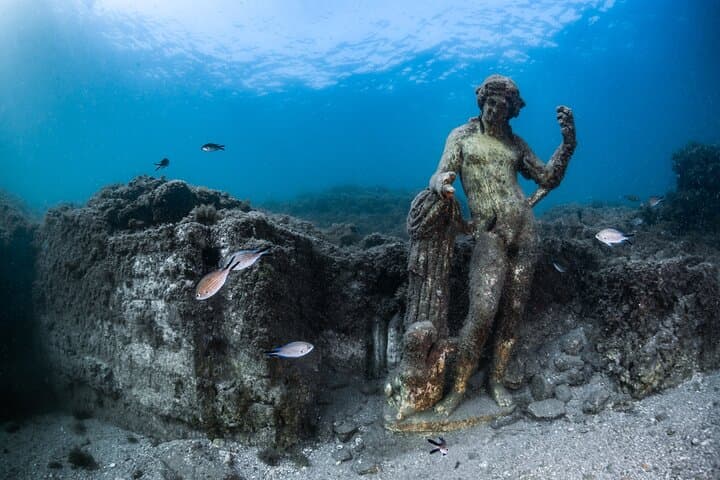
On the water you’ll follow an instructor through mapped routes past the Nymphaeum of Claudius and villa foundations, watching marine life stake claim among marble ruins. Visibility varies with season and currents, so plan for dynamic conditions rather than postcard calm.
Practical guidance: arrive with certification and recent dive log entries, bring a personal mask and dive computer, and expect a 4-hour excursion that includes surface intervals. Equalize early and often—the submerged mosaics reward patience. Respect marked sites, secure loose gear, and keep buoyancy steady to avoid stirring sediment. Book windows with good weather forecasts; the operator cancels in poor sea conditions and enforces a 24‑hour cancellation policy for a full refund.
moderate.
4 hours.
Comfortable swimming ability and basic cardiovascular fitness; must be comfortable equalizing and handling open-water conditions.
Yes—this tour is for certified divers only; you will be asked to show certification and recent dive log entries.
Sites are typically 5–10 meters deep; visibility varies seasonally and with weather but is often 5–20 meters on clear days.
No—touching artifacts is prohibited; guides follow established routes to protect fragile mosaics and structures.
The operator cancels in poor sea conditions and offers a full refund if canceled at least 24 hours before departure; day‑of cancellations occur when unsafe.
Baiae was a Roman thermal resort whose coastal villas and temples subsided over centuries due to bradyseism, leaving an underwater archaeological park unique to the Mediterranean.
Dives operate under site-management rules to limit contact and anchor damage; divers should avoid touching artifacts and follow guide instructions to reduce sediment disturbance.
SuBaia Diving Center operates guided outdoor trips and adventures with an emphasis on safety, stewardship, and memorable experiences.
You step off the quay at the Port of Baia with salt on your lips and a harbor wind that seems to push you toward the water. The crew greets you at the Subaia hub, gear is checked, and in less than ten minutes the boat nudges into the blue. At depths of 5–10 meters, columns, mosaics, and marble fragments sit quietly beneath the surface; the sea pulls light across them like a slow shutter.
You step off the quay at the Port of Baia with salt on your lips and a harbor wind that seems to push you toward the water. The crew greets you at the Subaia hub, gear is checked, and in less than ten minutes the boat nudges into the blue. At depths of 5–10 meters, columns, mosaics, and marble fragments sit quietly beneath the surface; the sea pulls light across them like a slow shutter.
This coastline was once the playground of Rome’s elite. Baia (Baiae) was a thermal resort whose villas and temples gradually sank through bradyseism—Earth’s slow rise and fall—leaving an underwater complex rare in both preservation and scale. Geology here is active: volcanic tuff, submerged quarries, and thermal vents shaped both land and legend. Culturally, the park bridges classical archaeology and modern conservation, with guided dives designed to minimize contact with fragile surfaces.
On the water you’ll follow an instructor through mapped routes past the Nymphaeum of Claudius and villa foundations, watching marine life stake claim among marble ruins. Visibility varies with season and currents, so plan for dynamic conditions rather than postcard calm.
Practical guidance: arrive with certification and recent dive log entries, bring a personal mask and dive computer, and expect a 4-hour excursion that includes surface intervals. Equalize early and often—the submerged mosaics reward patience. Respect marked sites, secure loose gear, and keep buoyancy steady to avoid stirring sediment. Book windows with good weather forecasts; the operator cancels in poor sea conditions and enforces a 24‑hour cancellation policy for a full refund.