THE ADVENTURE COLLECTIVE® · Independent discovery and booking for outdoor travel

Float over Bonaire’s fringing reefs on a 3.5-hour guided snorkel that visits two distinct reef sites. Small groups, a pro photographer, and snacks aboard make this an easy-access marine outing for beginners and experienced snorkelers alike.
Float over Bonaire’s fringing reefs on a 3.5-hour guided snorkel that visits two distinct reef sites. Small groups, a pro photographer, and snacks aboard make this an easy-access marine outing for beginners and experienced snorkelers alike.
You step off Kralendijk's dock into a stiff trade-wind morning and the water takes the day’s light, throwing it back as clean turquoise. A compact charter carries a small group southward; within minutes the shoreline is a line of salt pans and low volcanic rock, and the captain is pointing to a shallow shelf where coral gardens hold their breath.
Verified experiences and guided adventures in the surrounding area.
Operated by Seacow · Kralendijk, Bonaire, Caribbean Netherlands
You step off Kralendijk's dock into a stiff trade-wind morning and the water takes the day’s light, throwing it back as clean turquoise. A compact charter carries a small group southward; within minutes the shoreline is a line of salt pans and low volcanic rock, and the captain is pointing to a shallow shelf where coral gardens hold their breath.
Bonaire's reefs are part of the Bonaire National Marine Park, created in 1979 to protect the island's fringing reefs and seagrass beds. Geologically the coast is old limestone and coral rock, scoured by waves and salt; culturally the island's Dutch-Caribbean mix shows up in harbor-side buildings and casual dive shops that have stewarded these reefs for decades.
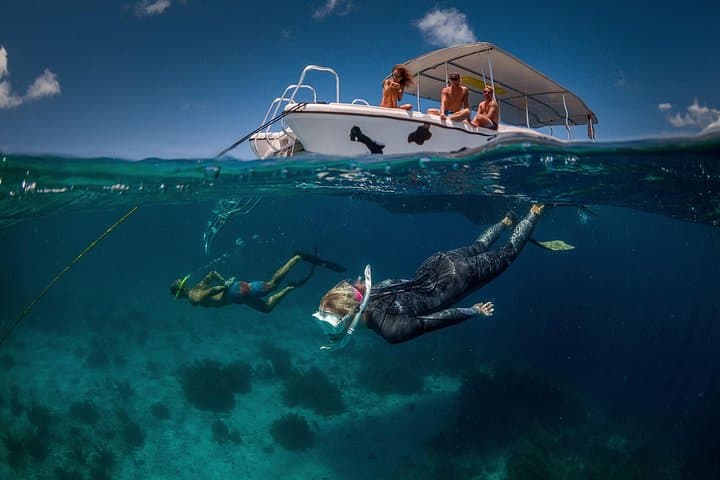
The trip itself is straightforward: 3.5 hours, two distinct snorkel stops chosen for visibility and marine variety, a guide in the water, safety vests, and a professional photographer to capture the action. All basic snorkel gear is provided, including prescription masks if needed, and homemade snacks and rum punch are served aboard. Small groups mean more space on the reef and less churn of fins.
Practical edge: the Stinapa Nature Tag is required (buy ahead at dive shops or online), arrive with reef-safe sunscreen and a short briefing will cover currents and no-touch rules. Morning departures usually offer calmer seas and clearer sightlines. This trip suits beginners and seasoned snorkelers alike who want reliable marine encounters, close-up coral passages, and a few good photos to take home.
easy.
3–4 hours.
Suitable for all fitness levels; must be able to swim short distances and enter/exit a small boat
No — the Stinapa nature tag is required but not included; purchase it at local dive shops or online and bring the receipt aboard.
Yes — small groups and safety vests make this suitable for children who can swim; check operator age limits when booking.
Safety vests are provided and guides stay close; non‑swimmers can still enjoy shallow snorkel areas but should discuss concerns with the operator before departure.
Operators may cancel for sea conditions or insufficient travelers; check the 24‑hour cancellation policy and rescheduling options when you book.
Bonaire established the Bonaire National Marine Park in 1979; local dive operators have long collaborated with Stinapa to protect reefs that support tourism and fisheries.
Follow no‑touch rules, use reef‑safe sunscreen, and respect the Stinapa tag requirement—these small actions help preserve fragile coral and seagrass habitats.
Seacow operates guided outdoor trips and adventures with an emphasis on safety, stewardship, and memorable experiences.
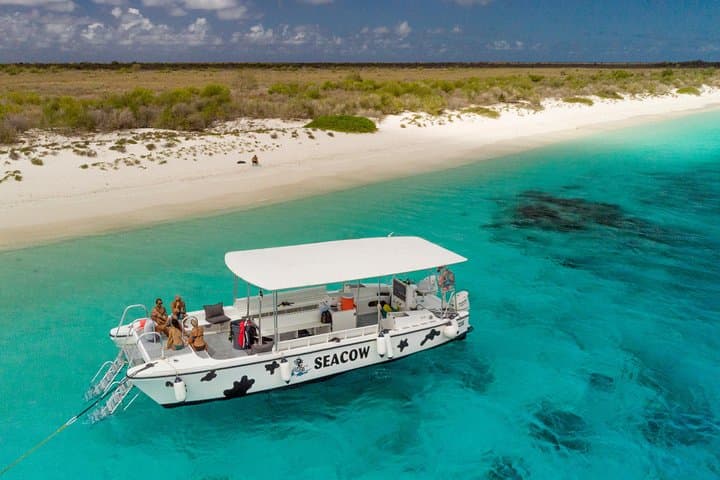


You step off Kralendijk's dock into a stiff trade-wind morning and the water takes the day’s light, throwing it back as clean turquoise. A compact charter carries a small group southward; within minutes the shoreline is a line of salt pans and low volcanic rock, and the captain is pointing to a shallow shelf where coral gardens hold their breath.
You step off Kralendijk's dock into a stiff trade-wind morning and the water takes the day’s light, throwing it back as clean turquoise. A compact charter carries a small group southward; within minutes the shoreline is a line of salt pans and low volcanic rock, and the captain is pointing to a shallow shelf where coral gardens hold their breath.
Bonaire's reefs are part of the Bonaire National Marine Park, created in 1979 to protect the island's fringing reefs and seagrass beds. Geologically the coast is old limestone and coral rock, scoured by waves and salt; culturally the island's Dutch-Caribbean mix shows up in harbor-side buildings and casual dive shops that have stewarded these reefs for decades.
The trip itself is straightforward: 3.5 hours, two distinct snorkel stops chosen for visibility and marine variety, a guide in the water, safety vests, and a professional photographer to capture the action. All basic snorkel gear is provided, including prescription masks if needed, and homemade snacks and rum punch are served aboard. Small groups mean more space on the reef and less churn of fins.
Practical edge: the Stinapa Nature Tag is required (buy ahead at dive shops or online), arrive with reef-safe sunscreen and a short briefing will cover currents and no-touch rules. Morning departures usually offer calmer seas and clearer sightlines. This trip suits beginners and seasoned snorkelers alike who want reliable marine encounters, close-up coral passages, and a few good photos to take home.