THE ADVENTURE COLLECTIVE® · Independent discovery and booking for outdoor travel

A short, scenic cruise along the Dotonbori canal offers a framed view of Osaka’s Glico sign, neon-lined bridges, and riverside street life. Perfect as a first glimpse of the city—especially luminous after dark.
A short, scenic cruise along the Dotonbori canal offers a framed view of Osaka’s Glico sign, neon-lined bridges, and riverside street life. Perfect as a first glimpse of the city—especially luminous after dark.
Boarding at Minatomachi Pier, the river pulls you into a different Osaka: glassy water mirrors neon scripts, and the rumble of the city softens into the hush of a boat hull. By day the canal cuts a clean line through merchant facades and family-run eateries; by night the Glico running man and advertising walls ignite the water with color.
Verified experiences and guided adventures in the surrounding area.
Operated by LINKTIVITY Inc. · Osaka, Osaka Prefecture
Boarding at Minatomachi Pier, the river pulls you into a different Osaka: glassy water mirrors neon scripts, and the rumble of the city softens into the hush of a boat hull. By day the canal cuts a clean line through merchant facades and family-run eateries; by night the Glico running man and advertising walls ignite the water with color.
The Dotonbori canal traces its modern form back to the early Edo period when waterways shaped Osaka’s trade arteries. The riverfront around Ebisubashi was once a theater and entertainment quarter; the floating view still carries that public pulse—festival music, savory smells, and crowds on the banks. Geologically there’s little drama here; this is an urban canal carved and managed over centuries, where stone embankments and bridges mark human engineering rather than wild topography.
Culturally, the cruise is a compact civic portrait: chefs frying takoyaki in street stalls, shopfront neon competing with traditional wooden signs, and commuters threading bridges. The short tour—about 20–30 minutes—functions best as a primer to Dotonbori’s rhythm: a quick, readable slice of Osaka before you step ashore.
Practically, board at least five minutes early and leave bulky food on shore—eating is discouraged onboard. Choose a night slot for neon reflections; daytime runs are clearer for people-watching and photographing street scenes. The boats are family‑friendly and suitable for most mobility levels, but bring a light layer for evening breezes and motion‑sickness remedies if you’re sensitive. Finish with a walk along Ebisubashi to compare the river view with the famous Glico photo from the bridge.
easy.
20–30 minutes.
Minimal fitness required; suitable for most ages and mobility levels though stairs may be present at some piers.
The boat trip itself runs about 20–30 minutes including boarding and disembarking; tours depart frequently (roughly every 20 minutes).
No—operators allocate boats on arrival, so you cannot select a specific vessel.
One preschool child may ride free per paying adult; infants must sit on a lap and operators have specific policies for children.
All sales are final for this offering, so tickets are non‑refundable—check schedules before booking.
Dotonbori has been an entertainment and theater district since the Edo period; the Glico running man sign has been a landmark on the canal since the early 20th century and has been updated several times.
Operators follow municipal rules for no-smoking and no-littering on board; visitors are encouraged to use public transit, dispose of trash responsibly, and avoid feeding wildlife to protect the canal ecosystem.
LINKTIVITY Inc. operates guided outdoor trips and adventures with an emphasis on safety, stewardship, and memorable experiences.
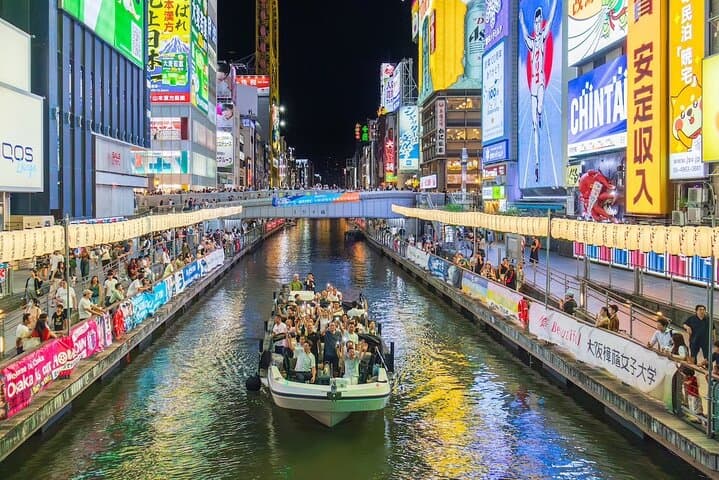
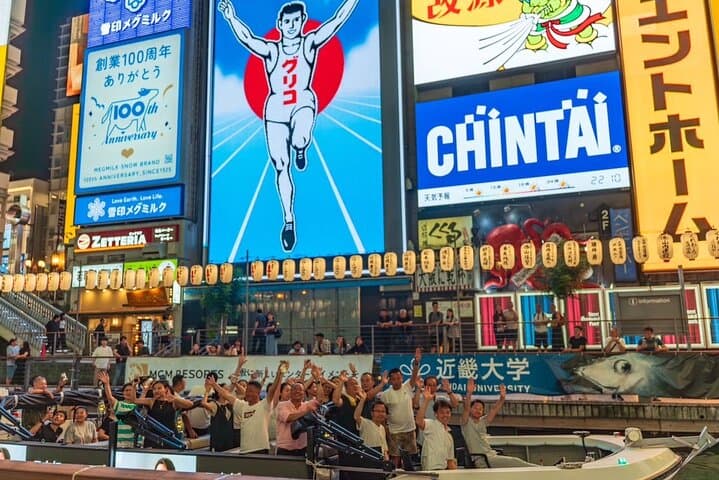
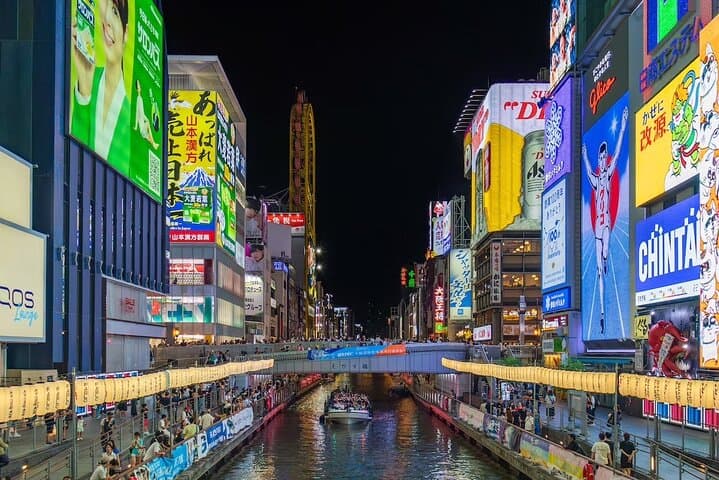
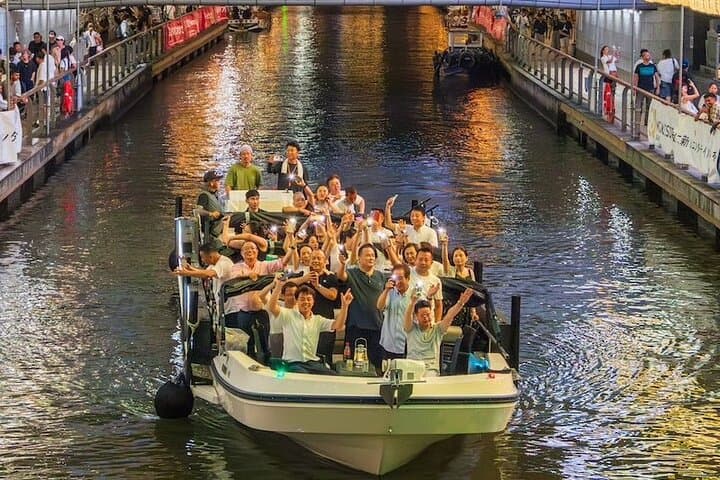
Boarding at Minatomachi Pier, the river pulls you into a different Osaka: glassy water mirrors neon scripts, and the rumble of the city softens into the hush of a boat hull. By day the canal cuts a clean line through merchant facades and family-run eateries; by night the Glico running man and advertising walls ignite the water with color.
Boarding at Minatomachi Pier, the river pulls you into a different Osaka: glassy water mirrors neon scripts, and the rumble of the city softens into the hush of a boat hull. By day the canal cuts a clean line through merchant facades and family-run eateries; by night the Glico running man and advertising walls ignite the water with color.
The Dotonbori canal traces its modern form back to the early Edo period when waterways shaped Osaka’s trade arteries. The riverfront around Ebisubashi was once a theater and entertainment quarter; the floating view still carries that public pulse—festival music, savory smells, and crowds on the banks. Geologically there’s little drama here; this is an urban canal carved and managed over centuries, where stone embankments and bridges mark human engineering rather than wild topography.
Culturally, the cruise is a compact civic portrait: chefs frying takoyaki in street stalls, shopfront neon competing with traditional wooden signs, and commuters threading bridges. The short tour—about 20–30 minutes—functions best as a primer to Dotonbori’s rhythm: a quick, readable slice of Osaka before you step ashore.
Practically, board at least five minutes early and leave bulky food on shore—eating is discouraged onboard. Choose a night slot for neon reflections; daytime runs are clearer for people-watching and photographing street scenes. The boats are family‑friendly and suitable for most mobility levels, but bring a light layer for evening breezes and motion‑sickness remedies if you’re sensitive. Finish with a walk along Ebisubashi to compare the river view with the famous Glico photo from the bridge.