THE ADVENTURE COLLECTIVE® · Independent discovery and booking for outdoor travel

Explore two guided cavern lines at Dos Ojos Cenote—Bat Cave and the Barbie Line—inside a section of one of the world’s largest underwater cave systems. Expect clear blue water, dramatic formations, and two 40–45 minute dives with an experienced guide.
Explore two guided cavern lines at Dos Ojos Cenote—Bat Cave and the Barbie Line—inside a section of one of the world’s largest underwater cave systems. Expect clear blue water, dramatic formations, and two 40–45 minute dives with an experienced guide.
Light narrows through a high roof and the water takes on a cold, clear blue; a guide clips a reel and the group slips beneath a low lip into Dos Ojos. The first breath underwater is immediate—the cave exhales cool, mineral-rich water and the ceiling fills with silhouetted shapes as bats stir above the cavern entrance.
Verified experiences and guided adventures in the surrounding area.
Operated by Cave Ha Diving Mexico · Tulum, Quintana Roo
Light narrows through a high roof and the water takes on a cold, clear blue; a guide clips a reel and the group slips beneath a low lip into Dos Ojos. The first breath underwater is immediate—the cave exhales cool, mineral-rich water and the ceiling fills with silhouetted shapes as bats stir above the cavern entrance.
Dos Ojos is part of the Sac Actun-Nohoch-Dos Ojos system, one of the world’s largest underwater cave networks, with passages tied into both freshwater and tidally influenced marine water. Geologically it is a folded limestone maze: wide galleries, towering columns, and delicate stalactites record millennia of water movement. Culturally, cenotes were freshwater lifelines and sacred sites for the Maya; today they are archaeological and recreational resources with careful access controls.
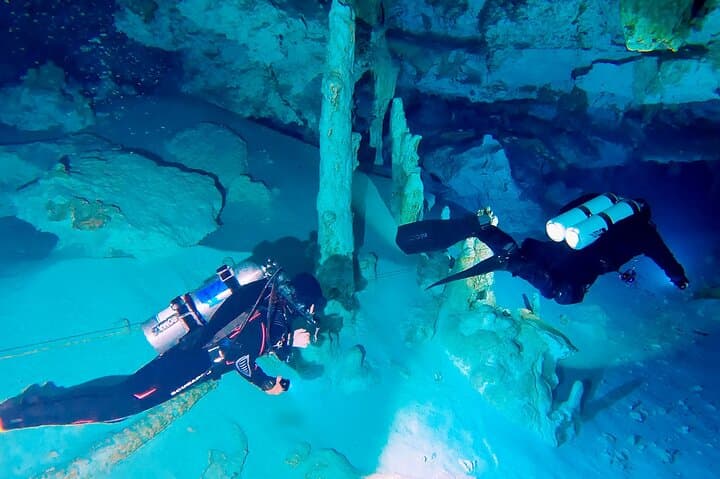
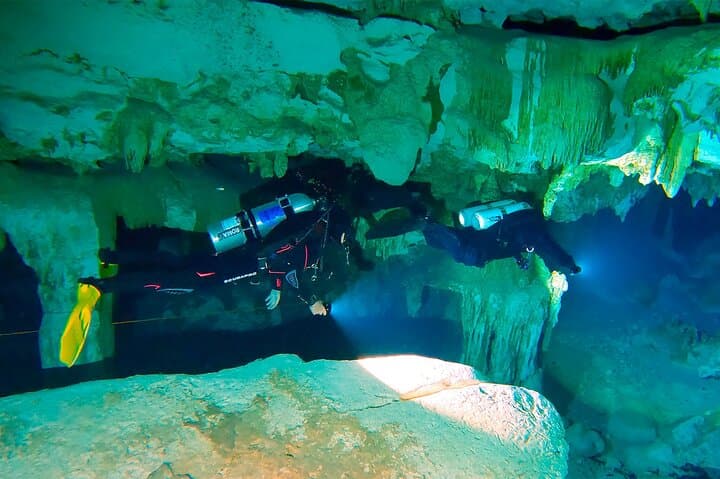
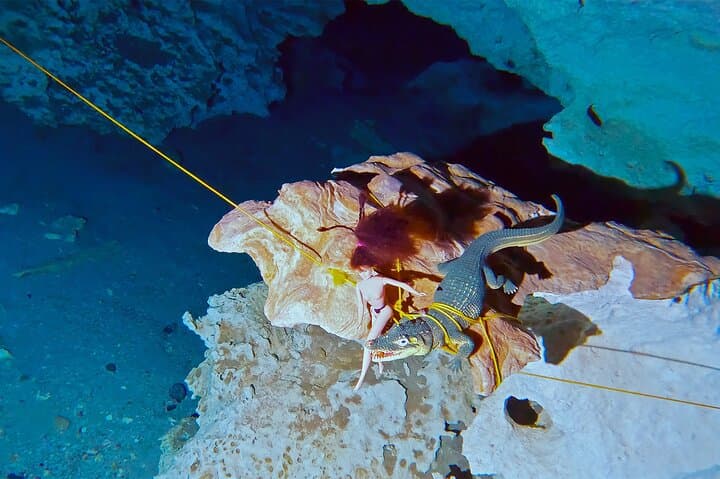
On this guided trip divers run two lines: the Bat Cave line—tight walls, massive speleothems, and the chance to surface near roosting bats—and the Barbie Line, a 415 m golden line through broad, light-flooded galleries that ends in an almost closed chamber. Dives average 40–45 minutes with a 30-minute surface interval; expect a full 6‑hour outing including gear assembly.
Practically: bring your open-water certification card, logbook, and comfortable closed-toe shoes for the short dirt-road approach. Neutral buoyancy and conservative gas management matter here—overhead environments amplify small mistakes. Hydrate beforehand, secure cameras to reels, and follow the guide’s line discipline. The site is accessible from Playa del Carmen or Tulum by vehicle; morning slots commonly offer the best light and calmer surface traffic.
challenging.
6 hours.
Moderately fit—comfortable swimming ability, ability to carry basic gear, and no major cardiovascular or spinal issues.
No formal cave certification is required for guided cavern line dives here—operators generally require at least Open Water certification and will limit penetration to line-guided cavern areas.
Each dive is about 40–45 minutes with a 30-minute surface interval; the full activity runs roughly 6 hours including gear assembly and transport time.
Most operators offer private transport; the cenote lies off a 4 km dirt road approximately 48 km south of Playa del Carmen and is easily reached by vehicle from either town.
Pregnancy, serious cardiovascular conditions, or spinal injuries are contraindications; operators also require standard medical and liability forms and minimum certification.
Cenotes supplied freshwater to Maya settlements and held ritual significance; modern protection balances tourism with archaeological and hydrological sensitivity.
Cenote systems are vulnerable to contamination and overuse—use biodegradable sunscreen, avoid stirring sediment, and follow park regulations to protect water quality.
Cave Ha Diving Mexico operates guided outdoor trips and adventures with an emphasis on safety, stewardship, and memorable experiences.
Light narrows through a high roof and the water takes on a cold, clear blue; a guide clips a reel and the group slips beneath a low lip into Dos Ojos. The first breath underwater is immediate—the cave exhales cool, mineral-rich water and the ceiling fills with silhouetted shapes as bats stir above the cavern entrance.
Light narrows through a high roof and the water takes on a cold, clear blue; a guide clips a reel and the group slips beneath a low lip into Dos Ojos. The first breath underwater is immediate—the cave exhales cool, mineral-rich water and the ceiling fills with silhouetted shapes as bats stir above the cavern entrance.
Dos Ojos is part of the Sac Actun-Nohoch-Dos Ojos system, one of the world’s largest underwater cave networks, with passages tied into both freshwater and tidally influenced marine water. Geologically it is a folded limestone maze: wide galleries, towering columns, and delicate stalactites record millennia of water movement. Culturally, cenotes were freshwater lifelines and sacred sites for the Maya; today they are archaeological and recreational resources with careful access controls.
On this guided trip divers run two lines: the Bat Cave line—tight walls, massive speleothems, and the chance to surface near roosting bats—and the Barbie Line, a 415 m golden line through broad, light-flooded galleries that ends in an almost closed chamber. Dives average 40–45 minutes with a 30-minute surface interval; expect a full 6‑hour outing including gear assembly.
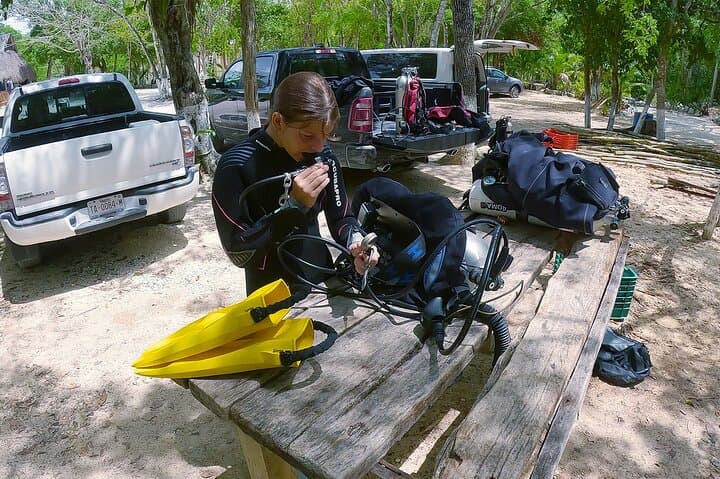
Practically: bring your open-water certification card, logbook, and comfortable closed-toe shoes for the short dirt-road approach. Neutral buoyancy and conservative gas management matter here—overhead environments amplify small mistakes. Hydrate beforehand, secure cameras to reels, and follow the guide’s line discipline. The site is accessible from Playa del Carmen or Tulum by vehicle; morning slots commonly offer the best light and calmer surface traffic.