THE ADVENTURE COLLECTIVE® · Independent discovery and booking for outdoor travel

Spend a day with a donkey on the lower slopes of Shpirag, walking centuries-old village tracks and pausing in fields with views toward Berat. Family-friendly and low-impact, this trek blends easy walking with cultural stops.
Spend a day with a donkey on the lower slopes of Shpirag, walking centuries-old village tracks and pausing in fields with views toward Berat. Family-friendly and low-impact, this trek blends easy walking with cultural stops.
A dry-stone road bends up out of the village and a donkey waits like a patient companion, ears twitching as the valley exhales beneath you. The air here tastes of cut grass and limestone; citrus-scented winds push you along the narrow lanes that climb away from Sinja toward the lower flanks of Shpirag.
Verified experiences and guided adventures in the surrounding area.
Operated by 1001 Albanian Adventures · Berat, Berat County
A dry-stone road bends up out of the village and a donkey waits like a patient companion, ears twitching as the valley exhales beneath you. The air here tastes of cut grass and limestone; citrus-scented winds push you along the narrow lanes that climb away from Sinja toward the lower flanks of Shpirag.
This full-day outing follows pastoral tracks through small hamlets and open fields, routes shaped by centuries of transhumant shepherding and small-scale farming. Geologically, Shpirag is a karst ridge—limestone outcrops, sinkholes and terraces cut by seasonal streams—so the walking alternates between packed-earth farm lanes and stone footpaths. Local culture is visible in stacked stone walls, small vegetable plots and simple village coffee stops where elders remember Ottoman-era trade routes.
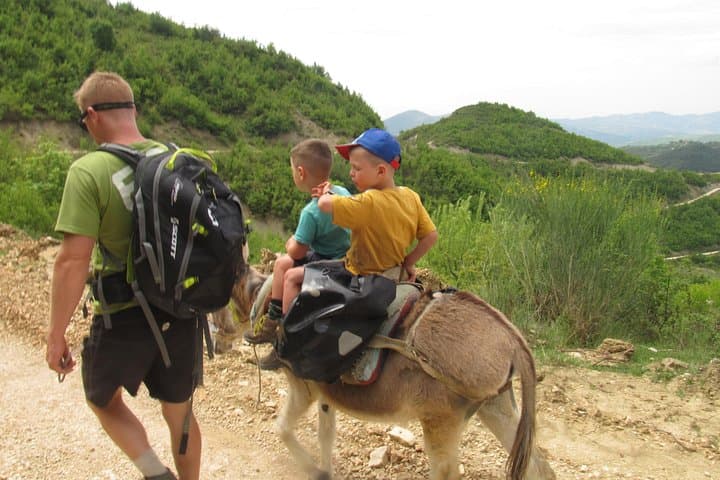
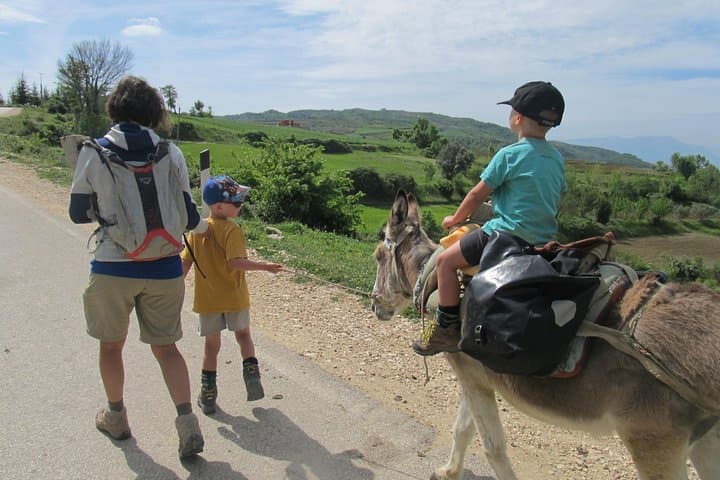
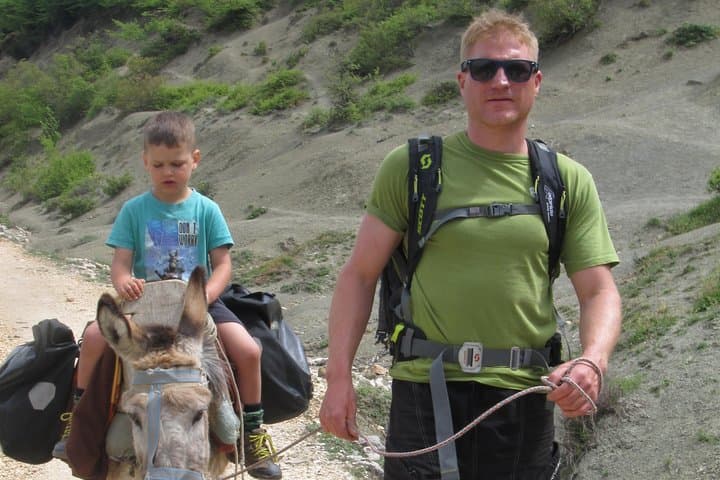
Expect a family-friendly rhythm: you can ride the donkey or walk beside it, take pauses in shaded fields and picnic near low cliffs with views toward Berat’s terraced hills. Donkeys are steady but require basic handling—guides saddle and lead them, and children often ride for short spells while adults walk.
Practical pointers: bring at least 2 liters of water, sun protection and shoes that handle dusty, rocky paths. Wear layered clothing for windy ridgelines and plan for a 4–9 hour day depending on your pace and stops. The trip pairs low elevation gain with long, rolling sections—it’s less about steep climbs and more about steady hours on rural trails and slow encounters with village life.
easy.
4–9 hours.
Suitable for most fitness levels; expect several hours of walking at an easy pace with frequent stops
The experience runs roughly 4 to 9 hours depending on pace and chosen route, including transfer time to and from the start village.
Yes — children can ride under guide supervision; family groups often mix walking and riding.
Guides provide saddling and lead the animals; if concerned, ask the operator about their animal care practices before booking.
No special fitness is required; the route is classed easy but involves several hours of walking over uneven rural tracks.
The villages around Shpirag grew around seasonal grazing and smallholder farms; stone walls and paths reflect generations of agricultural use.
Stick to existing tracks to protect fragile karst vegetation and ask guides about humane treatment of working animals; support local services to keep rural economies viable.
1001 Albanian Adventures operates guided outdoor trips and adventures with an emphasis on safety, stewardship, and memorable experiences.
A dry-stone road bends up out of the village and a donkey waits like a patient companion, ears twitching as the valley exhales beneath you. The air here tastes of cut grass and limestone; citrus-scented winds push you along the narrow lanes that climb away from Sinja toward the lower flanks of Shpirag.
A dry-stone road bends up out of the village and a donkey waits like a patient companion, ears twitching as the valley exhales beneath you. The air here tastes of cut grass and limestone; citrus-scented winds push you along the narrow lanes that climb away from Sinja toward the lower flanks of Shpirag.
This full-day outing follows pastoral tracks through small hamlets and open fields, routes shaped by centuries of transhumant shepherding and small-scale farming. Geologically, Shpirag is a karst ridge—limestone outcrops, sinkholes and terraces cut by seasonal streams—so the walking alternates between packed-earth farm lanes and stone footpaths. Local culture is visible in stacked stone walls, small vegetable plots and simple village coffee stops where elders remember Ottoman-era trade routes.
Expect a family-friendly rhythm: you can ride the donkey or walk beside it, take pauses in shaded fields and picnic near low cliffs with views toward Berat’s terraced hills. Donkeys are steady but require basic handling—guides saddle and lead them, and children often ride for short spells while adults walk.
Practical pointers: bring at least 2 liters of water, sun protection and shoes that handle dusty, rocky paths. Wear layered clothing for windy ridgelines and plan for a 4–9 hour day depending on your pace and stops. The trip pairs low elevation gain with long, rolling sections—it’s less about steep climbs and more about steady hours on rural trails and slow encounters with village life.