THE ADVENTURE COLLECTIVE® · Independent discovery and booking for outdoor travel

A 3-day trek from Đà Lạt into Bidoup’s pine forests and jungle to reach an unmarked 1,570 m summit. Expect river crossings, homestays with K’Ho hosts, and basic camping on a remote peak.
A 3-day trek from Đà Lạt into Bidoup’s pine forests and jungle to reach an unmarked 1,570 m summit. Expect river crossings, homestays with K’Ho hosts, and basic camping on a remote peak.
Morning on the sleeping bus gives way to highland air the moment you step out in Đà Lạt — cool, pine-scented, and ready to be tested.
Verified experiences and guided adventures in the surrounding area.
Operated by Asia Package Travel · Da Lat, Lam Dong
Morning on the sleeping bus gives way to highland air the moment you step out in Đà Lạt — cool, pine-scented, and ready to be tested.
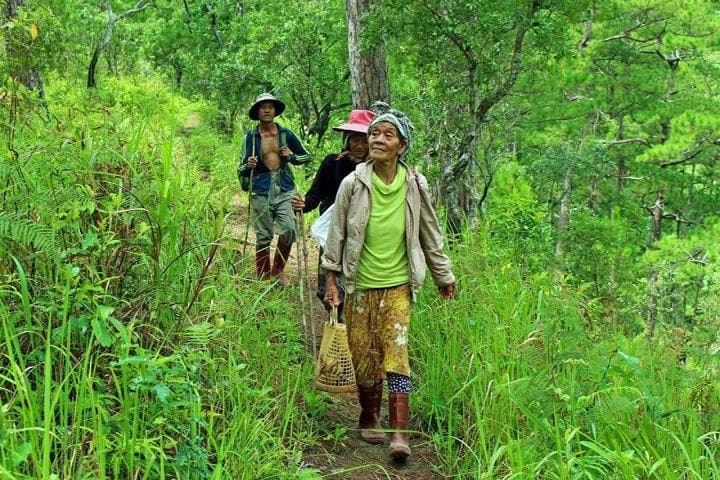
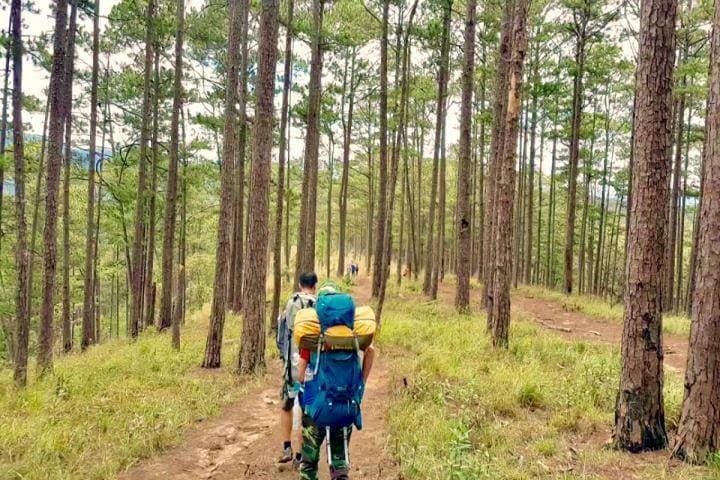
The three-day Dong Iar Jieng trek cuts from the city into Bidoup’s aging pine stands and a lower montane rainforest where vines tug at boots and streams dare you to cool off. Hikers move from river basins to a raw summit at about 1,570 m that remains off most maps; nights are spent in a wooden village homestay and a small, exposed camp on the peak.
Geologically the route sits on the southern Central Highlands’ montane massif, where eroded ridgelines and volcanic soils feed a dense, moisture-rich forest. Culturally the area is home to K’Ho villages—meeting local hosts brings fresh K’Ho coffee, regional stories, and simple meals after long days on trail.
Expect narrow, often muddy singletrack, creek crossings, and steep scrambles through creepers and pine litter. Guides lead navigation and provide tents and sleeping bags; water is available from streams but must be filtered. Wildlife is mostly shy—birdsong and small mammals populate the understory—and the forest responds to travel with sudden mists and cooling breezes that push you upward.
Practical edge: start early each day, carry at least 2–3 liters and a filter, use high-traction boots, and pack a reliable rain layer. The trip rewards steady pace and basic backcountry preparedness: hydrate frequently, protect gear from humidity, and be ready for wet trail conditions and limited phone signal.
challenging.
3 days.
Good cardiovascular fitness and the ability to handle sustained uphill hiking with a daypack; not suitable for those with serious back or heart conditions.
Participants should have moderate to good fitness—able to hike several hours with elevation gain each day; the tour is not recommended for those with serious cardiovascular or spinal conditions.
Yes, the operator provides tents and sleeping bags for the summit camp; personal sleeping liners or light mattress pads are optional for added comfort.
Accommodation includes a village wooden homestay on night one and a tented camp on the peak for night two; meals listed in the itinerary are included.
The trip uses a sleeping bus from Ho Chi Minh City to Đà Lạt, then road transfer by car to Bidoup National Park where trekking begins.
The highland valleys around Bidoup have long been inhabited by K’Ho communities; homestays offer direct cultural exchange with local farming and coffee traditions.
Bidoup-Nui Ba and adjacent highlands are protected for montane forest biodiversity; follow leave-no-trace practices and avoid contaminating streams to reduce visitor impact.
Asia Package Travel operates guided outdoor trips and adventures with an emphasis on safety, stewardship, and memorable experiences.
Morning on the sleeping bus gives way to highland air the moment you step out in Đà Lạt — cool, pine-scented, and ready to be tested.
Morning on the sleeping bus gives way to highland air the moment you step out in Đà Lạt — cool, pine-scented, and ready to be tested.
The three-day Dong Iar Jieng trek cuts from the city into Bidoup’s aging pine stands and a lower montane rainforest where vines tug at boots and streams dare you to cool off. Hikers move from river basins to a raw summit at about 1,570 m that remains off most maps; nights are spent in a wooden village homestay and a small, exposed camp on the peak.
Geologically the route sits on the southern Central Highlands’ montane massif, where eroded ridgelines and volcanic soils feed a dense, moisture-rich forest. Culturally the area is home to K’Ho villages—meeting local hosts brings fresh K’Ho coffee, regional stories, and simple meals after long days on trail.
Expect narrow, often muddy singletrack, creek crossings, and steep scrambles through creepers and pine litter. Guides lead navigation and provide tents and sleeping bags; water is available from streams but must be filtered. Wildlife is mostly shy—birdsong and small mammals populate the understory—and the forest responds to travel with sudden mists and cooling breezes that push you upward.
Practical edge: start early each day, carry at least 2–3 liters and a filter, use high-traction boots, and pack a reliable rain layer. The trip rewards steady pace and basic backcountry preparedness: hydrate frequently, protect gear from humidity, and be ready for wet trail conditions and limited phone signal.