THE ADVENTURE COLLECTIVE® · Independent discovery and booking for outdoor travel

Set off from Lisbon’s riverfront for a 2½-hour cruise led by a marine biologist. Expect close views of Belem’s river monuments and the chance to spot common dolphins and seabirds while learning about the Tejo’s ecology and maritime history.
Set off from Lisbon’s riverfront for a 2½-hour cruise led by a marine biologist. Expect close views of Belem’s river monuments and the chance to spot common dolphins and seabirds while learning about the Tejo’s ecology and maritime history.
The boat slips out from the riverbank and the city opens to the water: gulls wheel, the quay’s stone facades recede, and the Tagus (Tejo) widens into a pale, restless plane. You feel the river’s current push the hull gently forward as the guide—an onboard marine biologist—leans toward the rail, scanning for dorsal fins that break the surface like punctuation marks.
Verified experiences and guided adventures in the surrounding area.
Operated by Feel The River · Lisbon, Lisboa
The boat slips out from the riverbank and the city opens to the water: gulls wheel, the quay’s stone facades recede, and the Tagus (Tejo) widens into a pale, restless plane. You feel the river’s current push the hull gently forward as the guide—an onboard marine biologist—leans toward the rail, scanning for dorsal fins that break the surface like punctuation marks.
This stretch of the Tejo has carried traders, explorers and migrants for centuries; the Padrão dos Descobrimentos and the Tower of Belém pass by as living chapters of Lisbon’s Age of Discoveries. Geologically the estuary is a broad mixed-sediment environment where freshwater from the Tagus meets the Atlantic tidal swell—ideal feeding ground for common dolphins and a variety of seabirds.
Culturally, the river shaped Lisbon: its waterfront palaces, customs houses and maritime museums were designed to be seen from the water, and a cruise reframes familiar monuments at water level.
Practical guidance: tours last about 2½ hours and are suitable for most fitness levels—the vessel is stable with life vests provided and commentary in multiple languages. Sightings aren’t guaranteed but are more likely in calmer seas and seasonal feeding windows; the marine biologist explains species behavior, identification and local conservation concerns.
Bring binoculars, dress in windproof layers, and plan for a mid-morning or late-afternoon departure to avoid the harshest light and busiest docks. The experience is part natural history lesson, part scenic river cruise—an accessible way to meet Lisbon from the water while learning how the Tejo continues to shape life on its banks.
easy.
2–3 hours.
Suitable for most fitness levels; requires ability to step aboard and stand on deck for short periods.
Sightings aren’t guaranteed but common dolphins are frequently observed; a marine biologist increases the odds by choosing promising areas and interpreting behavior.
Tours typically depart from the Lisbon riverfront (Belém/central docks) and last about 150 minutes (approximately 2½ hours).
The vessel is family-friendly—infants may sit on laps—and the operator lists wheelchair-accessible options, though boarding can require a short step on some docks.
Commentary is usually provided by an experienced marine biologist and often available in Portuguese and English; check booking details for additional languages.
The Tagus estuary was the launching point for Portugal’s 15th–16th century discoveries; Belem’s monuments were built to impress seafarers approaching from the river.
Local groups monitor dolphin populations and water quality; visitors are asked not to feed wildlife and to follow guidelines to minimize disturbance.
Feel The River operates guided outdoor trips and adventures with an emphasis on safety, stewardship, and memorable experiences.
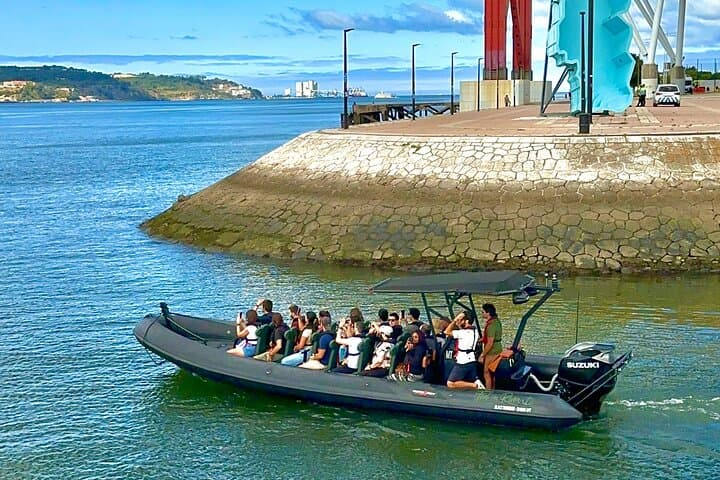
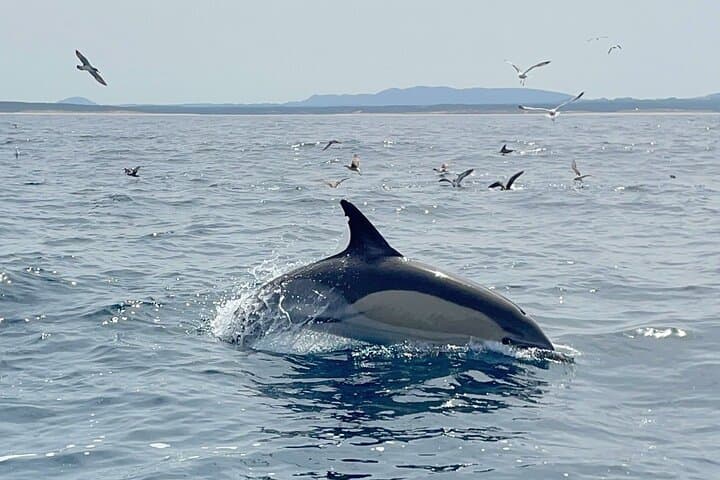
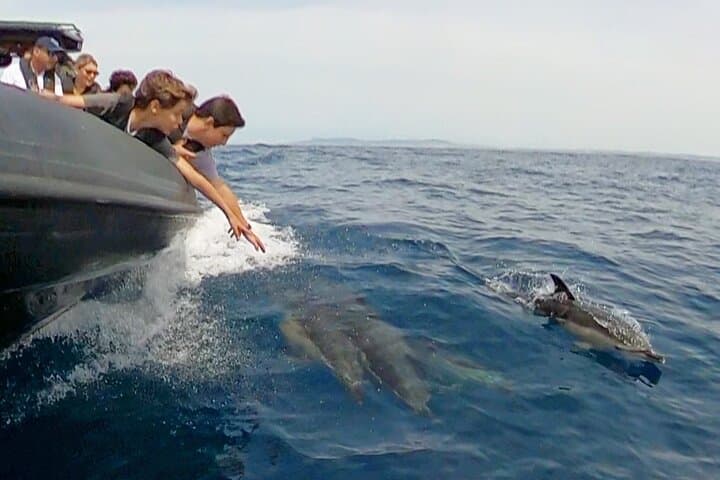
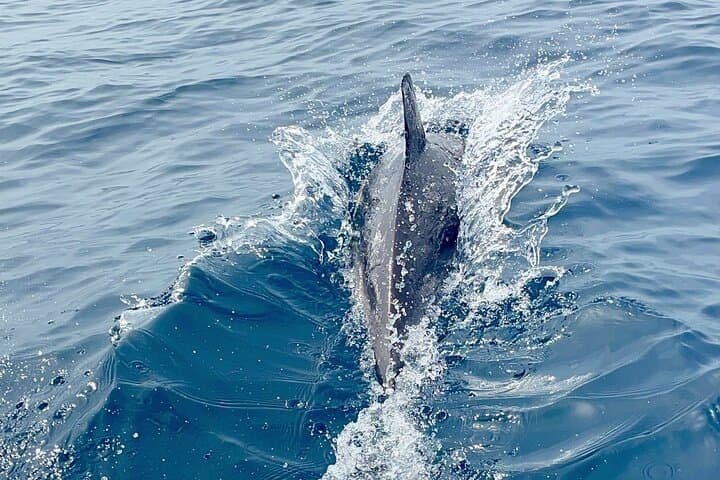
The boat slips out from the riverbank and the city opens to the water: gulls wheel, the quay’s stone facades recede, and the Tagus (Tejo) widens into a pale, restless plane. You feel the river’s current push the hull gently forward as the guide—an onboard marine biologist—leans toward the rail, scanning for dorsal fins that break the surface like punctuation marks.
The boat slips out from the riverbank and the city opens to the water: gulls wheel, the quay’s stone facades recede, and the Tagus (Tejo) widens into a pale, restless plane. You feel the river’s current push the hull gently forward as the guide—an onboard marine biologist—leans toward the rail, scanning for dorsal fins that break the surface like punctuation marks.
This stretch of the Tejo has carried traders, explorers and migrants for centuries; the Padrão dos Descobrimentos and the Tower of Belém pass by as living chapters of Lisbon’s Age of Discoveries. Geologically the estuary is a broad mixed-sediment environment where freshwater from the Tagus meets the Atlantic tidal swell—ideal feeding ground for common dolphins and a variety of seabirds.
Culturally, the river shaped Lisbon: its waterfront palaces, customs houses and maritime museums were designed to be seen from the water, and a cruise reframes familiar monuments at water level.
Practical guidance: tours last about 2½ hours and are suitable for most fitness levels—the vessel is stable with life vests provided and commentary in multiple languages. Sightings aren’t guaranteed but are more likely in calmer seas and seasonal feeding windows; the marine biologist explains species behavior, identification and local conservation concerns.
Bring binoculars, dress in windproof layers, and plan for a mid-morning or late-afternoon departure to avoid the harshest light and busiest docks. The experience is part natural history lesson, part scenic river cruise—an accessible way to meet Lisbon from the water while learning how the Tejo continues to shape life on its banks.