THE ADVENTURE COLLECTIVE® · Independent discovery and booking for outdoor travel

Head out from Marina de Lagos for a 90-minute Atlantic safari that regularly encounters bottlenose and common dolphins. Fast-paced, family-friendly, and rich in coastal scenery, the trip pairs high sighting rates with practical, safety-focused touring.
Head out from Marina de Lagos for a 90-minute Atlantic safari that regularly encounters bottlenose and common dolphins. Fast-paced, family-friendly, and rich in coastal scenery, the trip pairs high sighting rates with practical, safety-focused touring.
The marina slips open to the Atlantic and the boat slips away with a brisk, salt-scented push. In minutes the shoreline of Lagos drops behind you—limestone cliffs sharpen into stacks, gulls wheel, and the sea begins to show its first flashes of movement. The captain scans the horizon; the crew listens for whistles and the quick, surface arcs that signal a pod.
Verified experiences and guided adventures in the surrounding area.
Operated by Dolphin Seafaris Actividades Maritimas Lda · Lagos, Faro
The marina slips open to the Atlantic and the boat slips away with a brisk, salt-scented push. In minutes the shoreline of Lagos drops behind you—limestone cliffs sharpen into stacks, gulls wheel, and the sea begins to show its first flashes of movement. The captain scans the horizon; the crew listens for whistles and the quick, surface arcs that signal a pod.
Dolphin-watching off Lagos sits at the meeting point of Atlantic geology and maritime history. The Algarve’s Ponta da Piedade cliffs started as sedimentary limestone, carved by tides and storms into caves and arches that shape local currents and, in turn, where fish and dolphins gather. Lagos itself was an Age of Discovery port—its fishing culture is alive in the small harbors and markets that pepper the coast.
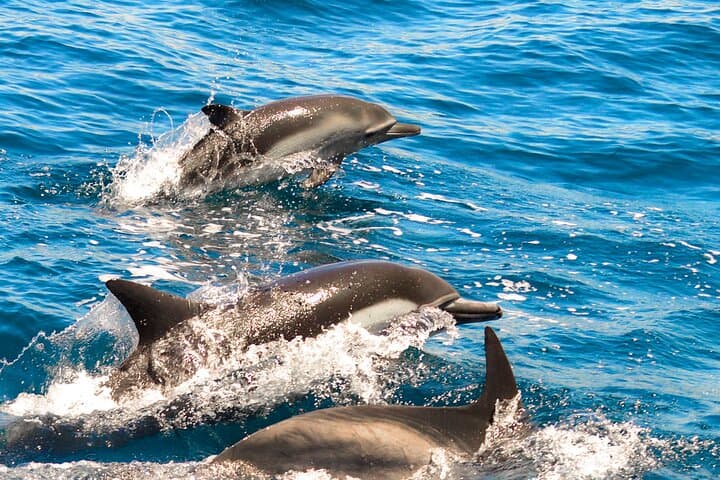
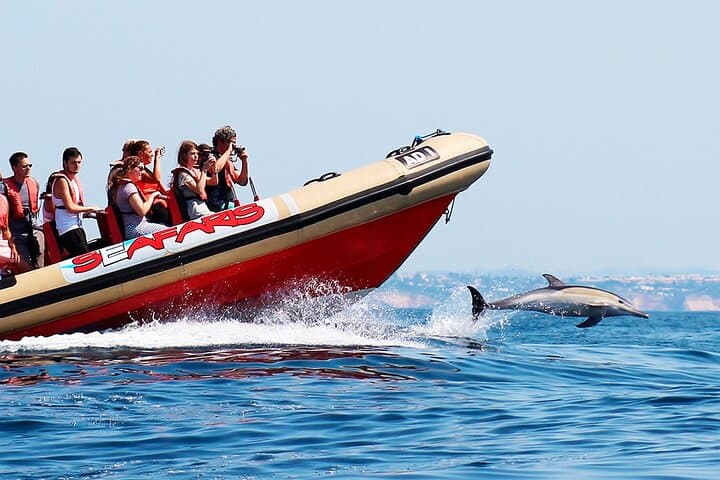
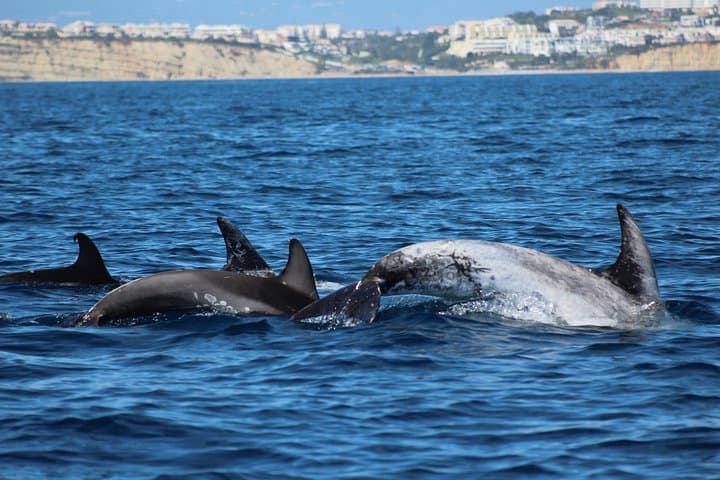
When dolphins appear they are playful and purposeful, riding bow waves or surfacing in groups. Sightings in this region are reliable—operators report encounters on most outings—but animals remain wild and unpredictable.
Practical guidance: tours run about 90 minutes from Marina de Lagos; arrive 15 minutes early for boarding and safety briefings. Bring sun protection, a windproof layer, and motion-sickness remedies if you’re sensitive to chop. Cameras with fast autofocus or a small zoom lens capture the best shots; binoculars help find distant activity.
Respectful watching is the rule—boats slow and keep a distance so pods can choose to approach. For a short, accessible window into Atlantic wildlife, this outing pairs comfortable cruising with high chances of seeing bottlenose and common dolphins in their natural element.
easy.
90 minutes.
Suitable for most fitness levels—boarding involves a few low steps and short periods standing on deck.
Operators in the Lagos area report sightings on over 90% of outings, but dolphins are wild animals so sightings aren’t guaranteed.
Yes—tours are family-friendly, but children under 3 are generally not recommended and strollers may not be practical on board.
Dress in layers with a windproof outer layer; non-slip shoes are recommended for moving on deck.
Trips are cancelled in unsafe conditions; most operators offer full refunds if they cancel due to weather, or allow rebooking.
Lagos was a key harbor during Portugal’s Age of Discovery; the town’s maritime economy shaped the coastline’s fishing and boat-building traditions.
Responsible operators follow approach guidelines to avoid disturbing pods and support local marine NGOs; avoid littering and use biodegradable sunscreens where possible.
Dolphin Seafaris Actividades Maritimas Lda operates guided outdoor trips and adventures with an emphasis on safety, stewardship, and memorable experiences.
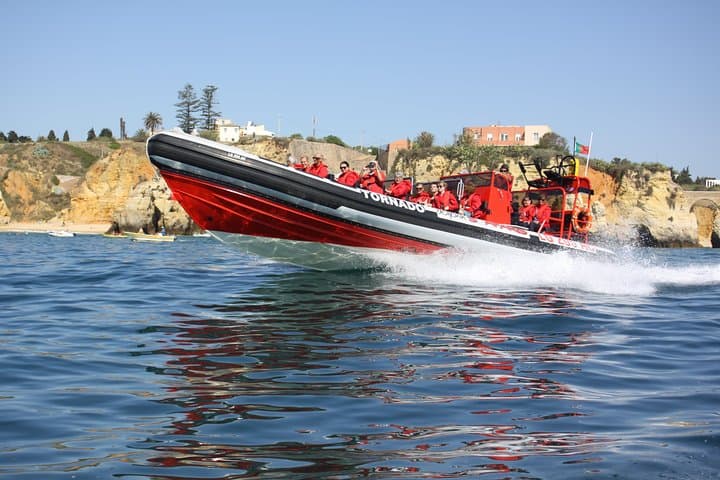
The marina slips open to the Atlantic and the boat slips away with a brisk, salt-scented push. In minutes the shoreline of Lagos drops behind you—limestone cliffs sharpen into stacks, gulls wheel, and the sea begins to show its first flashes of movement. The captain scans the horizon; the crew listens for whistles and the quick, surface arcs that signal a pod.
The marina slips open to the Atlantic and the boat slips away with a brisk, salt-scented push. In minutes the shoreline of Lagos drops behind you—limestone cliffs sharpen into stacks, gulls wheel, and the sea begins to show its first flashes of movement. The captain scans the horizon; the crew listens for whistles and the quick, surface arcs that signal a pod.
Dolphin-watching off Lagos sits at the meeting point of Atlantic geology and maritime history. The Algarve’s Ponta da Piedade cliffs started as sedimentary limestone, carved by tides and storms into caves and arches that shape local currents and, in turn, where fish and dolphins gather. Lagos itself was an Age of Discovery port—its fishing culture is alive in the small harbors and markets that pepper the coast.
When dolphins appear they are playful and purposeful, riding bow waves or surfacing in groups. Sightings in this region are reliable—operators report encounters on most outings—but animals remain wild and unpredictable.
Practical guidance: tours run about 90 minutes from Marina de Lagos; arrive 15 minutes early for boarding and safety briefings. Bring sun protection, a windproof layer, and motion-sickness remedies if you’re sensitive to chop. Cameras with fast autofocus or a small zoom lens capture the best shots; binoculars help find distant activity.
Respectful watching is the rule—boats slow and keep a distance so pods can choose to approach. For a short, accessible window into Atlantic wildlife, this outing pairs comfortable cruising with high chances of seeing bottlenose and common dolphins in their natural element.