THE ADVENTURE COLLECTIVE® · Independent discovery and booking for outdoor travel

Board in Sesimbra for a three-hour dolphin-watching cruise that pairs close wildlife encounters with guided marine ecology and geology commentary along the Arrábida coast. Perfect for families and curious travelers wanting an easy, informative sea outing.
Board in Sesimbra for a three-hour dolphin-watching cruise that pairs close wildlife encounters with guided marine ecology and geology commentary along the Arrábida coast. Perfect for families and curious travelers wanting an easy, informative sea outing.
The boat slips out of Sesimbra harbor and the shoreline folds away into white cliffs and hidden coves; wind pushes the bow and gulls quarrel overhead as the crew scans for blow and fin.
Verified experiences and guided adventures in the surrounding area.
Operated by Ludyesfera · Sesimbra, Setúbal
The boat slips out of Sesimbra harbor and the shoreline folds away into white cliffs and hidden coves; wind pushes the bow and gulls quarrel overhead as the crew scans for blow and fin.
This three-hour outing moves between wildlife watching and short lessons—guides outline the local marine web, point to Posidonia seagrass meadows that feed the coast, and identify the limestone cliffs of Parque Natural da Arrábida that were shaped by ancient seas and tectonic lift.
Human history shows in ruined fish-salting terraces and the occasional Roman or medieval anchor point along the shore; Cabo Espichel and the fishing traditions of Sesimbra give the coastline cultural depth. Geologically, Arrábida’s carbonate cliffs and sea caves make dramatic viewing and create sheltered bays where dolphins often hunt.
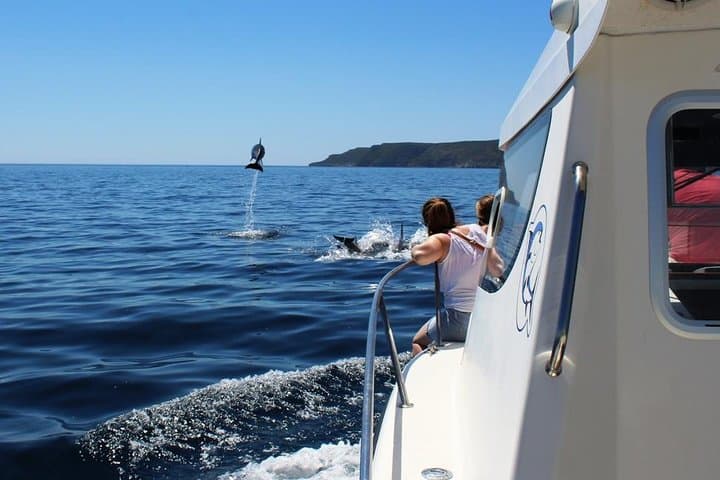
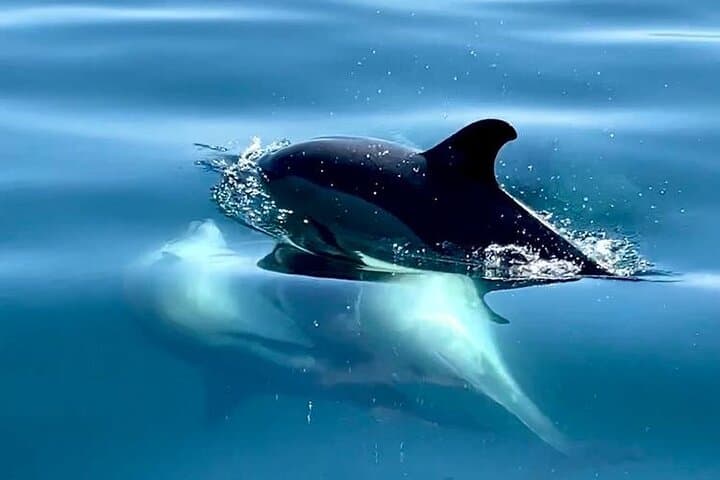
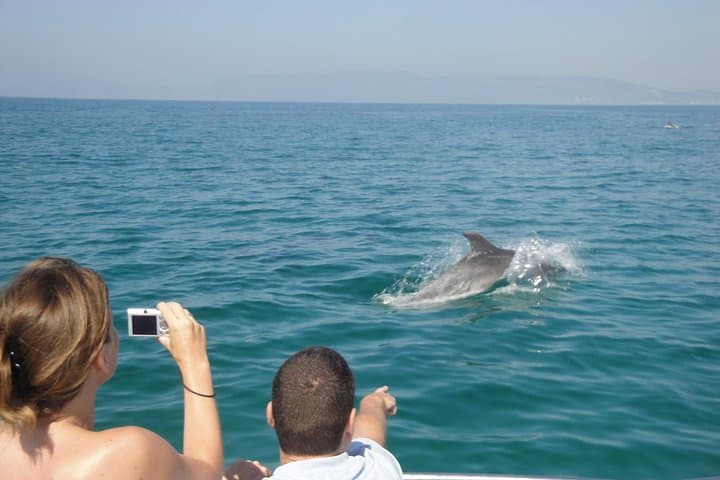
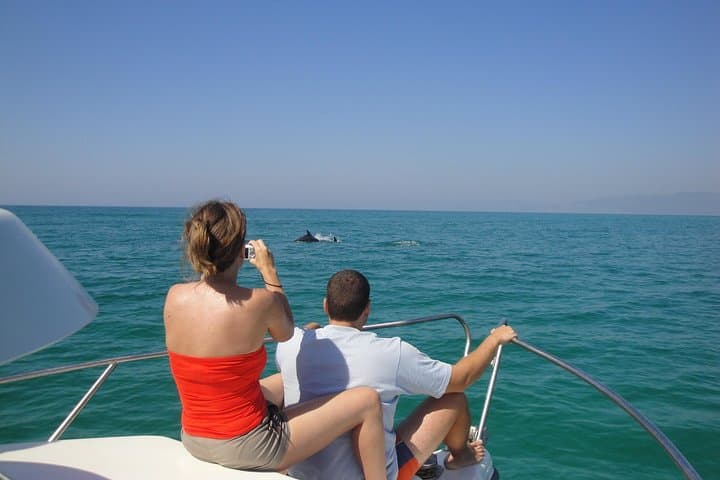
Expect natural history commentary, close approaches when dolphins cooperate, and a shoreline tour past beaches and sea caves; if conditions allow, the boat may stop for a swim. Dolphins here are usually common and bottlenose species—curious but wild, deciding the distance.
Practicalities: departures are around Sesimbra, small-group limits keep the boat nimble, and the trip is rated easy—no special fitness required, but seasickness can spoil the day. Bring sun protection, a light windproof layer, and a camera with a zoom. Morning light is best for photos and calmer seas; afternoons can get breezy. The experience balances calm observation with hands-on learning about marine biodiversity, geology, and coastal history.
easy.
3 hours.
Suitable for most fitness levels; ability to board small craft and stand briefly recommended
Captains approach cautiously and follow local guidelines; dolphins often come close on their own, but the crew will not force proximity to protect the animals.
Stops for swimming are possible if sea and weather conditions permit—bring a swimsuit and towel, but check with staff before planning to jump in.
Yes—infants can ride in strollers and must sit on laps; the activity is labeled physically easy but requires parental supervision on deck.
Operators may cancel for rough seas; full refunds are typically offered if canceled at least 24 hours prior or for unsafe conditions.
The Sesimbra coast has a long fishing history and Roman-era saltworks; nearby Cabo Espichel has religious and maritime landmarks that trace centuries of coastal use.
Arrábida is part of a protected natural park and local operators emphasize low-impact viewing to protect seagrass meadows and marine life.
Ludyesfera operates guided outdoor trips and adventures with an emphasis on safety, stewardship, and memorable experiences.
The boat slips out of Sesimbra harbor and the shoreline folds away into white cliffs and hidden coves; wind pushes the bow and gulls quarrel overhead as the crew scans for blow and fin.
The boat slips out of Sesimbra harbor and the shoreline folds away into white cliffs and hidden coves; wind pushes the bow and gulls quarrel overhead as the crew scans for blow and fin.
This three-hour outing moves between wildlife watching and short lessons—guides outline the local marine web, point to Posidonia seagrass meadows that feed the coast, and identify the limestone cliffs of Parque Natural da Arrábida that were shaped by ancient seas and tectonic lift.
Human history shows in ruined fish-salting terraces and the occasional Roman or medieval anchor point along the shore; Cabo Espichel and the fishing traditions of Sesimbra give the coastline cultural depth. Geologically, Arrábida’s carbonate cliffs and sea caves make dramatic viewing and create sheltered bays where dolphins often hunt.
Expect natural history commentary, close approaches when dolphins cooperate, and a shoreline tour past beaches and sea caves; if conditions allow, the boat may stop for a swim. Dolphins here are usually common and bottlenose species—curious but wild, deciding the distance.
Practicalities: departures are around Sesimbra, small-group limits keep the boat nimble, and the trip is rated easy—no special fitness required, but seasickness can spoil the day. Bring sun protection, a light windproof layer, and a camera with a zoom. Morning light is best for photos and calmer seas; afternoons can get breezy. The experience balances calm observation with hands-on learning about marine biodiversity, geology, and coastal history.