THE ADVENTURE COLLECTIVE® · Independent discovery and booking for outdoor travel

Board a semi-rigid boat from Setúbal for a 2½-hour search for common and bottlenose dolphins in the Sado estuary. Scenic coastline, limestone cliffs, and expert local skippers make this an intimate marine wildlife outing.
Board a semi-rigid boat from Setúbal for a 2½-hour search for common and bottlenose dolphins in the Sado estuary. Scenic coastline, limestone cliffs, and expert local skippers make this an intimate marine wildlife outing.
You push off from Setúbal’s small harbor and the Sado River seems to tug at the bow, urging you toward the open Atlantic. Salted spray punctuates the air as the semi-rigid boat slides past the Outão lighthouse and the pale cliffs of Arrábida; dolphins often rise ahead like silver punctuation marks, curious and quick.
Verified experiences and guided adventures in the surrounding area.
Operated by Longitude - turismo náutico e de natureza · Setúbal, Setúbal District
You push off from Setúbal’s small harbor and the Sado River seems to tug at the bow, urging you toward the open Atlantic. Salted spray punctuates the air as the semi-rigid boat slides past the Outão lighthouse and the pale cliffs of Arrábida; dolphins often rise ahead like silver punctuation marks, curious and quick.
The Sado estuary has supported fishing communities for centuries, feeding Setúbal’s markets and shaping local boatbuilding traditions. Geologically, the Arrábida coast is composed of Jurassic-Cretaceous limestones and steep karst cliffs that drop into turquoise coves—these formations create caves and channels that concentrate fish and, in turn, attract dolphins.
Local culture remains maritime: fishermen’s towns, salt pans, and the Palácio da Comenda on the waterfront are reminders of a coast lived on. Skippers here read tides and currents like old maps; their local knowledge is key to finding pods without stressing wildlife.
Practically, expect a 2½-hour outing on a fast, open boat with room for ten guests. Seas can be calm inside the estuary and brisk outside, so layers and wind protection matter. The operator adapts the route to sightings, sometimes cruising beaches like Figueirinha, Creiro and Portinho da Arrábida or exploring small islands at the mouth of the Sado.
Dolphin encounters vary—there’s no guarantee, but the Sado hosts both common and bottlenose dolphins. If weather allows, short swims may be possible; follow crew instructions strictly. Bring waterproof shoes, sun protection, and a small dry bag. Keep movement slow and voices low when dolphins appear—respectful distance helps ensure these animals stay wild and willing to approach again.
easy.
2–3 hours.
Suitable for people who can sit/stand on a small boat and board via small ramp or ladder; minimal exertion required.
No—wildlife sightings can’t be guaranteed, but the Sado estuary regularly hosts common and bottlenose dolphins and skippers use local knowledge to improve chances.
Swimming may be allowed depending on weather and crew discretion; follow all safety instructions and never enter the water near dolphins to avoid disturbance.
Yes, the tour is family-friendly; infants must sit on an adult’s lap and all passengers should be able to board a small boat safely.
Take medication before boarding if you’re prone to motion sickness, sit mid-boat where motion is less pronounced, and look at the horizon.
The Sado estuary has long been a fishing and salt-trading corridor; Setúbal’s waterfront and small palaces reflect maritime commerce and local seafaring traditions.
The area benefits from local conservation efforts and responsible-watching practices; operators follow guidelines to avoid chasing or disrupting dolphins.
Longitude - turismo náutico e de natureza operates guided outdoor trips and adventures with an emphasis on safety, stewardship, and memorable experiences.
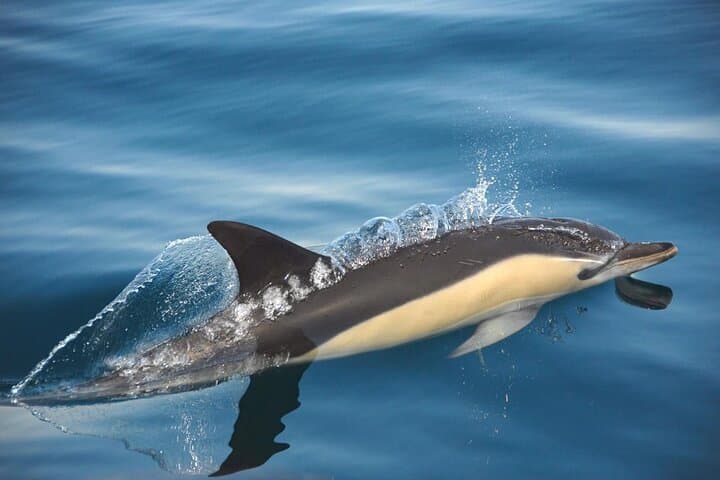
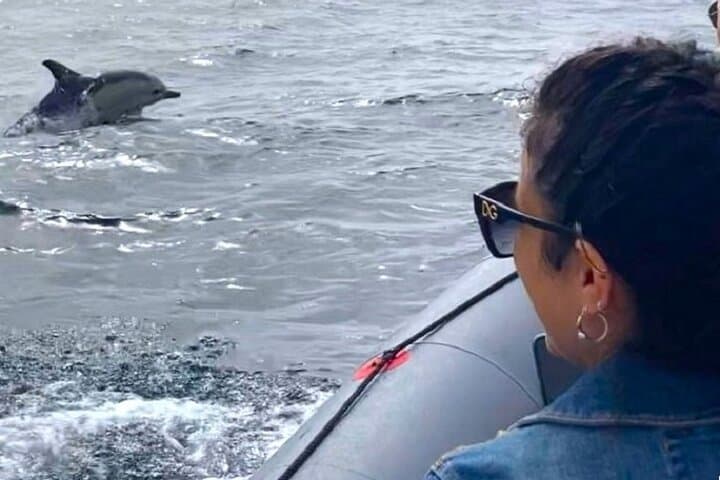
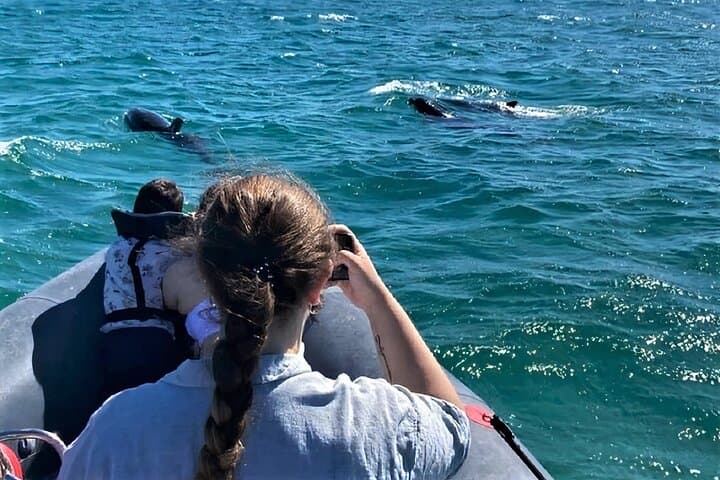
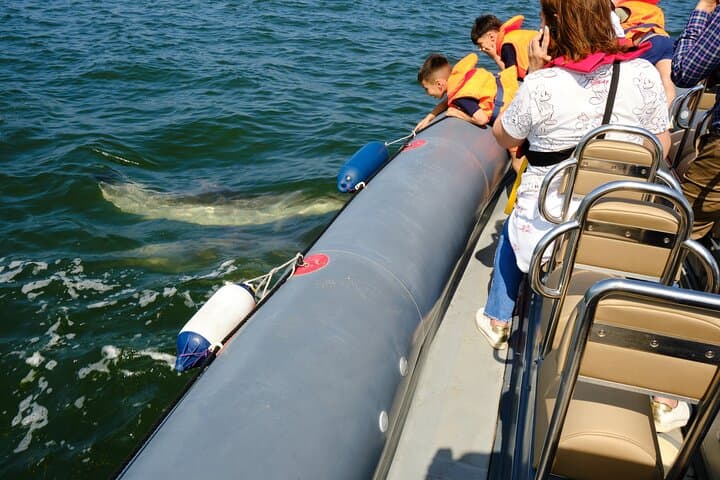
You push off from Setúbal’s small harbor and the Sado River seems to tug at the bow, urging you toward the open Atlantic. Salted spray punctuates the air as the semi-rigid boat slides past the Outão lighthouse and the pale cliffs of Arrábida; dolphins often rise ahead like silver punctuation marks, curious and quick.
You push off from Setúbal’s small harbor and the Sado River seems to tug at the bow, urging you toward the open Atlantic. Salted spray punctuates the air as the semi-rigid boat slides past the Outão lighthouse and the pale cliffs of Arrábida; dolphins often rise ahead like silver punctuation marks, curious and quick.
The Sado estuary has supported fishing communities for centuries, feeding Setúbal’s markets and shaping local boatbuilding traditions. Geologically, the Arrábida coast is composed of Jurassic-Cretaceous limestones and steep karst cliffs that drop into turquoise coves—these formations create caves and channels that concentrate fish and, in turn, attract dolphins.
Local culture remains maritime: fishermen’s towns, salt pans, and the Palácio da Comenda on the waterfront are reminders of a coast lived on. Skippers here read tides and currents like old maps; their local knowledge is key to finding pods without stressing wildlife.
Practically, expect a 2½-hour outing on a fast, open boat with room for ten guests. Seas can be calm inside the estuary and brisk outside, so layers and wind protection matter. The operator adapts the route to sightings, sometimes cruising beaches like Figueirinha, Creiro and Portinho da Arrábida or exploring small islands at the mouth of the Sado.
Dolphin encounters vary—there’s no guarantee, but the Sado hosts both common and bottlenose dolphins. If weather allows, short swims may be possible; follow crew instructions strictly. Bring waterproof shoes, sun protection, and a small dry bag. Keep movement slow and voices low when dolphins appear—respectful distance helps ensure these animals stay wild and willing to approach again.