THE ADVENTURE COLLECTIVE® · Independent discovery and booking for outdoor travel

Clip into the original iron roads of the Dolomites on a private, guided via ferrata from Cortina d'Ampezzo. Expect steep limestone faces, hands-on instruction from UIAGM/IFMGA guides, and 4–5 hours of exposed, technical climbing tailored to your abilities.
Clip into the original iron roads of the Dolomites on a private, guided via ferrata from Cortina d'Ampezzo. Expect steep limestone faces, hands-on instruction from UIAGM/IFMGA guides, and 4–5 hours of exposed, technical climbing tailored to your abilities.
You clip into the steel cable and the mountain answers—cold stone grinds under your palms, a wind from the north pushes itself into the cleft of the ridge, and the jagged teeth of the Dolomites open like a map of eras. The day begins in Cortina d'Ampezzo, where narrow streets still carry the muffled echoes of World War I and the pale limestone faces ahead promise something sharper: exposure, technique, and views that reframe what alpine climbing feels like.
Verified experiences and guided adventures in the surrounding area.
Operated by UIAGM/IFMGA Mountain Guide · Cortina d'Ampezzo, Veneto
You clip into the steel cable and the mountain answers—cold stone grinds under your palms, a wind from the north pushes itself into the cleft of the ridge, and the jagged teeth of the Dolomites open like a map of eras. The day begins in Cortina d'Ampezzo, where narrow streets still carry the muffled echoes of World War I and the pale limestone faces ahead promise something sharper: exposure, technique, and views that reframe what alpine climbing feels like.
Via ferrata—literally 'iron road'—was born here, on these limestone walls, where wartime routes became recreational lines. The Dolomites are dolostone: harder, more brittle than common limestone, sculpted by ancient seabeds and uplifted by tectonic forces; its vertical faces create the perfect playground for fixed-steel routes. Culturally, you climb in a region where Ladin language and alpine pastoral tradition still color local life—mountain huts (rifugi) keep recipes simple and caloric, readying climbers for steep returns.
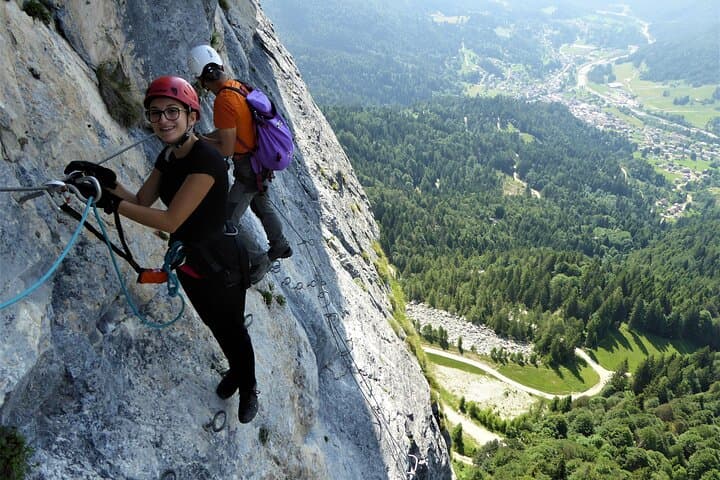
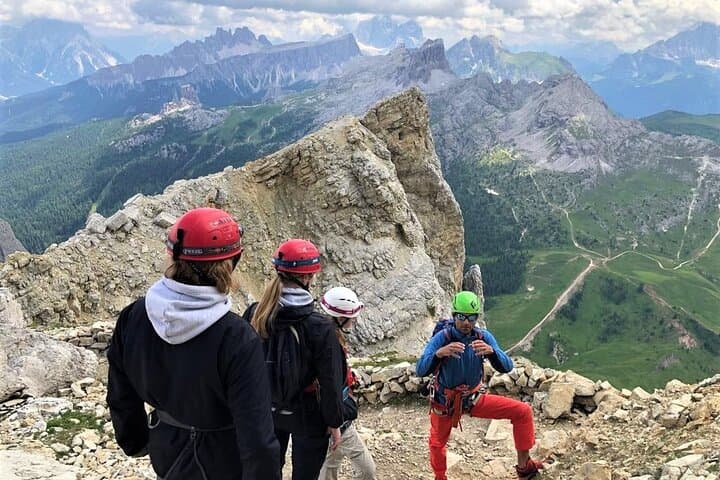
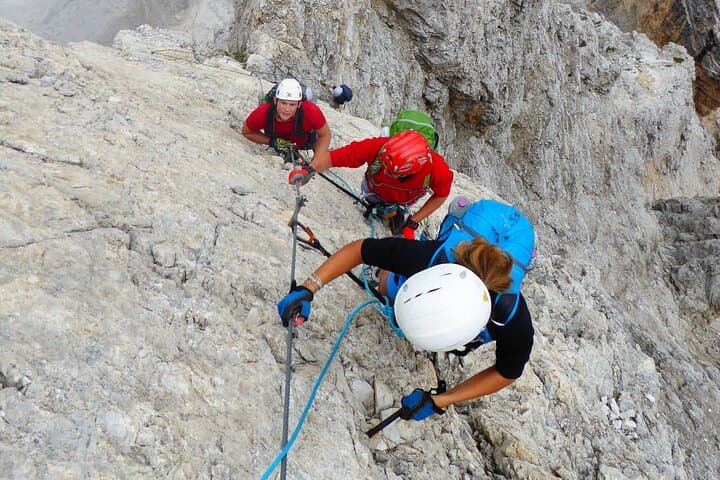
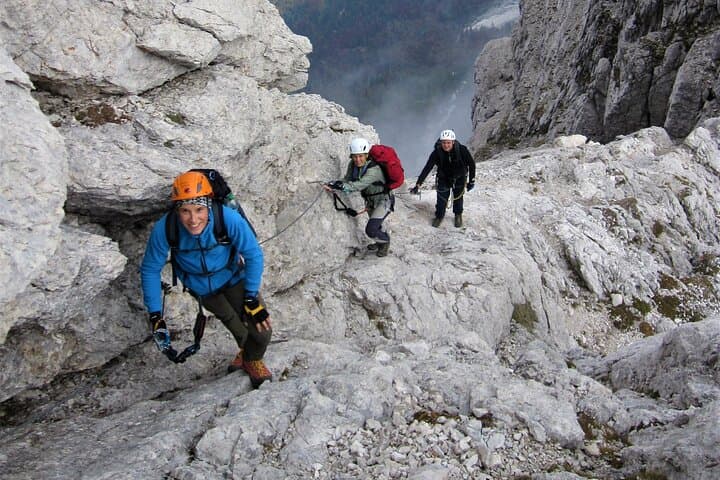
This private, guided experience suits parties wanting a technical introduction or a push toward more demanding heights. After a short drive from Cortina to the trailhead, expect a 20–60 minute approach across scree and path to the first steel rungs. Your UIAGM/IFMGA mountain guide issues helmets, harnesses, and via ferrata lanyards, then runs a concise safety briefing and hands-on practice of clipping, un-clipping, and moving on fixed protection. The climb itself varies by chosen route—guides select lines that match your party's skills—but most itineraries mix vertical ladders, exposed ridgelines, and short free-climb sections, totaling roughly 300–600 meters of elevation change.
Physically it’s demanding: steady arms, good balance, and a head for heights make the climb flow. Weather rules the day—sudden storms bring dangerous wet rock and lightning risk, which is why operators cancel in bad weather. The outing runs about 4–5 hours total and is tailor-made to be educational; guides teach rope maneuvers and climbing techniques you’ll use again.
Practical edge: wear stiff-soled approach or mountaineering boots, bring thin climbing gloves, sun protection, and a small daypack with water and snacks. If you want a gentler introduction, tell the guide—routes can be adjusted. For photographers, the ridgelines afford sweeping valley shots; for the adventurous, a longer line can include more exposed traverses and ladders. Above all, respect the rock and the fragile alpine plants: stay on route, pack out waste, and let the Dolomites keep their hard-won silence.
challenging.
4–5 hours.
Moderate to strong aerobic fitness with good upper-body endurance and comfort on exposed terrain
No formal experience required—guides provide instruction on gear, clipping technique, and movement—but you should be comfortable with exposure and have moderate fitness.
A certified UIAGM/IFMGA mountain guide, briefing, and technical instruction; confirm whether helmets and via ferrata kits are provided when booking.
Approach times are typically 20–60 minutes; expect 2–3 hours on the route itself and 4–5 hours total for the activity.
Older children with good fitness and no fear of heights can participate; operators set age limits—check with the guide and book accordingly.
The operator cancels in thunderstorms or unsafe conditions; the booking policy states no refund for cancellations by the traveler, so consider travel insurance.
The activity is private and tailored to your party; clarify maximum group size with the operator when booking to ensure the chosen route fits everyone’s skill level.
Via ferrata routes in the Dolomites trace their origins to World War I, when soldiers installed cables and ladders to move across the vertical fronts; many recreational ferratas follow or restore those historical lines.
The high-alpine environment is fragile—stick to fixed routes, avoid picking alpine plants, and pack out all waste; guides follow low-impact practices to protect trail and rock.
UIAGM/IFMGA Mountain Guide operates guided outdoor trips and adventures with an emphasis on safety, stewardship, and memorable experiences.
You clip into the steel cable and the mountain answers—cold stone grinds under your palms, a wind from the north pushes itself into the cleft of the ridge, and the jagged teeth of the Dolomites open like a map of eras. The day begins in Cortina d'Ampezzo, where narrow streets still carry the muffled echoes of World War I and the pale limestone faces ahead promise something sharper: exposure, technique, and views that reframe what alpine climbing feels like.
You clip into the steel cable and the mountain answers—cold stone grinds under your palms, a wind from the north pushes itself into the cleft of the ridge, and the jagged teeth of the Dolomites open like a map of eras. The day begins in Cortina d'Ampezzo, where narrow streets still carry the muffled echoes of World War I and the pale limestone faces ahead promise something sharper: exposure, technique, and views that reframe what alpine climbing feels like.
Via ferrata—literally 'iron road'—was born here, on these limestone walls, where wartime routes became recreational lines. The Dolomites are dolostone: harder, more brittle than common limestone, sculpted by ancient seabeds and uplifted by tectonic forces; its vertical faces create the perfect playground for fixed-steel routes. Culturally, you climb in a region where Ladin language and alpine pastoral tradition still color local life—mountain huts (rifugi) keep recipes simple and caloric, readying climbers for steep returns.
This private, guided experience suits parties wanting a technical introduction or a push toward more demanding heights. After a short drive from Cortina to the trailhead, expect a 20–60 minute approach across scree and path to the first steel rungs. Your UIAGM/IFMGA mountain guide issues helmets, harnesses, and via ferrata lanyards, then runs a concise safety briefing and hands-on practice of clipping, un-clipping, and moving on fixed protection. The climb itself varies by chosen route—guides select lines that match your party's skills—but most itineraries mix vertical ladders, exposed ridgelines, and short free-climb sections, totaling roughly 300–600 meters of elevation change.
Physically it’s demanding: steady arms, good balance, and a head for heights make the climb flow. Weather rules the day—sudden storms bring dangerous wet rock and lightning risk, which is why operators cancel in bad weather. The outing runs about 4–5 hours total and is tailor-made to be educational; guides teach rope maneuvers and climbing techniques you’ll use again.
Practical edge: wear stiff-soled approach or mountaineering boots, bring thin climbing gloves, sun protection, and a small daypack with water and snacks. If you want a gentler introduction, tell the guide—routes can be adjusted. For photographers, the ridgelines afford sweeping valley shots; for the adventurous, a longer line can include more exposed traverses and ladders. Above all, respect the rock and the fragile alpine plants: stay on route, pack out waste, and let the Dolomites keep their hard-won silence.