THE ADVENTURE COLLECTIVE® · Independent discovery and booking for outdoor travel

Move along iron rungs beneath pale limestone towers on a guided via ferrata near Cortina d'Ampezzo. This four-hour guided climb pairs seasoned UIAGM/IFMGA guides with classic Dolomite exposure—ideal for climbers ready to trade a trail for steel and verticality.
Move along iron rungs beneath pale limestone towers on a guided via ferrata near Cortina d'Ampezzo. This four-hour guided climb pairs seasoned UIAGM/IFMGA guides with classic Dolomite exposure—ideal for climbers ready to trade a trail for steel and verticality.
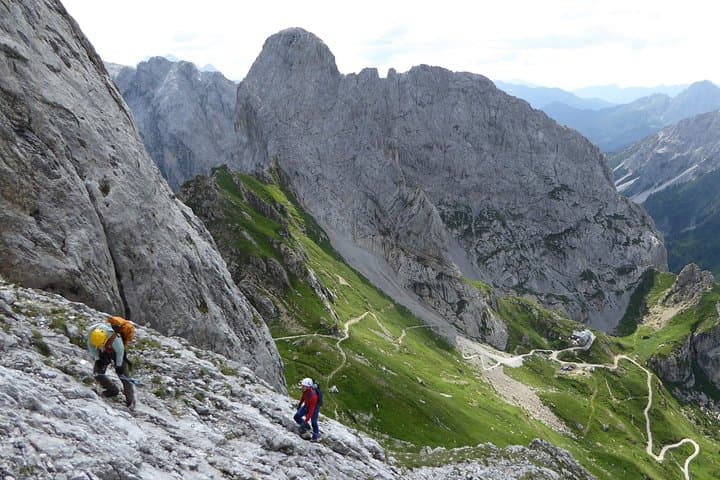
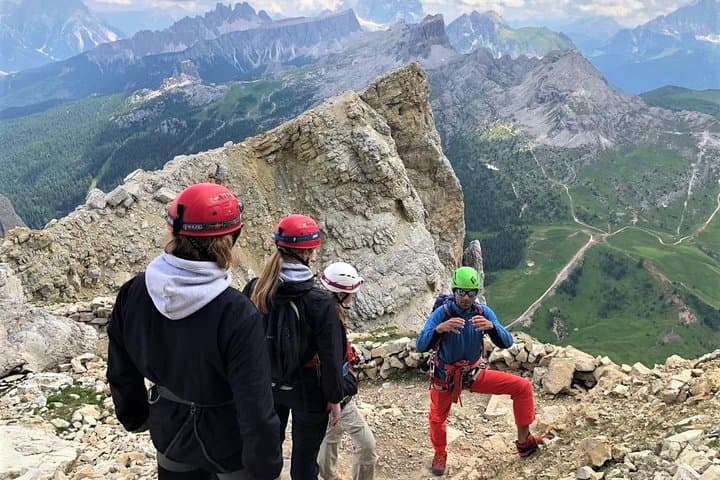
You step out of the minivan onto a scree slope and the mountains rearrange the world: pale limestone faces rise sheer and sharp, threaded with metal rungs and cable that wink in the sun. The guide pulls helmets from the kit bag, fits harnesses, and a brief, precise safety talk turns elevated fear into measured attention. For the next four hours the rock and the route take the lead—your job is to move, clip, and breathe with the cliff.
Verified experiences and guided adventures in the surrounding area.
Operated by UIAGM/IFMGA Mountain Guide · Cortina d'Ampezzo, Veneto
You step out of the minivan onto a scree slope and the mountains rearrange the world: pale limestone faces rise sheer and sharp, threaded with metal rungs and cable that wink in the sun. The guide pulls helmets from the kit bag, fits harnesses, and a brief, precise safety talk turns elevated fear into measured attention. For the next four hours the rock and the route take the lead—your job is to move, clip, and breathe with the cliff.
Via ferrata was born here in the Dolomites, when wartime paths were fixed with steel to connect dugouts and summits. That history still imprints the routes: cables follow natural weaknesses in the rock, sometimes passing rusted pegs and narrow ledges that were once strategic lines of communication. Geologically the Dolomites are dolostone—light, brittle limestone that fractures into vertical walls and knife-edged ridges. Sun and winter freeze-thaw have sculpted gullies and chimneys that make for exhilarating ferrata sequences.
Culturally, this part of the Veneto region speaks mountain—alpine farms, wooden chalets, and hearty plates of polenta and speck in Cortina d'Ampezzo, the town that serves as basecamp. Local guides here are UIAGM/IFMGA-trained: their knowledge is technical and local, aware of seasonal rockfall patterns and microclimates that can turn a dry morning into an afternoon thunderstorm.
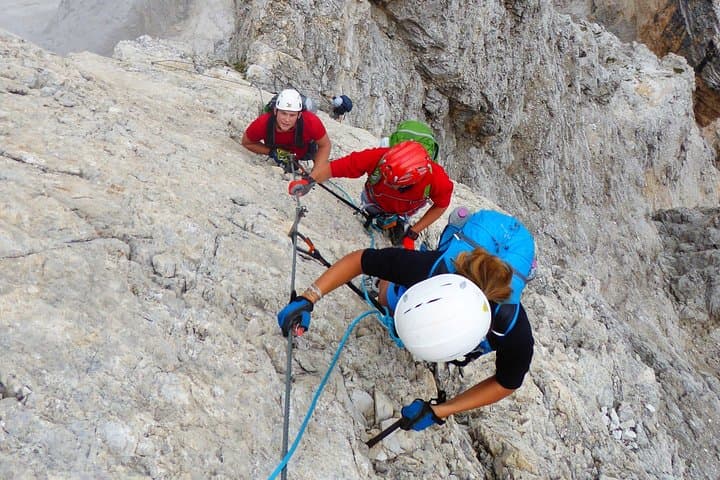
Typical logistics: the operator meets in or near Cortina and drives 15–20 minutes to a parking area. From there a 15–40 minute approach walk brings you to the start. Expect about 2–4 km of ferrata terrain with roughly 300–500 m of vertical gain on average routes; the full outing, briefing and return included, is around four hours. Terrain alternates metal rungs, exposed traverses, chimneys and short free-climb sections; the guide will tailor the specific track to the group's skill level.
Practical guidance: wear stiff-soled hiking boots with good ankle support and thin climbing or work-style gloves to protect your hands when clipping. Hydrate and bring layers—the sun can be strong on the rock but wind and elevation make late-season temperatures chill quickly. The operator supplies certified helmets, harnesses and via-ferrata lanyards; still, check that your footwear and gloves are well worn-in.
Safety and etiquette matter: stay clipped to the line, follow the guide's instructions, and let faster climbers pass at wider ledges. Respect the fragile alpine flora by staying on routes and packing out all waste. For first-timers, this is an intoxicating introduction to vertical travel—steep, precise and deeply place-specific to the Dolomites' luminous limestone walls.
challenging.
4 hours.
Moderate to fit; you should be comfortable hiking uphill with exposure and have basic balance and cardio endurance.
No technical climbing background is required; guides teach clipping and movement techniques, although comfort with heights and moderate fitness are necessary.
Yes—certified helmets, harnesses and via-ferrata lanyards are supplied; bring your own boots and gloves.
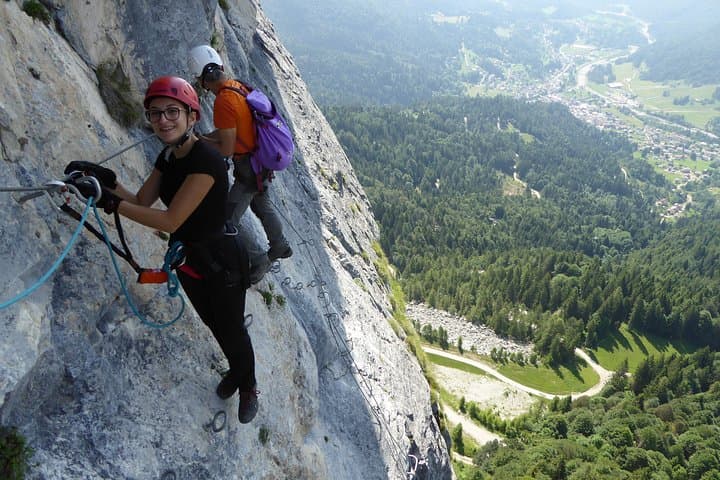
Routes can be highly exposed with long drop-offs visible beneath traverses; guides select sections suitable to the group's experience.
Shared tours can include up to 20 participants, but guides often split groups on different pitches to manage safety and flow.
The operator may cancel or reschedule in case of storms, heavy rain, or unsafe rockfall conditions—check the cancellation policy when booking.
While operators vary, participants should be physically capable and usually at least in early teens; check with the provider for specific age and weight restrictions.
Many Dolomite ferrata routes follow or repurpose World War I mule tracks and wartime passages that connected frontline positions across the range.
The Dolomites are a UNESCO site; stay on fixed routes, avoid trampling alpine vegetation, and follow local rules to minimize erosion and rock disturbance.
UIAGM/IFMGA Mountain Guide operates guided outdoor trips and adventures with an emphasis on safety, stewardship, and memorable experiences.
You step out of the minivan onto a scree slope and the mountains rearrange the world: pale limestone faces rise sheer and sharp, threaded with metal rungs and cable that wink in the sun. The guide pulls helmets from the kit bag, fits harnesses, and a brief, precise safety talk turns elevated fear into measured attention. For the next four hours the rock and the route take the lead—your job is to move, clip, and breathe with the cliff.
You step out of the minivan onto a scree slope and the mountains rearrange the world: pale limestone faces rise sheer and sharp, threaded with metal rungs and cable that wink in the sun. The guide pulls helmets from the kit bag, fits harnesses, and a brief, precise safety talk turns elevated fear into measured attention. For the next four hours the rock and the route take the lead—your job is to move, clip, and breathe with the cliff.
Via ferrata was born here in the Dolomites, when wartime paths were fixed with steel to connect dugouts and summits. That history still imprints the routes: cables follow natural weaknesses in the rock, sometimes passing rusted pegs and narrow ledges that were once strategic lines of communication. Geologically the Dolomites are dolostone—light, brittle limestone that fractures into vertical walls and knife-edged ridges. Sun and winter freeze-thaw have sculpted gullies and chimneys that make for exhilarating ferrata sequences.
Culturally, this part of the Veneto region speaks mountain—alpine farms, wooden chalets, and hearty plates of polenta and speck in Cortina d'Ampezzo, the town that serves as basecamp. Local guides here are UIAGM/IFMGA-trained: their knowledge is technical and local, aware of seasonal rockfall patterns and microclimates that can turn a dry morning into an afternoon thunderstorm.
Typical logistics: the operator meets in or near Cortina and drives 15–20 minutes to a parking area. From there a 15–40 minute approach walk brings you to the start. Expect about 2–4 km of ferrata terrain with roughly 300–500 m of vertical gain on average routes; the full outing, briefing and return included, is around four hours. Terrain alternates metal rungs, exposed traverses, chimneys and short free-climb sections; the guide will tailor the specific track to the group's skill level.
Practical guidance: wear stiff-soled hiking boots with good ankle support and thin climbing or work-style gloves to protect your hands when clipping. Hydrate and bring layers—the sun can be strong on the rock but wind and elevation make late-season temperatures chill quickly. The operator supplies certified helmets, harnesses and via-ferrata lanyards; still, check that your footwear and gloves are well worn-in.
Safety and etiquette matter: stay clipped to the line, follow the guide's instructions, and let faster climbers pass at wider ledges. Respect the fragile alpine flora by staying on routes and packing out all waste. For first-timers, this is an intoxicating introduction to vertical travel—steep, precise and deeply place-specific to the Dolomites' luminous limestone walls.