THE ADVENTURE COLLECTIVE® · Independent discovery and booking for outdoor travel

A guided day circuit from Cortina d'Ampezzo that climbs a gentle ridge and descends to a crystalline alpine lake. Expect varied mountain terrain, rifugio rest stops, and adaptable routing to match group ability.
A guided day circuit from Cortina d'Ampezzo that climbs a gentle ridge and descends to a crystalline alpine lake. Expect varied mountain terrain, rifugio rest stops, and adaptable routing to match group ability.
Rain-slick rock and a slice of blue sky frame the trail as the group pushes off from the small parking lot outside Cortina d'Ampezzo. Granite towers rise like weathered sculptures while a narrow path threads through larch and spruce; the air smells faintly of resin and cold water. The circuit climbs a gentle grade, crests a ridge, then drops toward a clear alpine lake where reflections tremble with every breeze.
Verified experiences and guided adventures in the surrounding area.
Operated by UIAGM/IFMGA Mountain Guide · Cortina d'Ampezzo, Veneto
Rain-slick rock and a slice of blue sky frame the trail as the group pushes off from the small parking lot outside Cortina d'Ampezzo. Granite towers rise like weathered sculptures while a narrow path threads through larch and spruce; the air smells faintly of resin and cold water. The circuit climbs a gentle grade, crests a ridge, then drops toward a clear alpine lake where reflections tremble with every breeze.
The Dolomites were born from ancient reef limestones and uplifted in the Tertiary—today those pale cliffs hold scars of WWI mule tracks and wartime galleries. Local mountain huts (rifugi) keep the culture alive: order a simple polenta and the conversation will swing from route conditions to family recipes. Geology shows in the vertical faces and scree slopes; flora shifts quickly from montane forest to dwarf shrubs and alpine grasses.
Expect varied terrain: compact dirt, rock steps, and occasional loose scree on descents. The route is designed for mixed groups and can be adjusted by guides, so it's suitable for hikers with basic endurance. Bring layered clothing, sturdy boots, at least 1.5 liters of water and sun protection; plan on 4–6 hours on your feet depending on pace and stops.
Timing matters—start early for calmer weather and clearer views. Practice simple mountain etiquette: stay on marked trails, keep noise low around wildlife, and tip the rifugio staff when you linger over an afternoon snack. This trek gives a direct, manageable taste of what makes the Dolomites one of Europe’s most compelling mountain landscapes.
easy.
5 hours.
Suitable for hikers with basic fitness who can sustain a steady 4–6 hour walk and manage moderate elevation change
Groups typically meet in Cortina d'Ampezzo near the agreed parking area; Cortina is accessible by regional bus from Dobbiaco or by car from Belluno and Bolzano.
The route is adaptable and described as suitable for all fitness levels, but children should be comfortable walking several hours and older participants should assess balance on uneven terrain.
There is usually a rifugio on the descent where you can buy local food; carrying snacks is recommended in case you prefer to eat on the trail.
This activity is listed as all sales final and may be canceled by the operator in bad weather; verify conditions with the provider before booking.
The Dolomites are ancient carbonate platforms transformed by uplift; the area also hosted WWI mountain warfare, leaving trails and tunnels that hikers still encounter.
Much of the region is protected under national parks and UNESCO status; stay on marked trails, pack out waste, and avoid disturbing fragile alpine vegetation.
UIAGM/IFMGA Mountain Guide operates guided outdoor trips and adventures with an emphasis on safety, stewardship, and memorable experiences.
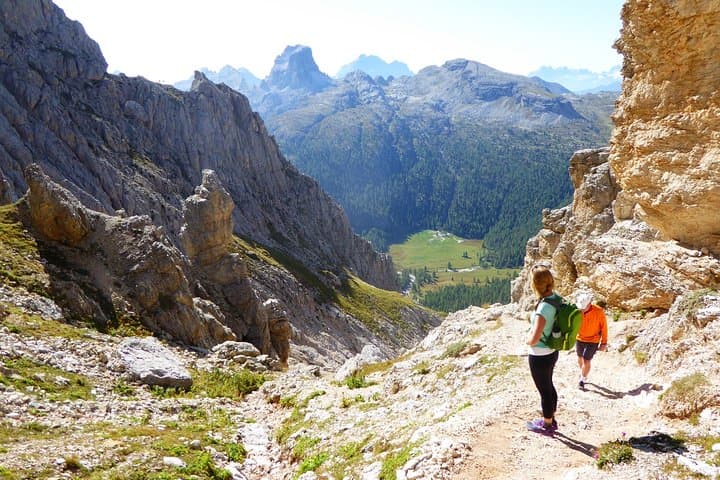


Rain-slick rock and a slice of blue sky frame the trail as the group pushes off from the small parking lot outside Cortina d'Ampezzo. Granite towers rise like weathered sculptures while a narrow path threads through larch and spruce; the air smells faintly of resin and cold water. The circuit climbs a gentle grade, crests a ridge, then drops toward a clear alpine lake where reflections tremble with every breeze.
Rain-slick rock and a slice of blue sky frame the trail as the group pushes off from the small parking lot outside Cortina d'Ampezzo. Granite towers rise like weathered sculptures while a narrow path threads through larch and spruce; the air smells faintly of resin and cold water. The circuit climbs a gentle grade, crests a ridge, then drops toward a clear alpine lake where reflections tremble with every breeze.
The Dolomites were born from ancient reef limestones and uplifted in the Tertiary—today those pale cliffs hold scars of WWI mule tracks and wartime galleries. Local mountain huts (rifugi) keep the culture alive: order a simple polenta and the conversation will swing from route conditions to family recipes. Geology shows in the vertical faces and scree slopes; flora shifts quickly from montane forest to dwarf shrubs and alpine grasses.
Expect varied terrain: compact dirt, rock steps, and occasional loose scree on descents. The route is designed for mixed groups and can be adjusted by guides, so it's suitable for hikers with basic endurance. Bring layered clothing, sturdy boots, at least 1.5 liters of water and sun protection; plan on 4–6 hours on your feet depending on pace and stops.
Timing matters—start early for calmer weather and clearer views. Practice simple mountain etiquette: stay on marked trails, keep noise low around wildlife, and tip the rifugio staff when you linger over an afternoon snack. This trek gives a direct, manageable taste of what makes the Dolomites one of Europe’s most compelling mountain landscapes.