THE ADVENTURE COLLECTIVE® · Independent discovery and booking for outdoor travel

Follow the river into narrow limestone gorges of the Dolomites for a five‑hour canyoning descent led by UIAGM/IFMGA guides. Expect slides, rappels, pools and local insights into Friuli’s mountain culture.
Follow the river into narrow limestone gorges of the Dolomites for a five‑hour canyoning descent led by UIAGM/IFMGA guides. Expect slides, rappels, pools and local insights into Friuli’s mountain culture.
The morning air tastes of wet stone and pine as you huddle beneath a granite lip and listen to water rehearsing its route downhill. Guides tighten harnesses, the bright neoprene of wet suits reflects a slit of sky, and the canyon ahead narrows to a throat of limestone where the river dares you to follow. For the next five hours you move with the water—sliding into emerald pools, edging down rappels, and stepping into cavernous alcoves the glaciers once cut through rock.
Verified experiences and guided adventures in the surrounding area.
Operated by UIAGM/IFMGA Mountain Guide · Maniago, Friuli-Venezia Giulia
The morning air tastes of wet stone and pine as you huddle beneath a granite lip and listen to water rehearsing its route downhill. Guides tighten harnesses, the bright neoprene of wet suits reflects a slit of sky, and the canyon ahead narrows to a throat of limestone where the river dares you to follow. For the next five hours you move with the water—sliding into emerald pools, edging down rappels, and stepping into cavernous alcoves the glaciers once cut through rock.
This is canyoning in the Dolomites of Friuli-Venezia Giulia: a hands-on way to read the region’s geologic history. The canyons here are carved from Triassic limestone and dolomite reef rocks uplifted by alpine collision. Over millennia, meltwater and flash floods scored deep channels, leaving waterfalls, plunge pools, and narrow slot sections that make each descent a sequence of technical moves and sensory surprises.
Culturally, these gorges sit at a crossroads. Friuli’s villages—Maniago among them—mix Italian mountain life with Austrian and Slovenian influences. Maniago, known locally for its cutlery tradition, supplies the mechanical precision behind the area's climbing and guiding culture; UIAGM/IFMGA guides working on this route bring that same exacting standard to safety and ropework.
Expect variety: easier stretches for first-timers and more technical lines for experienced canyoneers. The guides choose the canyon to match the group, balancing swimming, jumps, sliding, and abseils. Groups are small (max eight), so the rhythm is personal—time to pause on ledges, study the patterns of light, and watch water polish rock into a living staircase.
Practical guidance: arrive hydrated and fed—canyoning is cold work that burns calories fast. Bring shoes with grippy rubber, a fast-drying base layer, and leave cotton behind. The operator supplies wetsuit, helmet, harness, ropes and devices, but you should be comfortable treading water and have a moderate fitness base. Weather cancels trips—flash floods matter—so check conditions and plan flexibility into your itinerary.
Beyond the canyon, carve out time to walk Maniago’s streets, taste hearty mountain cuisine in a trattoria, and take a short drive to lookouts above the Val Cellina. Respect the fragile stream ecosystems: follow your guide’s instructions, avoid polluting sunscreens, and keep group sizes small to minimize impact.
By late afternoon, when the light pools low in the gorge and your hands remember every grip, canyoning here reads like a concentrated education in alpine water and stone—community, geology, and pure momentum braided into one vivid, manageable adventure.
moderate.
5 hours.
Moderate fitness required: comfortable with continuous movement, swimming short distances, and stair-step scrambling.
UIAGM/IFMGA-certified mountain guides lead all descents, set anchors, and manage rope systems for safety.
No—guides tailor the canyon choice to the group’s skill; however, a basic level of fitness and comfort swimming is expected.
Trips are cancelled for safety in high water or storms; operators typically reschedule when possible but their cancellation policy is strict—check before booking.
No—guides offer alternatives when possible; participants can opt out of jumps and use a controlled lower or slide instead.
Yes—wetsuit, harness, helmet, ropes and standard devices are included; bring personal footwear and a base layer.
Shared groups are capped at eight participants, keeping the descent personal and minimizing environmental impact.
The canyons follow channels cut through Triassic limestones uplifted during the Alpine orogeny; local mountain communities have long used these valleys for logging and seasonal pastures.
Guides emphasize low-impact practices: small groups, no-trace anchoring where possible, and banning chemical sunscreens to protect aquatic life.
UIAGM/IFMGA Mountain Guide operates guided outdoor trips and adventures with an emphasis on safety, stewardship, and memorable experiences.
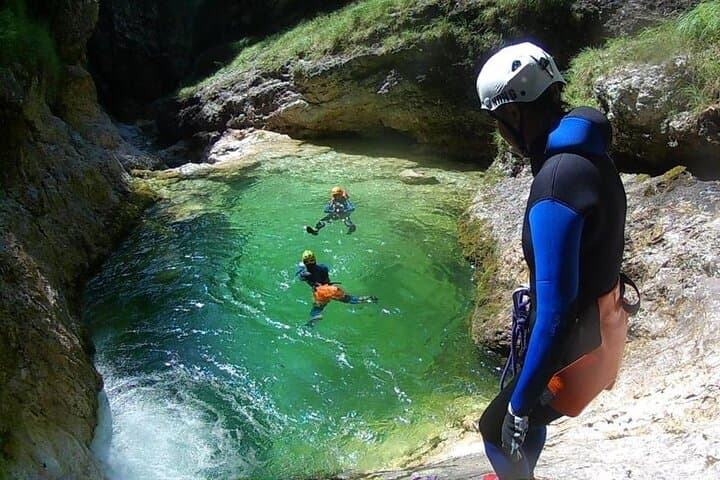
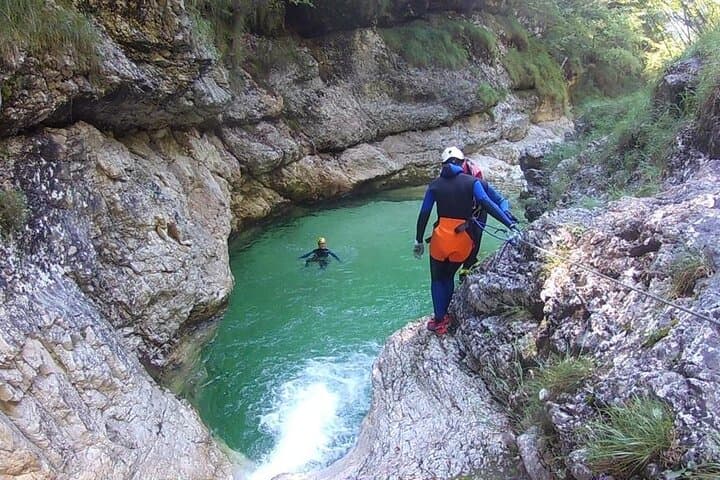
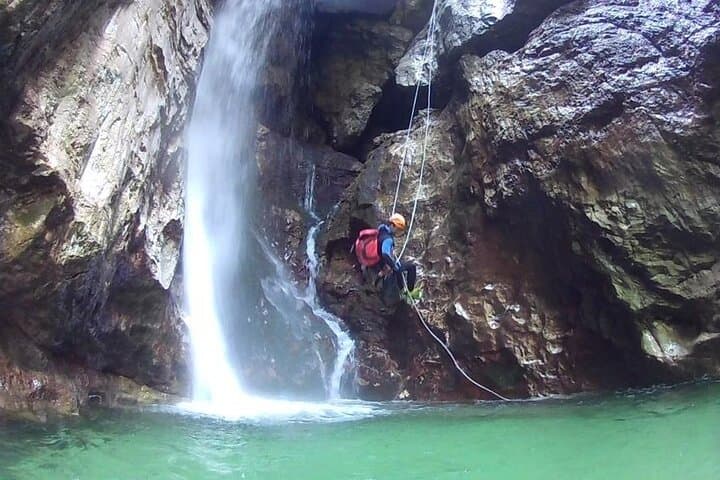
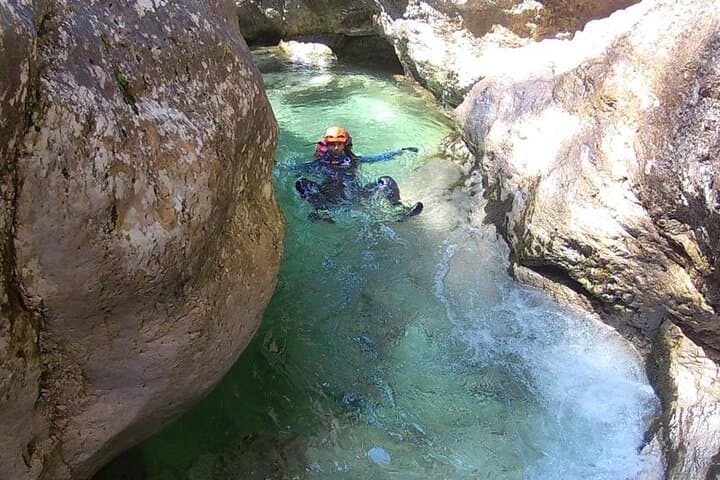
The morning air tastes of wet stone and pine as you huddle beneath a granite lip and listen to water rehearsing its route downhill. Guides tighten harnesses, the bright neoprene of wet suits reflects a slit of sky, and the canyon ahead narrows to a throat of limestone where the river dares you to follow. For the next five hours you move with the water—sliding into emerald pools, edging down rappels, and stepping into cavernous alcoves the glaciers once cut through rock.
The morning air tastes of wet stone and pine as you huddle beneath a granite lip and listen to water rehearsing its route downhill. Guides tighten harnesses, the bright neoprene of wet suits reflects a slit of sky, and the canyon ahead narrows to a throat of limestone where the river dares you to follow. For the next five hours you move with the water—sliding into emerald pools, edging down rappels, and stepping into cavernous alcoves the glaciers once cut through rock.
This is canyoning in the Dolomites of Friuli-Venezia Giulia: a hands-on way to read the region’s geologic history. The canyons here are carved from Triassic limestone and dolomite reef rocks uplifted by alpine collision. Over millennia, meltwater and flash floods scored deep channels, leaving waterfalls, plunge pools, and narrow slot sections that make each descent a sequence of technical moves and sensory surprises.
Culturally, these gorges sit at a crossroads. Friuli’s villages—Maniago among them—mix Italian mountain life with Austrian and Slovenian influences. Maniago, known locally for its cutlery tradition, supplies the mechanical precision behind the area's climbing and guiding culture; UIAGM/IFMGA guides working on this route bring that same exacting standard to safety and ropework.
Expect variety: easier stretches for first-timers and more technical lines for experienced canyoneers. The guides choose the canyon to match the group, balancing swimming, jumps, sliding, and abseils. Groups are small (max eight), so the rhythm is personal—time to pause on ledges, study the patterns of light, and watch water polish rock into a living staircase.
Practical guidance: arrive hydrated and fed—canyoning is cold work that burns calories fast. Bring shoes with grippy rubber, a fast-drying base layer, and leave cotton behind. The operator supplies wetsuit, helmet, harness, ropes and devices, but you should be comfortable treading water and have a moderate fitness base. Weather cancels trips—flash floods matter—so check conditions and plan flexibility into your itinerary.
Beyond the canyon, carve out time to walk Maniago’s streets, taste hearty mountain cuisine in a trattoria, and take a short drive to lookouts above the Val Cellina. Respect the fragile stream ecosystems: follow your guide’s instructions, avoid polluting sunscreens, and keep group sizes small to minimize impact.
By late afternoon, when the light pools low in the gorge and your hands remember every grip, canyoning here reads like a concentrated education in alpine water and stone—community, geology, and pure momentum braided into one vivid, manageable adventure.