THE ADVENTURE COLLECTIVE® · Independent discovery and booking for outdoor travel

Spend a cool half-day in the highlands above Chiang Rai visiting the Doi Tung Royal Villa, Mae Fah Luang Botanical Garden, and nearby hill tribe villages. This compact tour mixes scenic viewpoints, Lanna temple architecture, and insight into sustainable development projects.
Spend a cool half-day in the highlands above Chiang Rai visiting the Doi Tung Royal Villa, Mae Fah Luang Botanical Garden, and nearby hill tribe villages. This compact tour mixes scenic viewpoints, Lanna temple architecture, and insight into sustainable development projects.
You arrive to a road that climbs into cool mountain air; tea terraces slope away like folded green sheets and the road narrows as clouds brush the ridgeline. The Doi Tung Royal Villa sits modestly above the trees — Swiss-inspired timber and stone that feel deliberate against highland sky — while a short drive higher brings you to Wat Phra That Doi Tung, its twin Lanna stupas watching over valleys that, on clear days, reach to Laos and Myanmar.
Verified experiences and guided adventures in the surrounding area.
Operated by Asian Trails LTD · Chiang Rai, Chiang Rai Province
You arrive to a road that climbs into cool mountain air; tea terraces slope away like folded green sheets and the road narrows as clouds brush the ridgeline. The Doi Tung Royal Villa sits modestly above the trees — Swiss-inspired timber and stone that feel deliberate against highland sky — while a short drive higher brings you to Wat Phra That Doi Tung, its twin Lanna stupas watching over valleys that, on clear days, reach to Laos and Myanmar.
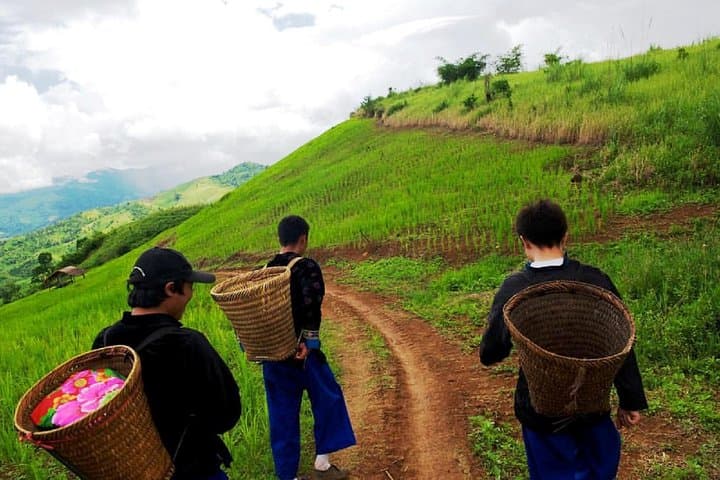
The half-day tour traces a modern conservation story: Princess Srinagarindra’s Doi Tung Development Project transformed eroded slopes into productive farms, botanical gardens, and community enterprises. Geologically, the area is part of the northern Thai highlands — older metamorphic rock worn into rounded peaks and fertile terraces. Culturally, the route passes villages of hill tribes such as the Akha and Hmong, where traditional textiles and agricultural practices persist alongside project-run coffee and handicraft initiatives.
Expect short, mostly paved drives with light walking between exhibits, gardens, and temple terraces at roughly 1,900–2,000 m elevation; temperatures are noticeably cooler than Chiang Rai town. Bring sun protection for open garden paths and a light layer for the summit wind. Follow local etiquette at religious sites — dress modestly and avoid photographing monks without permission.
Practical tips: allow about four hours including pickup, admissions are usually included, and guides will frame history and contemporary livelihoods clearly. This is a compact, accessible cultural outing that pairs scenic viewpoints with tangible examples of sustainable development, ideal for travelers who want a scenic half-day dive into northern Thailand’s landscape and communities.
easy.
3–4 hours.
Suitable for most fitness levels; involves short walks and standing during visits
This private half-day tour runs about four hours and typically includes hotel pickup and drop-off in Chiang Rai (pickup time confirmed after booking).
Yes—entrance and donation fees for sites listed (Royal Villa, Mae Fah Luang Botanical Garden, Wat Phra That Doi Tung) are generally included in the tour price.
Yes; the itinerary involves light walking and short drives, but stairs and some uneven paths mean mobility limitations could be challenging for some visitors.
Yes—many community enterprises sell hill tribe textiles, handicrafts, and locally grown coffee; bring small bills and ask guides about fair purchasing options.
The Doi Tung Development Project was initiated by Princess Srinagarindra to rehabilitate deforested slopes and create sustainable livelihoods for local communities, with the Royal Villa as a base for oversight.
The area emphasizes community-based agriculture and reforestation; visitors are encouraged to support verified local enterprises and avoid buying products of uncertain origin.
Asian Trails LTD operates guided outdoor trips and adventures with an emphasis on safety, stewardship, and memorable experiences.
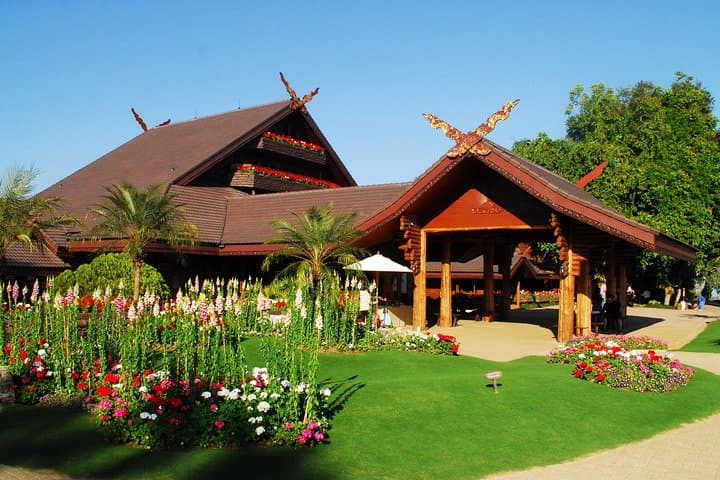
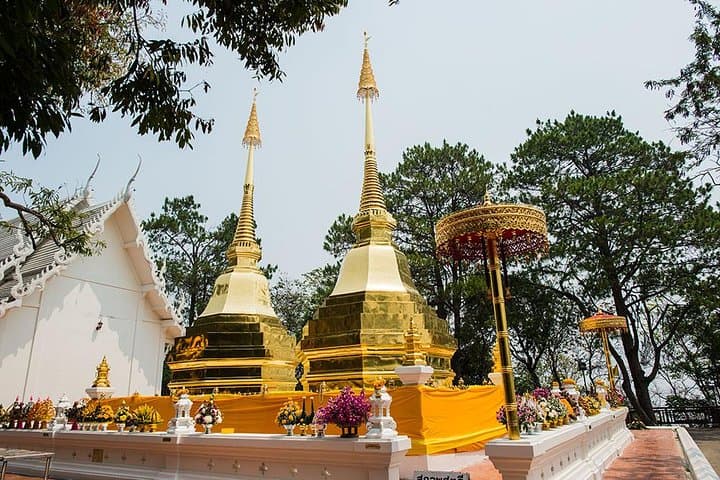
You arrive to a road that climbs into cool mountain air; tea terraces slope away like folded green sheets and the road narrows as clouds brush the ridgeline. The Doi Tung Royal Villa sits modestly above the trees — Swiss-inspired timber and stone that feel deliberate against highland sky — while a short drive higher brings you to Wat Phra That Doi Tung, its twin Lanna stupas watching over valleys that, on clear days, reach to Laos and Myanmar.
You arrive to a road that climbs into cool mountain air; tea terraces slope away like folded green sheets and the road narrows as clouds brush the ridgeline. The Doi Tung Royal Villa sits modestly above the trees — Swiss-inspired timber and stone that feel deliberate against highland sky — while a short drive higher brings you to Wat Phra That Doi Tung, its twin Lanna stupas watching over valleys that, on clear days, reach to Laos and Myanmar.
The half-day tour traces a modern conservation story: Princess Srinagarindra’s Doi Tung Development Project transformed eroded slopes into productive farms, botanical gardens, and community enterprises. Geologically, the area is part of the northern Thai highlands — older metamorphic rock worn into rounded peaks and fertile terraces. Culturally, the route passes villages of hill tribes such as the Akha and Hmong, where traditional textiles and agricultural practices persist alongside project-run coffee and handicraft initiatives.
Expect short, mostly paved drives with light walking between exhibits, gardens, and temple terraces at roughly 1,900–2,000 m elevation; temperatures are noticeably cooler than Chiang Rai town. Bring sun protection for open garden paths and a light layer for the summit wind. Follow local etiquette at religious sites — dress modestly and avoid photographing monks without permission.
Practical tips: allow about four hours including pickup, admissions are usually included, and guides will frame history and contemporary livelihoods clearly. This is a compact, accessible cultural outing that pairs scenic viewpoints with tangible examples of sustainable development, ideal for travelers who want a scenic half-day dive into northern Thailand’s landscape and communities.