THE ADVENTURE COLLECTIVE® · Independent discovery and booking for outdoor travel

Spend a full day exploring Chiang Mai’s spiritual summit and a quirky limestone cascade. Visit Wat Phra That Doi Suthep, wander the forested Palad Temple, and climb the famous Sticky Waterfall at Bua Thong.
Spend a full day exploring Chiang Mai’s spiritual summit and a quirky limestone cascade. Visit Wat Phra That Doi Suthep, wander the forested Palad Temple, and climb the famous Sticky Waterfall at Bua Thong.
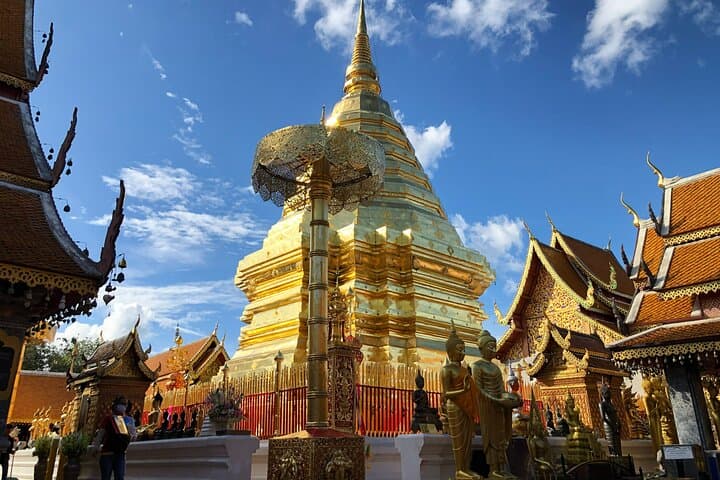
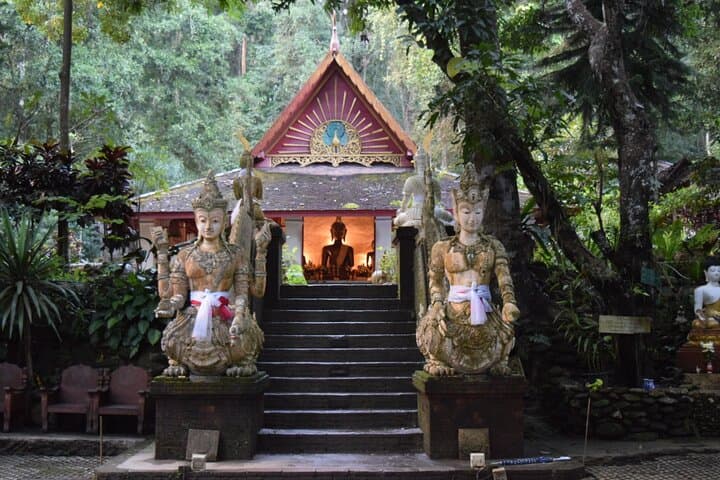
You step off an air-conditioned minivan and the mountain air grabs your attention — a cooler, incense-scented draft that carries distant chant and the rumble of small waterfalls. The itinerary threads together three very different faces of Doi Suthep: the gilded chedi of Wat Phra That Doi Suthep, the forested hush of Wat Pha Lat (Palad Temple), and the mineral-smoothed tiers of Bua Thong, the “Sticky Waterfall.”
Verified experiences and guided adventures in the surrounding area.
Operated by AP Good@travel · Chiang Mai, Chiang Mai
You step off an air-conditioned minivan and the mountain air grabs your attention — a cooler, incense-scented draft that carries distant chant and the rumble of small waterfalls. The itinerary threads together three very different faces of Doi Suthep: the gilded chedi of Wat Phra That Doi Suthep, the forested hush of Wat Pha Lat (Palad Temple), and the mineral-smoothed tiers of Bua Thong, the “Sticky Waterfall.”
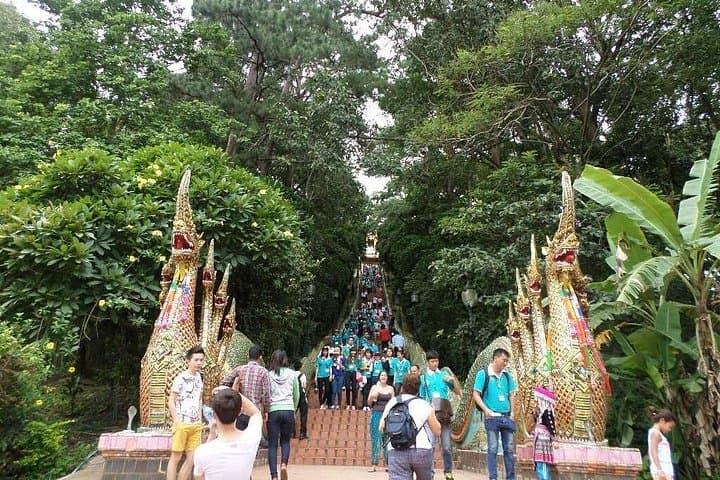
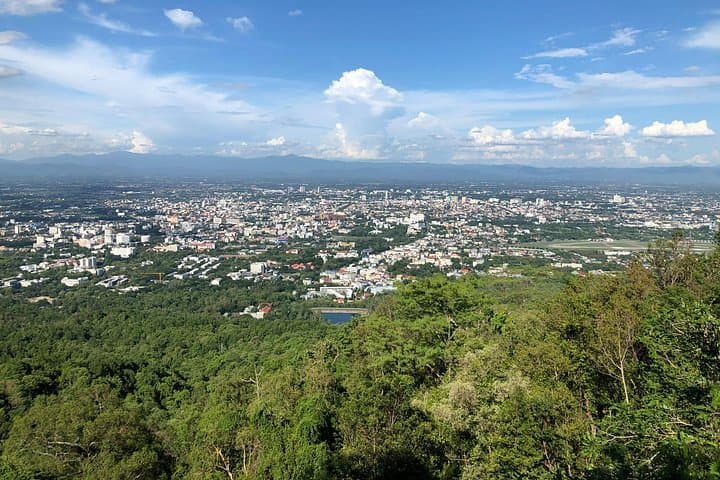
Doi Suthep is both a religious landmark and a geological ridge carved from granite and laterite; its temples were built as pilgrimage stations for northern Lanna kings and their communities. Wat Phra That’s golden chedi reflects centuries of Theravada devotion and offers panoramic views over Chiang Mai’s red-tiled grid. Lower on the slope, Wat Pha Lat sits on historic forest paths and was once a quiet hermitage — moss and teak roots keep the steps soft underfoot.
Bua Thong’s limestones are the tour’s geological surprise: calcium carbonate deposits create a rough, grippy surface that lets visitors climb through small cascades without slipping. That hands-on movement contrasts with the temple visits, where respectful silence and covered shoulders matter.
Practical guide: plan an early pickup and expect an 8–9 hour day with moderate walking, uneven steps and short rock climbs at the waterfall. Dress in lightweight long pants or a sarong for temple access, bring a daypack with water, and wear shoes with good traction for the Sticky Waterfall. Timing your visit for morning light at Doi Suthep and late afternoon at Bua Thong minimizes crowds and heat, and gives you both the ceremonial and physical rhythms of the mountain.
easy.
8–9 hours.
Suitable for people with basic mobility who can handle stairs and short rock scrambles; not strenuous but involves prolonged standing and walking.
Most group tours include the standard temple donation or entry; confirm with the operator for any additional fees at each site.
You can, but footwear with grip is recommended—some visitors prefer water shoes for toe protection and traction on wet limestone.
Yes, but parents should supervise at the waterfall and temple steps; infants must sit on laps during transport per tour rules.
Temples require covered shoulders and knees; if you arrive improperly dressed you may be asked to rent or borrow a sarong at the site.
Doi Suthep became a major pilgrimage site after the 14th century when a sacred relic was enshrined; the mountain road and terraces reflect Lanna-era religious development.
Stay on marked paths to protect erosion-prone slopes and avoid introducing soap or foreign substances to the waterfall; local guides often emphasize low-impact visits.
AP Good@travel operates guided outdoor trips and adventures with an emphasis on safety, stewardship, and memorable experiences.
You step off an air-conditioned minivan and the mountain air grabs your attention — a cooler, incense-scented draft that carries distant chant and the rumble of small waterfalls. The itinerary threads together three very different faces of Doi Suthep: the gilded chedi of Wat Phra That Doi Suthep, the forested hush of Wat Pha Lat (Palad Temple), and the mineral-smoothed tiers of Bua Thong, the “Sticky Waterfall.”
You step off an air-conditioned minivan and the mountain air grabs your attention — a cooler, incense-scented draft that carries distant chant and the rumble of small waterfalls. The itinerary threads together three very different faces of Doi Suthep: the gilded chedi of Wat Phra That Doi Suthep, the forested hush of Wat Pha Lat (Palad Temple), and the mineral-smoothed tiers of Bua Thong, the “Sticky Waterfall.”
Doi Suthep is both a religious landmark and a geological ridge carved from granite and laterite; its temples were built as pilgrimage stations for northern Lanna kings and their communities. Wat Phra That’s golden chedi reflects centuries of Theravada devotion and offers panoramic views over Chiang Mai’s red-tiled grid. Lower on the slope, Wat Pha Lat sits on historic forest paths and was once a quiet hermitage — moss and teak roots keep the steps soft underfoot.
Bua Thong’s limestones are the tour’s geological surprise: calcium carbonate deposits create a rough, grippy surface that lets visitors climb through small cascades without slipping. That hands-on movement contrasts with the temple visits, where respectful silence and covered shoulders matter.
Practical guide: plan an early pickup and expect an 8–9 hour day with moderate walking, uneven steps and short rock climbs at the waterfall. Dress in lightweight long pants or a sarong for temple access, bring a daypack with water, and wear shoes with good traction for the Sticky Waterfall. Timing your visit for morning light at Doi Suthep and late afternoon at Bua Thong minimizes crowds and heat, and gives you both the ceremonial and physical rhythms of the mountain.