THE ADVENTURE COLLECTIVE® · Independent discovery and booking for outdoor travel

Ascend to Wat Phra That Doi Suthep for panoramic city views, then explore San Kamphaeng’s craft villages where umbrellas, silk and silver are made by hand. This half-day tour pairs mountain temple grandeur with hands-on cultural discovery.
Ascend to Wat Phra That Doi Suthep for panoramic city views, then explore San Kamphaeng’s craft villages where umbrellas, silk and silver are made by hand. This half-day tour pairs mountain temple grandeur with hands-on cultural discovery.
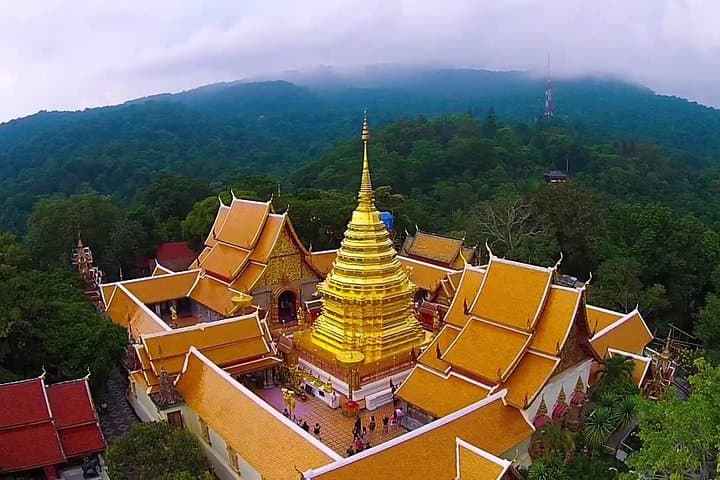
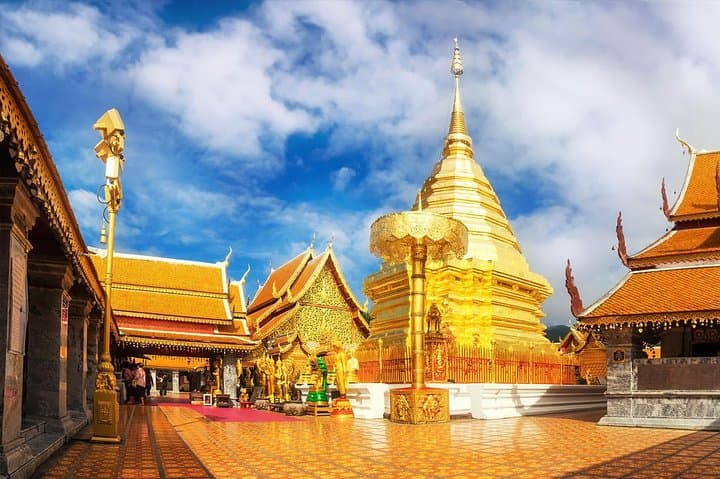
You climb out of Chiang Mai’s grid of streets and into cool, thinning air as the road snakes up the flanks of Doi Suthep. The city shrinks below; clouds press against the mountainside and the jungle seems to breathe around you. At the temple gate the Naga Serpent staircase unfurls—306 steps that test steadiness more than strength—and the golden chedi crowns the ridge, catching light like a quiet signal.
Verified experiences and guided adventures in the surrounding area.
Operated by Sightseeingbangkok.com · Chiang Mai, Chiang Mai
You climb out of Chiang Mai’s grid of streets and into cool, thinning air as the road snakes up the flanks of Doi Suthep. The city shrinks below; clouds press against the mountainside and the jungle seems to breathe around you. At the temple gate the Naga Serpent staircase unfurls—306 steps that test steadiness more than strength—and the golden chedi crowns the ridge, catching light like a quiet signal.
Wat Phra That Doi Suthep sits about 1,069 meters above sea level and has been central to Lanna culture since the 14th century. The complex is a study in lacquered wood, gilded spires, and mural panels that map Khmer and Thai stylistic shifts. Geologically the mountain is part of northern Thailand’s rugged theta of forested ridges; the ascent reveals terraced forest, rocky outcrops, and views across the Ping River valley.
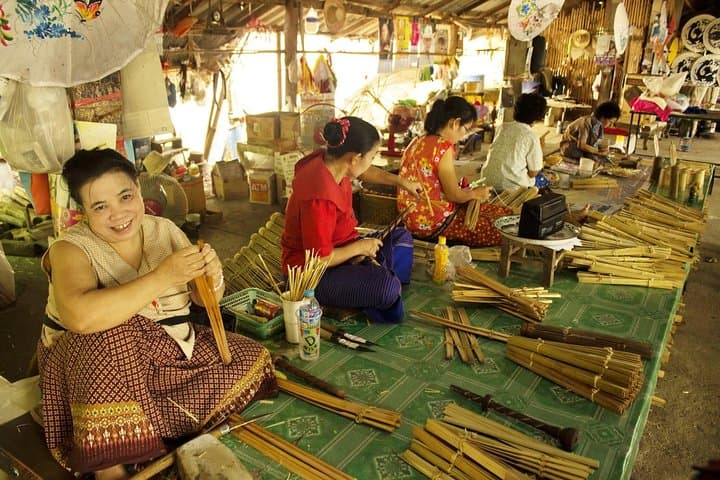
After the temple, the tour moves east to San Kamphaeng—home to Bo Sang umbrellas, silk weavers, and silver craftsmen. Workshops open their doors to demonstrations: umbrella frames tightened with bamboo, threads dyed and woven, lacquerware polished by hand.
Practical notes: the climb is optional—there’s a tram/cable car if you prefer. Dress respectfully—shoulders and knees covered for temple entry. Allow about four hours total including village stops; bring small bills for admission, offerings, and purchases. Expect uneven steps, occasional slippery surfaces, and shaded sections where humidity can linger. Hydrate, wear grippy shoes, and leave time to watch a silversmith or umbrella painter at work—those close-up moments are the real souvenirs.
easy.
4 hours.
Suitable for most fitness levels; walking and optional stair climbing required—those with limited mobility can use the cable car.
The tour runs about four hours from hotel pickup to drop-off, including time at the temple and handicraft villages.
Yes—there is a small entrance/admission fee for Wat Phra That Doi Suthep, typically collected at the parking/temple entry.
Yes—the temple offers a cable car/tram from the parking lot to the complex if you prefer not to climb the Naga staircase.
Many vendors will pack items for travel; for larger or fragile pieces, ask about shipping options or purchase protective packaging.
The temple dates to the 14th century and is tied to Lanna kingdom history; legend says a sacred white elephant marked the temple’s location after climbing the mountain.
Avoid feeding wildlife and minimize plastic use—buy local crafts directly from artisans to support traditional livelihoods and encourage sustainable production.
Sightseeingbangkok.com operates guided outdoor trips and adventures with an emphasis on safety, stewardship, and memorable experiences.

You climb out of Chiang Mai’s grid of streets and into cool, thinning air as the road snakes up the flanks of Doi Suthep. The city shrinks below; clouds press against the mountainside and the jungle seems to breathe around you. At the temple gate the Naga Serpent staircase unfurls—306 steps that test steadiness more than strength—and the golden chedi crowns the ridge, catching light like a quiet signal.
You climb out of Chiang Mai’s grid of streets and into cool, thinning air as the road snakes up the flanks of Doi Suthep. The city shrinks below; clouds press against the mountainside and the jungle seems to breathe around you. At the temple gate the Naga Serpent staircase unfurls—306 steps that test steadiness more than strength—and the golden chedi crowns the ridge, catching light like a quiet signal.
Wat Phra That Doi Suthep sits about 1,069 meters above sea level and has been central to Lanna culture since the 14th century. The complex is a study in lacquered wood, gilded spires, and mural panels that map Khmer and Thai stylistic shifts. Geologically the mountain is part of northern Thailand’s rugged theta of forested ridges; the ascent reveals terraced forest, rocky outcrops, and views across the Ping River valley.
After the temple, the tour moves east to San Kamphaeng—home to Bo Sang umbrellas, silk weavers, and silver craftsmen. Workshops open their doors to demonstrations: umbrella frames tightened with bamboo, threads dyed and woven, lacquerware polished by hand.
Practical notes: the climb is optional—there’s a tram/cable car if you prefer. Dress respectfully—shoulders and knees covered for temple entry. Allow about four hours total including village stops; bring small bills for admission, offerings, and purchases. Expect uneven steps, occasional slippery surfaces, and shaded sections where humidity can linger. Hydrate, wear grippy shoes, and leave time to watch a silversmith or umbrella painter at work—those close-up moments are the real souvenirs.