THE ADVENTURE COLLECTIVE® · Independent discovery and booking for outdoor travel

This full-day private tour from Chiang Mai pairs one of northern Thailand’s most revered temples with a hill‑tribe visit and the unique ‘Sticky’ Bua Thong Waterfall. Expect stairs, short hikes, cultural encounters and a limestone climb that grips underfoot.
This full-day private tour from Chiang Mai pairs one of northern Thailand’s most revered temples with a hill‑tribe visit and the unique ‘Sticky’ Bua Thong Waterfall. Expect stairs, short hikes, cultural encounters and a limestone climb that grips underfoot.
You step out of the air‑conditioned van onto a rim of forest and concrete—monks slope past in saffron; the Golden Chedi glints above the treeline, and below the city sits like a breath held. The 306 steps to Wat Phra That Doi Suthep invite a steady cadence, or you can let the cable car lift you through dripping ficus and teak.
Verified experiences and guided adventures in the surrounding area.
Operated by AP Good@travel · Chiang Mai, Chiang Mai
You step out of the air‑conditioned van onto a rim of forest and concrete—monks slope past in saffron; the Golden Chedi glints above the treeline, and below the city sits like a breath held. The 306 steps to Wat Phra That Doi Suthep invite a steady cadence, or you can let the cable car lift you through dripping ficus and teak.
Built in stages since 1373, Doi Suthep is both a pilgrimage site and a vantage point over Chiang Mai; its chedi anchors a landscape of volcanic ridges and eroded sandstone that funnel mist into the valley. A short drive away, the Long Neck village offers a window into Karen traditions—handwoven cloth, oral histories, and livelihoods adapting to tourism. Later, Bua Thong (“Sticky”) Waterfall changes the rules: mineral-laden limestone grips feet and palms, turning a rush of water into a climbable stairway that dares you up its tiers.
Expect a mix of paved steps, temple courtyards, short village walks, and the gritty, uneven limestone at the falls. The day includes lunch, bottled water, and private transport with hotel pickup. Cultural norms matter—dress modestly at temples, ask before photographing people, and support artisans rather than buying mass‑made goods.
Practical guidance: wear grippy shoes that can get wet, bring sun protection and insect repellent, and carry a small pack for valuables. Start early to beat midday heat and combine camera batteries with patience; crowds thin toward late afternoon when light and air cool the ridge.
challenging.
8–9 hours.
Good cardio and leg strength recommended—stairs, short hikes and scrambling on limestone require stamina.
Expect several flights of stairs at Doi Suthep, short walks through the hill tribe village, and a climbable, uneven limestone waterfall; moderate to strong fitness is recommended.
The tour description notes lunch and admission to the listed sites are included; confirm any optional donations or souvenirs are extra.
Photos are generally allowed at the temple and village—always ask permission before photographing people, especially inside homes or during rituals.
Bua Thong’s pools are shallow and the focus is on climbing the limestone; swimming is limited and water flow varies seasonally, so exercise caution.
Wat Phra That Doi Suthep dates back to the 14th century and has long been a focal point for Lanna kingdom pilgrimage and regional identity.
Respect local communities and fragile limestone at Bua Thong—avoid soaps in water, stay on trails, and buy from local artisans to support sustainable incomes.
AP Good@travel operates guided outdoor trips and adventures with an emphasis on safety, stewardship, and memorable experiences.


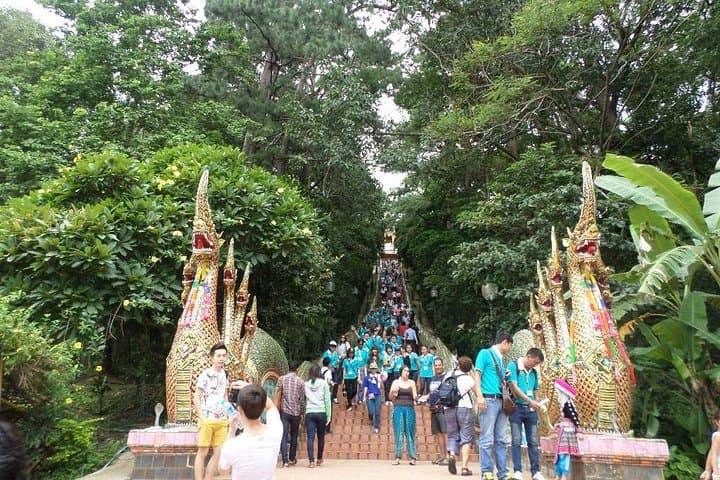
You step out of the air‑conditioned van onto a rim of forest and concrete—monks slope past in saffron; the Golden Chedi glints above the treeline, and below the city sits like a breath held. The 306 steps to Wat Phra That Doi Suthep invite a steady cadence, or you can let the cable car lift you through dripping ficus and teak.
You step out of the air‑conditioned van onto a rim of forest and concrete—monks slope past in saffron; the Golden Chedi glints above the treeline, and below the city sits like a breath held. The 306 steps to Wat Phra That Doi Suthep invite a steady cadence, or you can let the cable car lift you through dripping ficus and teak.
Built in stages since 1373, Doi Suthep is both a pilgrimage site and a vantage point over Chiang Mai; its chedi anchors a landscape of volcanic ridges and eroded sandstone that funnel mist into the valley. A short drive away, the Long Neck village offers a window into Karen traditions—handwoven cloth, oral histories, and livelihoods adapting to tourism. Later, Bua Thong (“Sticky”) Waterfall changes the rules: mineral-laden limestone grips feet and palms, turning a rush of water into a climbable stairway that dares you up its tiers.
Expect a mix of paved steps, temple courtyards, short village walks, and the gritty, uneven limestone at the falls. The day includes lunch, bottled water, and private transport with hotel pickup. Cultural norms matter—dress modestly at temples, ask before photographing people, and support artisans rather than buying mass‑made goods.
Practical guidance: wear grippy shoes that can get wet, bring sun protection and insect repellent, and carry a small pack for valuables. Start early to beat midday heat and combine camera batteries with patience; crowds thin toward late afternoon when light and air cool the ridge.