THE ADVENTURE COLLECTIVE® · Independent discovery and booking for outdoor travel

Climb the Naga-flanked stairs to Doi Suthep’s golden chedi, then wander the floral terraces of Phu Ping Palace on a focused half-day from Chiang Mai. This practical guide covers what to expect, local history, and essential tips for a smooth visit.
Climb the Naga-flanked stairs to Doi Suthep’s golden chedi, then wander the floral terraces of Phu Ping Palace on a focused half-day from Chiang Mai. This practical guide covers what to expect, local history, and essential tips for a smooth visit.
Perched about 1,069 meters above the valley, the trail and stairway to Wat Phra That Doi Suthep push you up through teak and banyan, the carved Naga serpents keeping time with each footfall.
Verified experiences and guided adventures in the surrounding area.
Operated by Way to Bangkok · Chiang Mai, Chiang Mai Province
Perched about 1,069 meters above the valley, the trail and stairway to Wat Phra That Doi Suthep push you up through teak and banyan, the carved Naga serpents keeping time with each footfall.
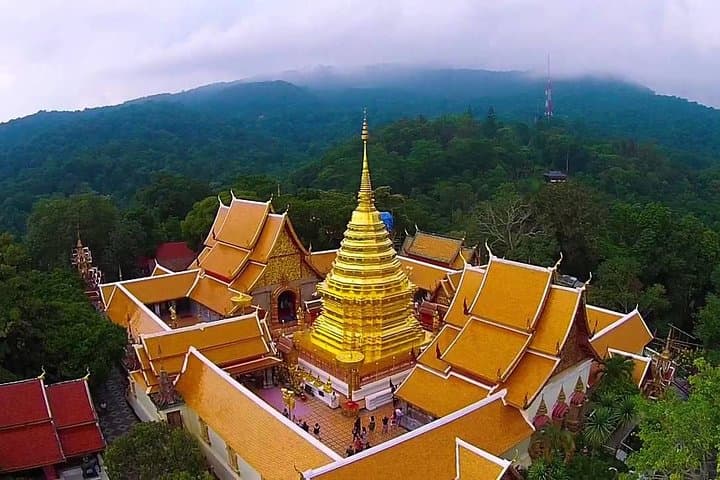
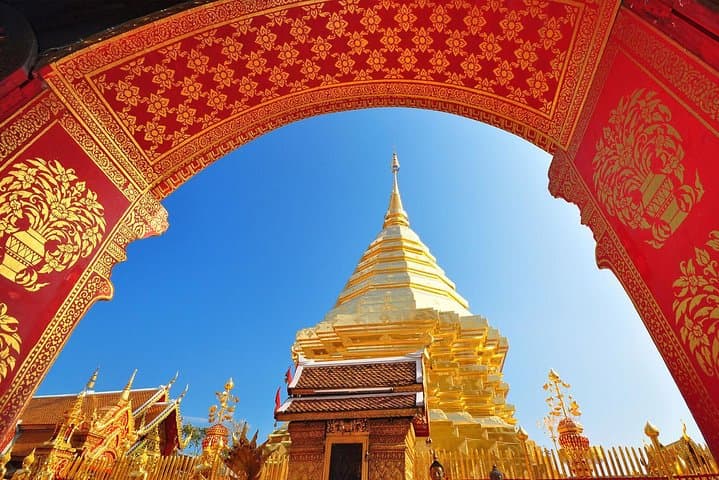
On clear mornings the temple’s gilded spire punctures the sky and the city below feels like a folded map. The site traces back to the late 14th century and carries the island-like legend of a white elephant that chose the spot for a Buddha relic; the chedi and lacquered shrines display classic Lanna ornament and craftsmanship. Geologically the ridge is weathered volcanic rock covered in evergreen forest, which shapes the cooling breezes and pockets of mist that sometimes wrap the temple.
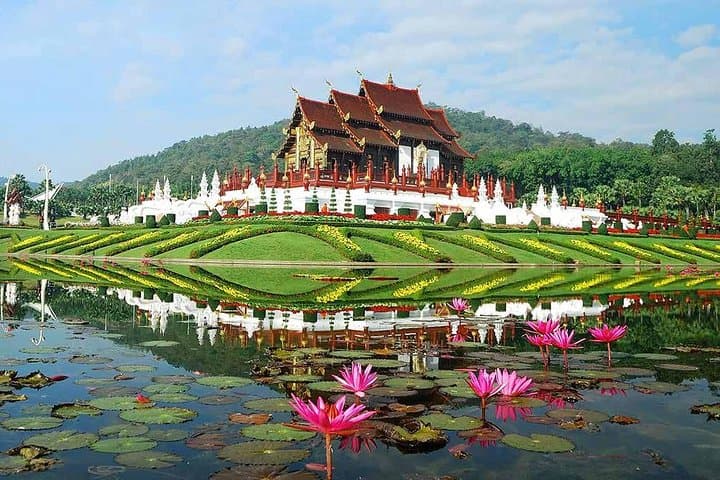
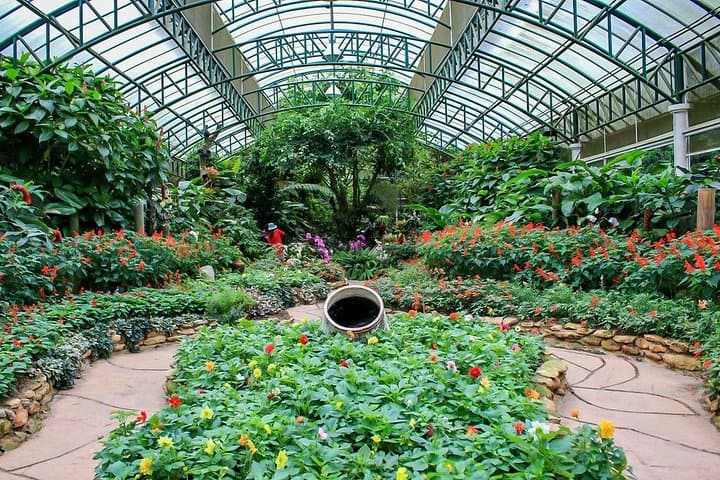
A short drive higher brings Phu Ping Palace, the royal winter residence built in 1962. Its terraced gardens mix temperate and tropical plantings—beds change through the year and gardeners prune with quiet precision—offering a calm counterpoint to temple rituals and incense.
Practical guidance: the advertised half-day runs roughly four hours with hotel pickup; you can choose the 306-step Naga staircase or a short cable car ride. Dress modestly (shoulders and knees covered), carry water, sun protection and slip-resistant shoes for polished stone and occasional moss. Expect stairs, short paved walks and some uneven surfaces; allow time for photos at the main viewpoint and a peaceful stroll through the palace gardens before returning to town.
Respect worship areas, avoid feeding monkeys, and time your visit early to catch cooler air and thinner crowds.
easy.
3–4 hours.
Light fitness; able to climb stairs and walk short paved or uneven sections.
Admission is typically charged for Wat Doi Suthep and for Phu Ping Palace gardens; fees vary slightly and are often included on guided tours—carry local currency.
Yes—the Naga Serpent staircase has 306 steps; it’s a cultural route but can be steep, so choose the cable car if you prefer less climbing.
The half-day is generally family-friendly, but seniors or those with mobility issues should use the cable car and note there are many steps and some uneven pavement.
There are small stalls near the temple and parking areas selling snacks, drinks and local handicrafts; the palace grounds are quieter with limited vendors.
Wat Phra That Doi Suthep was established in the late 14th century and is tied to a legend of a white elephant that located the site for a Buddha relic; Phu Ping Palace was built as a royal winter retreat in 1962.
Visitor pressure can stress hillside forests and palace gardens—stay on paths, avoid feeding wildlife and follow posted rules to protect erosion-prone slopes.
Way to Bangkok operates guided outdoor trips and adventures with an emphasis on safety, stewardship, and memorable experiences.
Perched about 1,069 meters above the valley, the trail and stairway to Wat Phra That Doi Suthep push you up through teak and banyan, the carved Naga serpents keeping time with each footfall.
Perched about 1,069 meters above the valley, the trail and stairway to Wat Phra That Doi Suthep push you up through teak and banyan, the carved Naga serpents keeping time with each footfall.
On clear mornings the temple’s gilded spire punctures the sky and the city below feels like a folded map. The site traces back to the late 14th century and carries the island-like legend of a white elephant that chose the spot for a Buddha relic; the chedi and lacquered shrines display classic Lanna ornament and craftsmanship. Geologically the ridge is weathered volcanic rock covered in evergreen forest, which shapes the cooling breezes and pockets of mist that sometimes wrap the temple.
A short drive higher brings Phu Ping Palace, the royal winter residence built in 1962. Its terraced gardens mix temperate and tropical plantings—beds change through the year and gardeners prune with quiet precision—offering a calm counterpoint to temple rituals and incense.
Practical guidance: the advertised half-day runs roughly four hours with hotel pickup; you can choose the 306-step Naga staircase or a short cable car ride. Dress modestly (shoulders and knees covered), carry water, sun protection and slip-resistant shoes for polished stone and occasional moss. Expect stairs, short paved walks and some uneven surfaces; allow time for photos at the main viewpoint and a peaceful stroll through the palace gardens before returning to town.
Respect worship areas, avoid feeding monkeys, and time your visit early to catch cooler air and thinner crowds.