THE ADVENTURE COLLECTIVE® · Independent discovery and booking for outdoor travel

See Doha’s coastal skyline, The Pearl’s engineered marina, Katara Cultural Village and Souq Waqif in a private half-day tour. Ideal for first-time visitors who want a focused introduction to the city’s history, architecture and markets.
See Doha’s coastal skyline, The Pearl’s engineered marina, Katara Cultural Village and Souq Waqif in a private half-day tour. Ideal for first-time visitors who want a focused introduction to the city’s history, architecture and markets.
A wind off the Arabian Gulf sharpens the edges of Doha’s skyline as the private car eases away from the Corniche. In four focused hours the city unfolds: a glitzy marina sculpted from reclaimed sand, a cultural village that stages art and opera, a museum island with a single architect’s silhouette against blue water, and an alleway market where spices and incense puncture the air. The pace is intentional—snapshots rather than an exhaustive itinerary—so each stop feels like a well-timed scene.
Verified experiences and guided adventures in the surrounding area.
Operated by Qatar International Tours · Doha, Doha
A wind off the Arabian Gulf sharpens the edges of Doha’s skyline as the private car eases away from the Corniche. In four focused hours the city unfolds: a glitzy marina sculpted from reclaimed sand, a cultural village that stages art and opera, a museum island with a single architect’s silhouette against blue water, and an alleway market where spices and incense puncture the air. The pace is intentional—snapshots rather than an exhaustive itinerary—so each stop feels like a well-timed scene.
Doha’s modern rise is recent: late-20th-century oil and gas wealth funded ambitious land reclamation projects like The Pearl and bold civic architecture such as the Museum of Islamic Art by I.M. Pei. Geologically the peninsula sits on carbonate platforms and shallow coastal sabkhas, which explain the city’s flat horizon and the engineering behind artificial islands. Culturally, Qatar balances rapid modernization with visible traditions—falconry, dhow boats, and souq commerce remain active parts of daily life.
Practically, this is an easy, low-impact way to sample Doha. Expect short walks of 15–30 minutes at each stop, limited stairs at some sites, and photography-friendly exteriors. Museum entry may be closed midweek; the souq is busiest at dusk. Dress modestly—shoulders and knees covered in public spaces—and carry sun protection: the desert sun is insistent even on cloudy days. Bottled water is provided, but bring a refillable bottle for the day. Confirm pickup details in advance, and allow extra time if you plan to linger at cafes or take a boat ride around The Pearl. The tour suits travelers who want a compact, guided orientation to Doha’s contrasts between tradition and high-design.
easy.
4 hours.
Suitable for all fitness levels—mostly short, gentle walks between stops
Yes—private pickup and drop-off within Doha are included; confirm your preferred pickup point during booking.
Some stops include admission; confirm specific inclusions—Museum of Islamic Art entry is sometimes excluded depending on the package.
Yes—this is a low-intensity tour with short walks and private transport, suitable for families and most mobility levels.
Small Qatari riyal notes and cards at larger shops; many small vendors prefer cash and will expect bargaining.
Doha transformed from a pearl-diving coastal town into a globalized city after mid-20th-century oil and gas development; modern landmarks often sit atop former coastal flats.
Rapid coastal development stresses marine and shoreline ecosystems—travelers should avoid littering, use refillable water bottles, and respect protected areas.
Qatar International Tours operates guided outdoor trips and adventures with an emphasis on safety, stewardship, and memorable experiences.
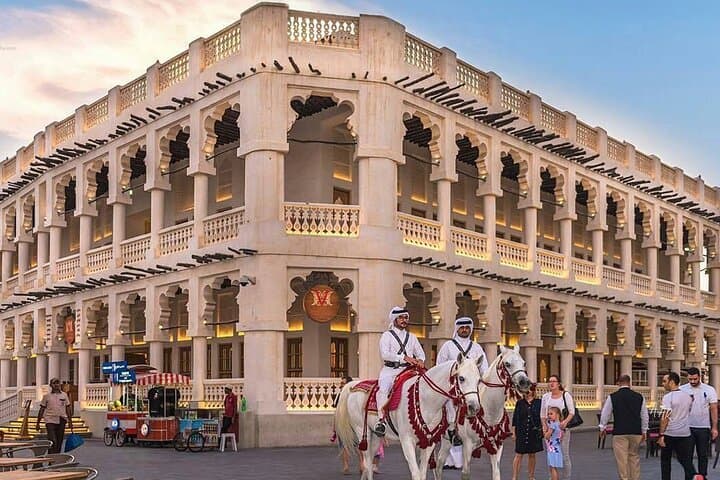
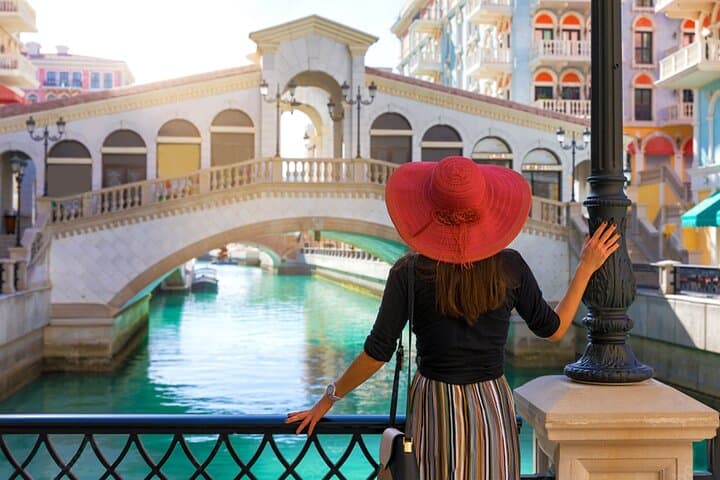
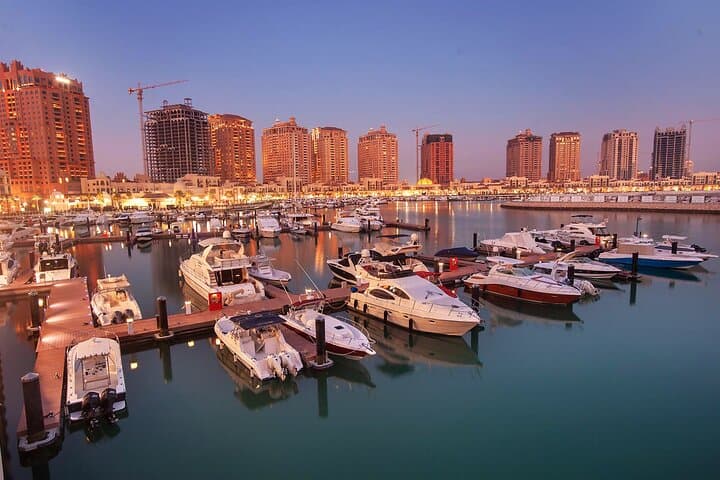
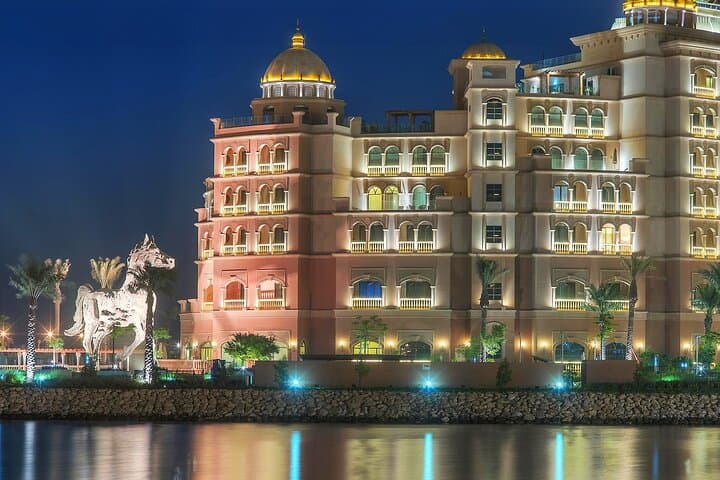
A wind off the Arabian Gulf sharpens the edges of Doha’s skyline as the private car eases away from the Corniche. In four focused hours the city unfolds: a glitzy marina sculpted from reclaimed sand, a cultural village that stages art and opera, a museum island with a single architect’s silhouette against blue water, and an alleway market where spices and incense puncture the air. The pace is intentional—snapshots rather than an exhaustive itinerary—so each stop feels like a well-timed scene.
A wind off the Arabian Gulf sharpens the edges of Doha’s skyline as the private car eases away from the Corniche. In four focused hours the city unfolds: a glitzy marina sculpted from reclaimed sand, a cultural village that stages art and opera, a museum island with a single architect’s silhouette against blue water, and an alleway market where spices and incense puncture the air. The pace is intentional—snapshots rather than an exhaustive itinerary—so each stop feels like a well-timed scene.
Doha’s modern rise is recent: late-20th-century oil and gas wealth funded ambitious land reclamation projects like The Pearl and bold civic architecture such as the Museum of Islamic Art by I.M. Pei. Geologically the peninsula sits on carbonate platforms and shallow coastal sabkhas, which explain the city’s flat horizon and the engineering behind artificial islands. Culturally, Qatar balances rapid modernization with visible traditions—falconry, dhow boats, and souq commerce remain active parts of daily life.
Practically, this is an easy, low-impact way to sample Doha. Expect short walks of 15–30 minutes at each stop, limited stairs at some sites, and photography-friendly exteriors. Museum entry may be closed midweek; the souq is busiest at dusk. Dress modestly—shoulders and knees covered in public spaces—and carry sun protection: the desert sun is insistent even on cloudy days. Bottled water is provided, but bring a refillable bottle for the day. Confirm pickup details in advance, and allow extra time if you plan to linger at cafes or take a boat ride around The Pearl. The tour suits travelers who want a compact, guided orientation to Doha’s contrasts between tradition and high-design.