THE ADVENTURE COLLECTIVE® · Independent discovery and booking for outdoor travel

Explore Doha’s cultural spine in a single day: from the desert‑rose volumes of the National Museum to I.M. Pei’s Museum of Islamic Art and the heritage houses of Msheireb. This guided, private tour packs history, architecture and hands‑on displays into a 5–6 hour itinerary.
Explore Doha’s cultural spine in a single day: from the desert‑rose volumes of the National Museum to I.M. Pei’s Museum of Islamic Art and the heritage houses of Msheireb. This guided, private tour packs history, architecture and hands‑on displays into a 5–6 hour itinerary.
You step off the air-conditioned vehicle into the hush of Doha’s waterfront: the National Museum’s desert‑rose plates cut the light into shadow, while I.M. Pei’s geometric museum sits calm on its own island. The city’s modern surfaces—sandstone tones, glass, and steel—frame displays that pull the landscape and sea into the stories on the walls.
Verified experiences and guided adventures in the surrounding area.
Operated by Al Annabi Tourism · Doha, Doha
You step off the air-conditioned vehicle into the hush of Doha’s waterfront: the National Museum’s desert‑rose plates cut the light into shadow, while I.M. Pei’s geometric museum sits calm on its own island. The city’s modern surfaces—sandstone tones, glass, and steel—frame displays that pull the landscape and sea into the stories on the walls.
The route links sites that trace Qatar’s leap from pearling and palace rule to a global cultural hub. The National Museum, built around Sheikh Abdullah bin Jassim Al‑Thani’s palace, uses immersive galleries to map geology, tribal life and oil-era transformation; the Museum of Islamic Art houses 1,400 years of material culture curated by I.M. Pei’s clean, coastal volumes. Msheireb Museums reanimate four heritage houses to show daily life in old Doha, while the 3-2-1 Qatar Olympic and Sports Museum turns sporting heritage into interactive exhibits.
Expect mostly indoor walking with short transfers by AC vehicle—this private tour commonly runs 5–6 hours. Photography restrictions vary by gallery; many special exhibitions require separate tickets. Exhibits emphasize preservation: rare manuscripts and textiles are climate‑controlled, and labels often include Arabic and English.
Practical guidance: wear comfortable shoes and modest, breathable clothing; carry a light layer for chilled galleries; plan visits around prayer times and late‑afternoon heat in summer. Admissions to specific museums are often not included, so check ticket policies in advance. The tour is well suited to curious visitors who want a concentrated, accessible survey of Qatar’s museums without navigating transit alone.
easy.
5–6 hours.
Suitable for most fitness levels; involves several hours of walking on flat surfaces and short vehicle transfers.
Admissions are often not included on this tour—confirm at booking and buy timed tickets for major museums if needed.
Most museums have level access, elevators and ramps; notify the operator in advance to arrange appropriate pickup and assistance.
Guides typically speak English; private bookings may offer other languages with advance notice—check when you book.
Photography policies vary by museum and exhibition—look for posted signs and ask staff; flash and tripods are commonly restricted.
The National Museum reuses Sheikh Abdullah bin Jassim Al‑Thani’s former palace as its core; MIA was designed by I.M. Pei and anchors Doha’s waterfront cultural district.
Qatar’s major museums run climate‑controlled displays to protect fragile artifacts; visitors are asked to follow signage to limit light and handling exposure.
Al Annabi Tourism operates guided outdoor trips and adventures with an emphasis on safety, stewardship, and memorable experiences.
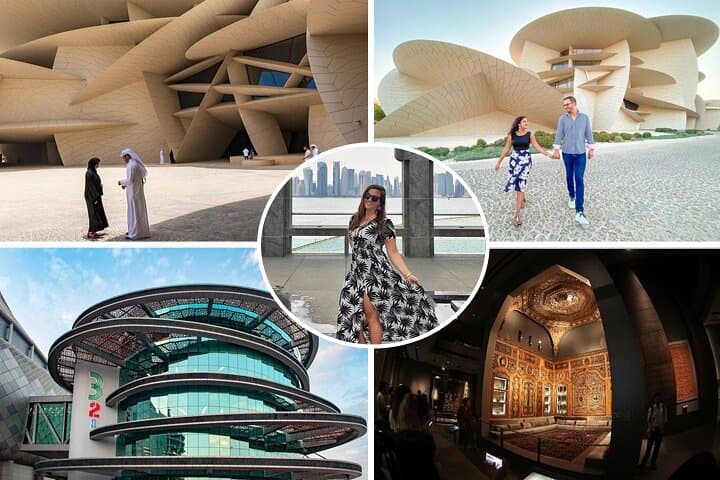
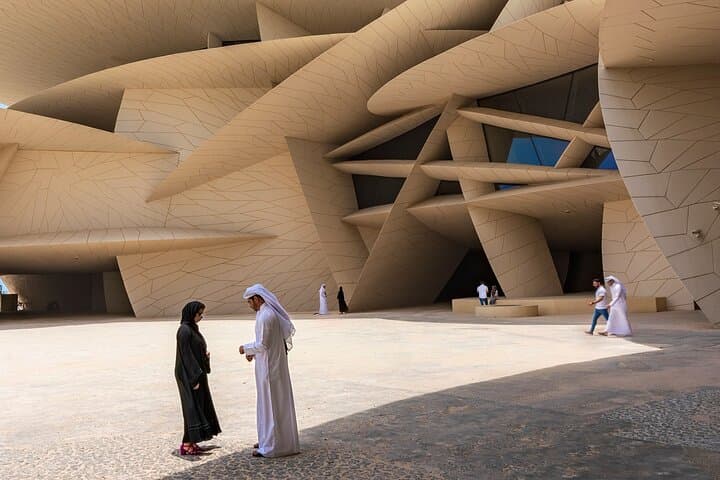
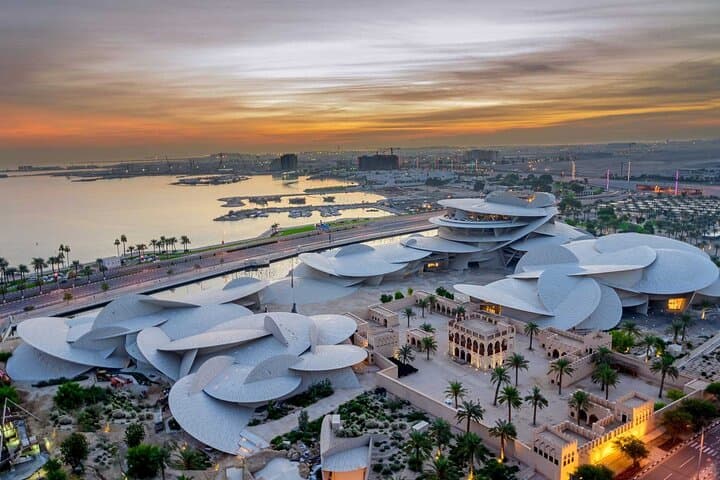
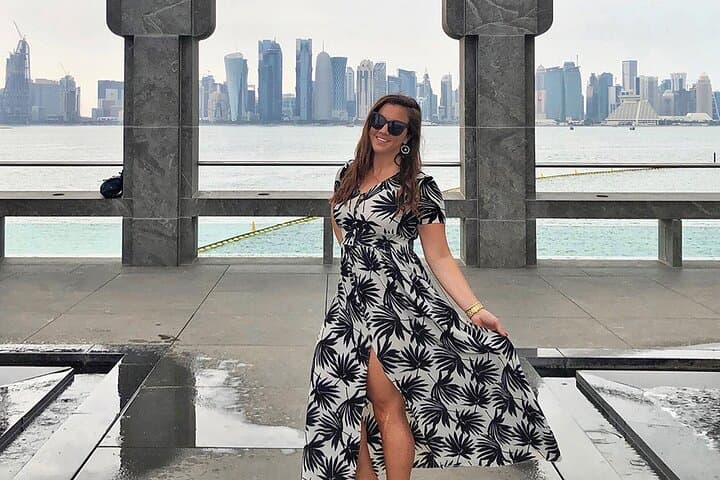
You step off the air-conditioned vehicle into the hush of Doha’s waterfront: the National Museum’s desert‑rose plates cut the light into shadow, while I.M. Pei’s geometric museum sits calm on its own island. The city’s modern surfaces—sandstone tones, glass, and steel—frame displays that pull the landscape and sea into the stories on the walls.
You step off the air-conditioned vehicle into the hush of Doha’s waterfront: the National Museum’s desert‑rose plates cut the light into shadow, while I.M. Pei’s geometric museum sits calm on its own island. The city’s modern surfaces—sandstone tones, glass, and steel—frame displays that pull the landscape and sea into the stories on the walls.
The route links sites that trace Qatar’s leap from pearling and palace rule to a global cultural hub. The National Museum, built around Sheikh Abdullah bin Jassim Al‑Thani’s palace, uses immersive galleries to map geology, tribal life and oil-era transformation; the Museum of Islamic Art houses 1,400 years of material culture curated by I.M. Pei’s clean, coastal volumes. Msheireb Museums reanimate four heritage houses to show daily life in old Doha, while the 3-2-1 Qatar Olympic and Sports Museum turns sporting heritage into interactive exhibits.
Expect mostly indoor walking with short transfers by AC vehicle—this private tour commonly runs 5–6 hours. Photography restrictions vary by gallery; many special exhibitions require separate tickets. Exhibits emphasize preservation: rare manuscripts and textiles are climate‑controlled, and labels often include Arabic and English.
Practical guidance: wear comfortable shoes and modest, breathable clothing; carry a light layer for chilled galleries; plan visits around prayer times and late‑afternoon heat in summer. Admissions to specific museums are often not included, so check ticket policies in advance. The tour is well suited to curious visitors who want a concentrated, accessible survey of Qatar’s museums without navigating transit alone.