THE ADVENTURE COLLECTIVE® · Independent discovery and booking for outdoor travel

Ride trained Arabian horses across wind-sculpted dunes an hour from Doha, then relax in a traditional Majlis for coffee and cultural insights. A guided, beginner-friendly loop with transport makes this an accessible half-day desert escape.
Ride trained Arabian horses across wind-sculpted dunes an hour from Doha, then relax in a traditional Majlis for coffee and cultural insights. A guided, beginner-friendly loop with transport makes this an accessible half-day desert escape.
The sun sits low over flat, tawny dunes as you climb into the saddle — the desert ahead a quiet expanse that seems to breathe. Arabian horses pick their way through sandy ridges, ears cocked, muscles working with a steady, patient power. The city’s skyline recedes, and the wind pulls at your sleeves as your guide steers toward a line of distant dunes.
Verified experiences and guided adventures in the surrounding area.
Operated by Arabian Tourism · Doha, Doha
The sun sits low over flat, tawny dunes as you climb into the saddle — the desert ahead a quiet expanse that seems to breathe. Arabian horses pick their way through sandy ridges, ears cocked, muscles working with a steady, patient power. The city’s skyline recedes, and the wind pulls at your sleeves as your guide steers toward a line of distant dunes.
This route threads modern Doha to an older Bedouin tradition: horses have been central to Gulf life for centuries, used for travel, hunting, and social status. Geologically the area is part of a coastal plain shaped by wind-blown sands and intermittent sabkhas; beneath the sand sits compacted gypsum and old marine deposits that make the riding surprisingly firm in places.
Culturally, the after-ride Majlis offers a compact immersion — shared tea, conversation about breeding and training, and a chance to learn how horses shaped Qatari identity. Photographers find contrasts here: glossy horses against pale dunes and Doha’s glass towers on the horizon.
Practical guidance: expect a three-hour window from pickup to drop-off, with roughly one hour in the saddle. Wear covered shoes and sun protection; helmets and basic gear are provided and an instructor briefs beginners. Hydrate before you go and keep movement slow in the mounting area — sudden shifts unsettle even calm mounts.
Timing matters: morning and late-afternoon rides are cooler and offer cleaner light for photos. Respect the guides’ route choices to protect fragile desert flora and stick to the safety briefing — these horses are well-trained but this is still open terrain.
easy.
2–3 hours.
Suitable for most fitness levels; you should be able to sit upright and hold light rein control for an hour.
No—an introductory briefing and an experienced instructor on every ride make this suitable for beginners and families.
Yes—air-conditioned pickup and drop-off in Doha are included; confirm your pickup point when booking.
Helmets and basic riding equipment are provided; bringing your own closed-toe shoes is recommended for comfort.
This activity is not recommended for pregnant travelers or guests with spinal or significant heart conditions; consult your physician first.
Horses have been central to Bedouin life in Qatar for centuries; Arabian breeds were selectively bred for endurance and close human handling.
Stick to established tracks, avoid disturbing native plants, and support local operators who follow sustainable water and waste practices to protect fragile desert ecosystems.
Arabian Tourism operates guided outdoor trips and adventures with an emphasis on safety, stewardship, and memorable experiences.
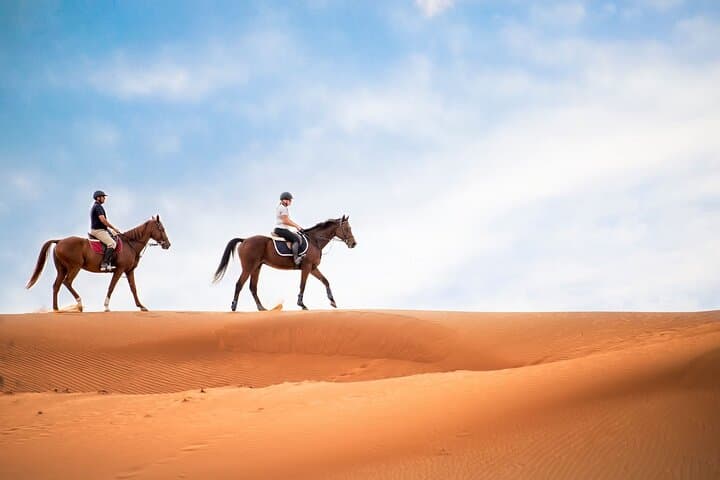
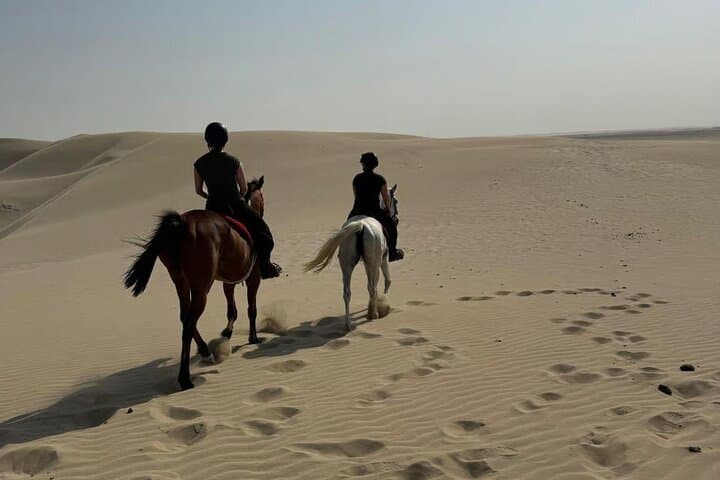
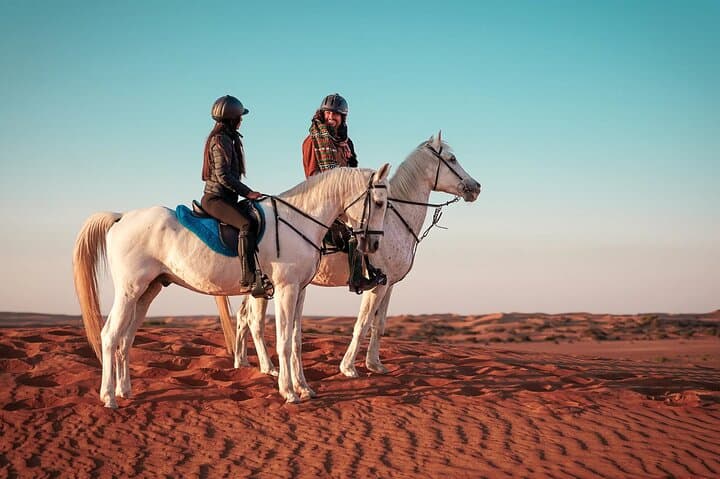
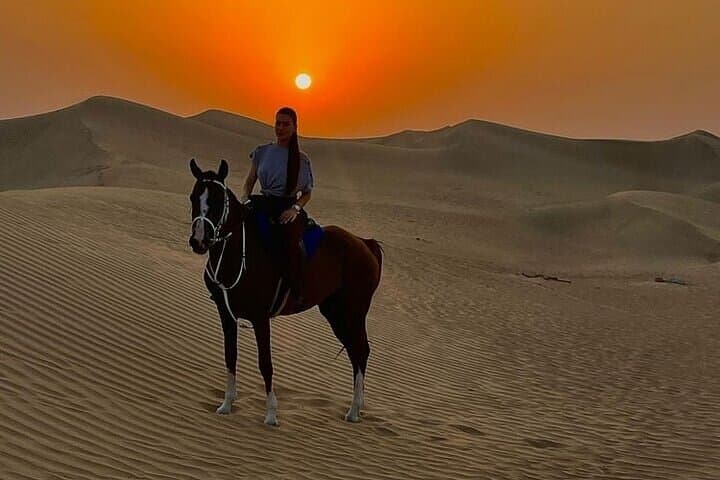
The sun sits low over flat, tawny dunes as you climb into the saddle — the desert ahead a quiet expanse that seems to breathe. Arabian horses pick their way through sandy ridges, ears cocked, muscles working with a steady, patient power. The city’s skyline recedes, and the wind pulls at your sleeves as your guide steers toward a line of distant dunes.
The sun sits low over flat, tawny dunes as you climb into the saddle — the desert ahead a quiet expanse that seems to breathe. Arabian horses pick their way through sandy ridges, ears cocked, muscles working with a steady, patient power. The city’s skyline recedes, and the wind pulls at your sleeves as your guide steers toward a line of distant dunes.
This route threads modern Doha to an older Bedouin tradition: horses have been central to Gulf life for centuries, used for travel, hunting, and social status. Geologically the area is part of a coastal plain shaped by wind-blown sands and intermittent sabkhas; beneath the sand sits compacted gypsum and old marine deposits that make the riding surprisingly firm in places.
Culturally, the after-ride Majlis offers a compact immersion — shared tea, conversation about breeding and training, and a chance to learn how horses shaped Qatari identity. Photographers find contrasts here: glossy horses against pale dunes and Doha’s glass towers on the horizon.
Practical guidance: expect a three-hour window from pickup to drop-off, with roughly one hour in the saddle. Wear covered shoes and sun protection; helmets and basic gear are provided and an instructor briefs beginners. Hydrate before you go and keep movement slow in the mounting area — sudden shifts unsettle even calm mounts.
Timing matters: morning and late-afternoon rides are cooler and offer cleaner light for photos. Respect the guides’ route choices to protect fragile desert flora and stick to the safety briefing — these horses are well-trained but this is still open terrain.