THE ADVENTURE COLLECTIVE® · Independent discovery and booking for outdoor travel

Ride trained Arabian horses over Doha’s wind-shaped dunes and experience Qatar’s equestrian heritage in a 3-hour outing. Ideal for beginners and experienced riders, tours combine hotel transfer, guided saddle time, and desert hospitality.
Ride trained Arabian horses over Doha’s wind-shaped dunes and experience Qatar’s equestrian heritage in a 3-hour outing. Ideal for beginners and experienced riders, tours combine hotel transfer, guided saddle time, and desert hospitality.
The saddle nudges, the horse shifts, and the dune unfurls ahead — a broad face of wind-sculpted sand that asks you to move with it. Riding an Arabian across Doha’s dunes feels kinetic: the horse’s rhythm meets the slow geometry of the desert, and the city’s skyline sits distant and indifferent across the heat haze.
Verified experiences and guided adventures in the surrounding area.
Operated by Skyline Dunes · Doha, Doha
The saddle nudges, the horse shifts, and the dune unfurls ahead — a broad face of wind-sculpted sand that asks you to move with it. Riding an Arabian across Doha’s dunes feels kinetic: the horse’s rhythm meets the slow geometry of the desert, and the city’s skyline sits distant and indifferent across the heat haze.
Qatar’s relationship with horses goes back centuries; Bedouin tribes prized Arabian bloodlines for speed, endurance and temperament, and those traditions shape today’s equestrian culture. Geologically the dunes are aeolian ridges of windblown quartz and shell fragments formed where coastal flats meet inland sand seas, so footing changes from packed slopes to soft crowns. Culturally, outings often include brief hospitality stops—tea, water, and a chance to hear local riders describe their animals and tack.
Practical guidance: tours typically run about three hours door-to-door with roughly 60 minutes in the saddle, suitable for beginners and experienced riders. Wear closed-toe shoes and long pants to prevent chafing; sun protection is mandatory and mornings or late afternoons are cooler and less dusty. Expect a mix of gentle climbs on dune faces and easier flat traverses; listen to guides for remounts and direction when visibility drops from blowing sand.
Safety and conservation: follow the guide’s route to minimize dune erosion and avoid disturbing nesting birds. Hydrate before and after the ride, and leave electronics in protective cases—sand is the persistent hazard of this landscape. When you dismount, the desert’s scale becomes quieter; the horse exhales, and the dunes keep their slow, patient advance.
moderate.
3 hours.
Suitable for most fitness levels; you should be able to sit in a saddle for an hour and walk unassisted.
The full activity window is typically three hours including pickup; expect around 45–60 minutes actually in the saddle.
No — tours cater to beginners with guided instruction and calm Arabian mounts, though basic balance helps.
Yes — most operators include air-conditioned hotel pickup and drop-off as part of the tour.
Infants must sit on laps and the activity is not recommended for pregnant guests or people with serious back or heart conditions.
Horse breeding and desert travel are central to Qatar’s Bedouin heritage; Arabian bloodlines were selectively bred for endurance and temperament for centuries.
Riders should stay on designated routes to limit dune erosion and avoid trampling fragile desert plants; responsible operators limit group sizes to reduce impact.
Skyline Dunes operates guided outdoor trips and adventures with an emphasis on safety, stewardship, and memorable experiences.
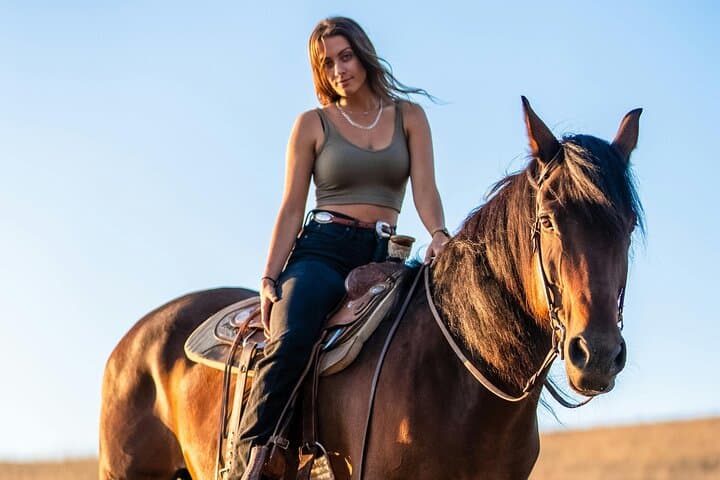
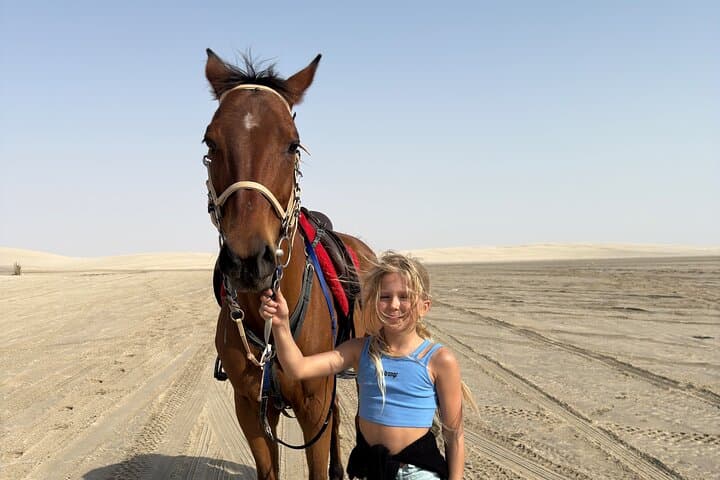
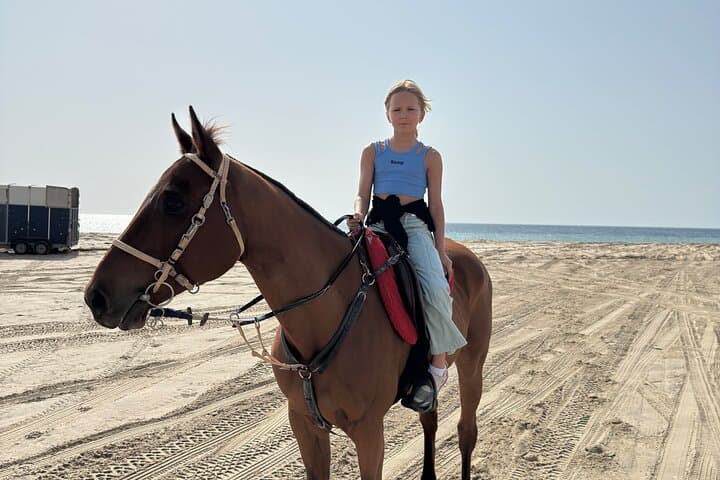
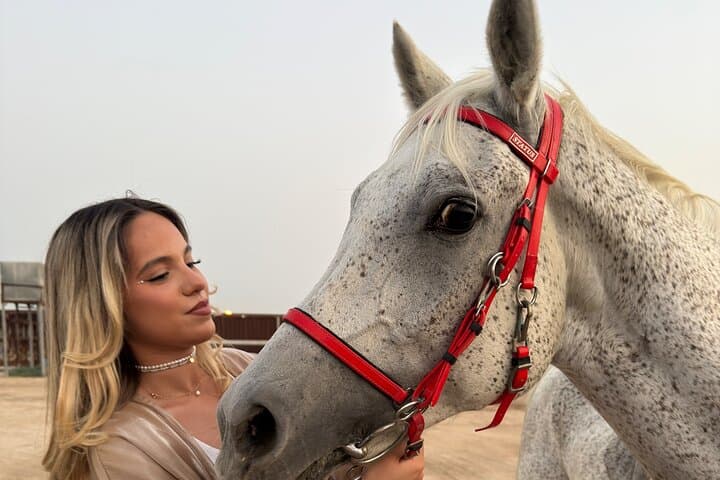
The saddle nudges, the horse shifts, and the dune unfurls ahead — a broad face of wind-sculpted sand that asks you to move with it. Riding an Arabian across Doha’s dunes feels kinetic: the horse’s rhythm meets the slow geometry of the desert, and the city’s skyline sits distant and indifferent across the heat haze.
The saddle nudges, the horse shifts, and the dune unfurls ahead — a broad face of wind-sculpted sand that asks you to move with it. Riding an Arabian across Doha’s dunes feels kinetic: the horse’s rhythm meets the slow geometry of the desert, and the city’s skyline sits distant and indifferent across the heat haze.
Qatar’s relationship with horses goes back centuries; Bedouin tribes prized Arabian bloodlines for speed, endurance and temperament, and those traditions shape today’s equestrian culture. Geologically the dunes are aeolian ridges of windblown quartz and shell fragments formed where coastal flats meet inland sand seas, so footing changes from packed slopes to soft crowns. Culturally, outings often include brief hospitality stops—tea, water, and a chance to hear local riders describe their animals and tack.
Practical guidance: tours typically run about three hours door-to-door with roughly 60 minutes in the saddle, suitable for beginners and experienced riders. Wear closed-toe shoes and long pants to prevent chafing; sun protection is mandatory and mornings or late afternoons are cooler and less dusty. Expect a mix of gentle climbs on dune faces and easier flat traverses; listen to guides for remounts and direction when visibility drops from blowing sand.
Safety and conservation: follow the guide’s route to minimize dune erosion and avoid disturbing nesting birds. Hydrate before and after the ride, and leave electronics in protective cases—sand is the persistent hazard of this landscape. When you dismount, the desert’s scale becomes quieter; the horse exhales, and the dunes keep their slow, patient advance.