THE ADVENTURE COLLECTIVE® · Independent discovery and booking for outdoor travel

Ride across wind-sculpted dunes outside Doha on an instructor-led Arabian-horse tour with hotel transfer. Suitable for beginners and experienced riders, this 3–4 hour outing pairs desert solitude with local equestrian tradition.
Ride across wind-sculpted dunes outside Doha on an instructor-led Arabian-horse tour with hotel transfer. Suitable for beginners and experienced riders, this 3–4 hour outing pairs desert solitude with local equestrian tradition.
The sun leans low over rippled sand as the lead instructor adjusts a bridle and the group slips into single file. Wind shapes small crests beneath the horses' hooves; each step compresses fine quartz grains that have blown here for millennia. Riders move between open bowls and dune ridgelines, the city skyline a distant memory and the desert’s hush taking charge.
Verified experiences and guided adventures in the surrounding area.
Operated by Desert Ville Adventure · Doha, Doha
The sun leans low over rippled sand as the lead instructor adjusts a bridle and the group slips into single file. Wind shapes small crests beneath the horses' hooves; each step compresses fine quartz grains that have blown here for millennia. Riders move between open bowls and dune ridgelines, the city skyline a distant memory and the desert’s hush taking charge.
The Arabian horse has been bred on this peninsula for centuries — prized by Bedouin tribes for endurance, temperament and a close bond with riders. Qatar’s coastal desert is young in geological terms: wind-driven dunes riding on older limestone plains, salt flats and occasional gypsum crusts. Cultural echoes appear in campfire routes and the hospitality extended at the riding center where tea and bottled water are standard.
Expect a structured, instructor-led excursion that suits beginners through confident riders: mounts are matched to ability, and the pace alternates walk, trot and occasional canter where conditions allow. Wildlife sightings — foxes slipping between dunes or distant gazelles — are possible in quieter sections.
Practical guidance: plan for 3–4 hours including hotel transfer; schedule morning or late-afternoon slots to avoid peak heat. Wear closed-toe shoes, long pants, sun protection and bring hardy sunglasses; a light layer is useful for early mornings. Hydrate well before and after the ride and disclose any back, pregnancy or heart conditions in advance. Follow instructor commands, stay with the group, and resist chasing wildlife — the desert’s health depends on low-impact visits.
moderate.
3–4 hours.
Light to moderate fitness; able to mount/dismount, sit in a saddle for up to a few hours and follow instructor pace.
No — the ride accommodates beginners with instruction and matched horses, though basic mobility to mount and sit in a saddle is necessary.
Yes — private transfer to the riding center and back to Doha are included in the tour price.
Canters are possible where sand and safety allow; the instructor will control pace and only permit faster gaits for suitable riders and terrain.
Infants must sit on an adult’s lap and specialized seats may be provided; check age and weight limits with the operator before booking.
Arabian horses are woven into Gulf nomadic life; Qatar’s horse breeding and racing traditions date back centuries and remain culturally significant.
Operators emphasize low-impact riding routes and staying with guided groups to protect fragile dune vegetation and wildlife; avoid littering and disturbing animals.
Desert Ville Adventure operates guided outdoor trips and adventures with an emphasis on safety, stewardship, and memorable experiences.


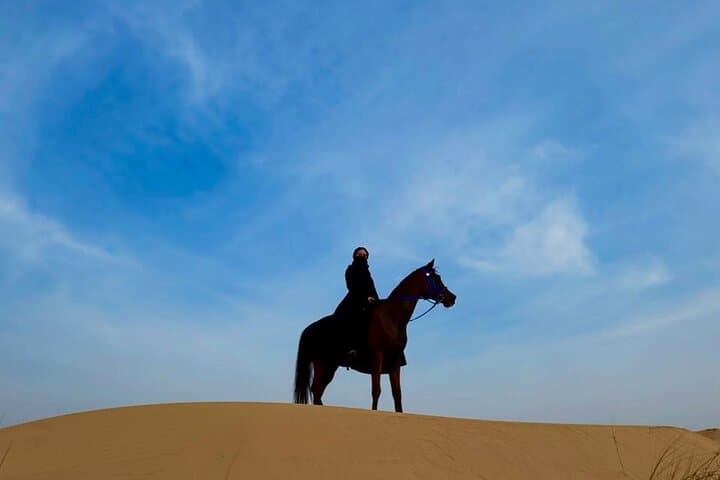
The sun leans low over rippled sand as the lead instructor adjusts a bridle and the group slips into single file. Wind shapes small crests beneath the horses' hooves; each step compresses fine quartz grains that have blown here for millennia. Riders move between open bowls and dune ridgelines, the city skyline a distant memory and the desert’s hush taking charge.
The sun leans low over rippled sand as the lead instructor adjusts a bridle and the group slips into single file. Wind shapes small crests beneath the horses' hooves; each step compresses fine quartz grains that have blown here for millennia. Riders move between open bowls and dune ridgelines, the city skyline a distant memory and the desert’s hush taking charge.
The Arabian horse has been bred on this peninsula for centuries — prized by Bedouin tribes for endurance, temperament and a close bond with riders. Qatar’s coastal desert is young in geological terms: wind-driven dunes riding on older limestone plains, salt flats and occasional gypsum crusts. Cultural echoes appear in campfire routes and the hospitality extended at the riding center where tea and bottled water are standard.
Expect a structured, instructor-led excursion that suits beginners through confident riders: mounts are matched to ability, and the pace alternates walk, trot and occasional canter where conditions allow. Wildlife sightings — foxes slipping between dunes or distant gazelles — are possible in quieter sections.
Practical guidance: plan for 3–4 hours including hotel transfer; schedule morning or late-afternoon slots to avoid peak heat. Wear closed-toe shoes, long pants, sun protection and bring hardy sunglasses; a light layer is useful for early mornings. Hydrate well before and after the ride and disclose any back, pregnancy or heart conditions in advance. Follow instructor commands, stay with the group, and resist chasing wildlife — the desert’s health depends on low-impact visits.