THE ADVENTURE COLLECTIVE® · Independent discovery and booking for outdoor travel

Climb aboard a sled led by seasoned Alaskan huskies and glide six miles on Iditarod training trails with views of Denali. This two-hour experience mixes an informative visitor center briefing with hands-on time meeting the dogs.
Climb aboard a sled led by seasoned Alaskan huskies and glide six miles on Iditarod training trails with views of Denali. This two-hour experience mixes an informative visitor center briefing with hands-on time meeting the dogs.
A hush settles over the spruce as the sled runners kiss packed snow and the team surges forward. Cold air sharpens every sound: paws padding, harnesses soft-rustling, and the guide’s steady commands. From the visitor center you step into that quiet — six miles along actual Iditarod training trails that slice across frozen lakes and weave through forest openings with Denali and the Alaska Range looming on the skyline.
Verified experiences and guided adventures in the surrounding area.
Operated by Happy Trails Kennel · Talkeetna, Alaska
A hush settles over the spruce as the sled runners kiss packed snow and the team surges forward. Cold air sharpens every sound: paws padding, harnesses soft-rustling, and the guide’s steady commands. From the visitor center you step into that quiet — six miles along actual Iditarod training trails that slice across frozen lakes and weave through forest openings with Denali and the Alaska Range looming on the skyline.
Mushing is woven into Alaskan life; these trails were once practical winter highways for mail and supply and later became crucibles for the Iditarod. Geologically the route crosses glacial outwash plains and moraine-bounded basins, where bedrock and ice have sculpted wide, flat runways ideal for sleds. Local culture centers on dog care and wilderness competence — you’ll meet athletes with thick coats and fierce loyalty who are, in many ways, the day’s engine.
Expect compact, even terrain with low rolling banks and open lake crossings; the ride is driven by guide expertise rather than passenger skill. Practicalities: the full program is about two hours (including a presentation and meet-and-greet), with roughly six miles of trail. Dress in layered, windproof clothing and bring insulated boots, a warm hat, and spare batteries — cold drains electronics fast. Morning light is best for views and firmer snow; afternoons can be softer and colder. Follow the guide’s instructions around the dogs and stay aware of changing weather — conditions can shift quickly.
This is an accessible, tactile way to experience Alaska’s winter rhythms: the dogs push forward, the wind dares you to keep pace, and the landscape answers with wide, honest beauty.
easy.
2 hours.
Minimal fitness required; participants should be able to stand and step onto a sled with assistance.
An experienced guide handles the sled; guests ride and may be invited to learn basic commands or briefly stand on runners depending on conditions.
Most kennels allow children accompanied by an adult; specific age limits vary so check the operator’s policy before booking.
The visitor center and many staging areas are wheelchair accessible, but transferring onto a sled may require assistance—contact the provider with needs in advance.
Tours run in a range of winter conditions; operators may reschedule or cancel for safety. Confirm cancellation and refund policies when booking.
Mushing evolved from subsistence and mail routes; the Iditarod later formalized long-distance racing and preserved trail heritage.
Stick to groomed trails, avoid disturbing wildlife, and follow kennel guidance—responsible visitation helps protect trail corridors and the dogs’ welfare.
Happy Trails Kennel operates guided outdoor trips and adventures with an emphasis on safety, stewardship, and memorable experiences.

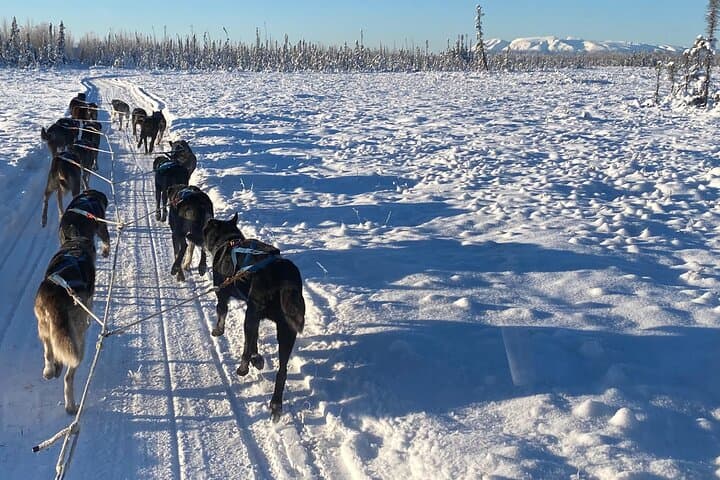

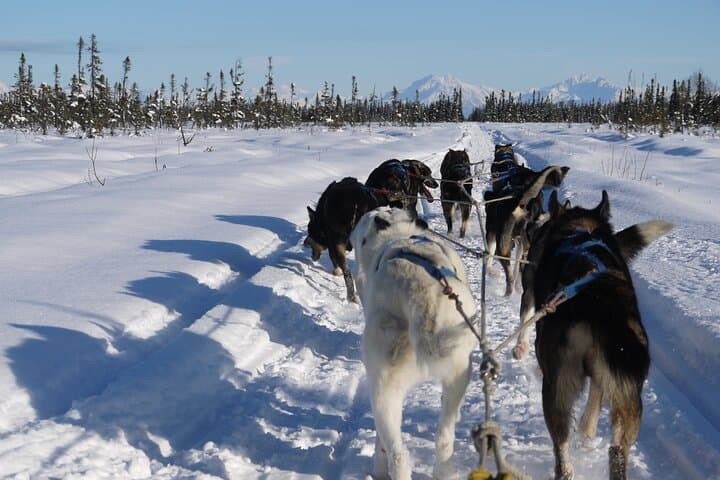
A hush settles over the spruce as the sled runners kiss packed snow and the team surges forward. Cold air sharpens every sound: paws padding, harnesses soft-rustling, and the guide’s steady commands. From the visitor center you step into that quiet — six miles along actual Iditarod training trails that slice across frozen lakes and weave through forest openings with Denali and the Alaska Range looming on the skyline.
A hush settles over the spruce as the sled runners kiss packed snow and the team surges forward. Cold air sharpens every sound: paws padding, harnesses soft-rustling, and the guide’s steady commands. From the visitor center you step into that quiet — six miles along actual Iditarod training trails that slice across frozen lakes and weave through forest openings with Denali and the Alaska Range looming on the skyline.
Mushing is woven into Alaskan life; these trails were once practical winter highways for mail and supply and later became crucibles for the Iditarod. Geologically the route crosses glacial outwash plains and moraine-bounded basins, where bedrock and ice have sculpted wide, flat runways ideal for sleds. Local culture centers on dog care and wilderness competence — you’ll meet athletes with thick coats and fierce loyalty who are, in many ways, the day’s engine.
Expect compact, even terrain with low rolling banks and open lake crossings; the ride is driven by guide expertise rather than passenger skill. Practicalities: the full program is about two hours (including a presentation and meet-and-greet), with roughly six miles of trail. Dress in layered, windproof clothing and bring insulated boots, a warm hat, and spare batteries — cold drains electronics fast. Morning light is best for views and firmer snow; afternoons can be softer and colder. Follow the guide’s instructions around the dogs and stay aware of changing weather — conditions can shift quickly.
This is an accessible, tactile way to experience Alaska’s winter rhythms: the dogs push forward, the wind dares you to keep pace, and the landscape answers with wide, honest beauty.