THE ADVENTURE COLLECTIVE® · Independent discovery and booking for outdoor travel

Trace the coast from Punta Pirulil to the iconic Dock of Souls on an eight-hour day tour that combines coastal cliffs, native forest, and small-town culture. Ideal for hikers with moderate fitness who want a mix of scenery, history, and local flavor.
Trace the coast from Punta Pirulil to the iconic Dock of Souls on an eight-hour day tour that combines coastal cliffs, native forest, and small-town culture. Ideal for hikers with moderate fitness who want a mix of scenery, history, and local flavor.
A damp sea wind meets hikers on the headland at Punta Pirulil, salt spray sketching patterns on cliff grass as the sculpted pier—the "Dock of Souls"—leans toward the Pacific like a memory made solid. The trail moves between open coastline and pockets of Valdivian temperate rain forest: ferns clutch the earth, and the surf keeps time below the cliffs.
Verified experiences and guided adventures in the surrounding area.
Operated by Tangol · Cucao, Los Lagos Region
A damp sea wind meets hikers on the headland at Punta Pirulil, salt spray sketching patterns on cliff grass as the sculpted pier—the "Dock of Souls"—leans toward the Pacific like a memory made solid. The trail moves between open coastline and pockets of Valdivian temperate rain forest: ferns clutch the earth, and the surf keeps time below the cliffs.
This route threads local history into the landscape. Cucao’s chapel, recorded in 1734, marks the island’s long contact with Jesuit missions and indigenous Huilliche communities. Geologically, the coast here is shaped by exposed volcanic rock and glacially sculpted channels; cliffs reveal layered beds that explain why the sea here is restless and dramatic. Culture shows in small agrotourism stops—empanadas and conversation—and in regional crafts sold in Castro, the likely start point for the day.
Expect wildlife glimpses: coastal seabirds wheel over the bay while forest trails hide chucao tapaculos and, very rarely, the island’s shy Darwin’s fox. The national park’s peatlands and lenga stands require care: stay on marked trails and pack out waste.
Practical guidance: the full excursion runs most of the day with several short hikes and a roughly 1–2 hour mixed-terrain trek inside Chiloé National Park. Wear waterproof footwear and layered clothing; be ready for wind and sudden rain. Bring water, camera, and small cash for local stops. Guides handle logistics and park entry—hikers supply steady legs and curiosity. This is a coastal day of contrasts: surf daring you from below, and forest breathing cool shade above.
moderate.
6–8 hours.
Good cardiovascular fitness and comfortable on uneven terrain for a half-day to full-day outing
The whole tour is about 6–8 hours; trekking segments total roughly 2–3 hours on mixed terrain with additional walking through towns and park trails.
The hike is family-friendly if participants have moderate mobility; some sections are uneven and require careful footing—check with the operator about specific needs.
The tour lists National Park entrance in inclusions, so entry should be covered—confirm at booking for any recent policy changes.
No technical experience is required, but hikers should be comfortable on uneven coastal and forest trails for several hours.
Cucao was an early stop for Jesuit missions; a chapel recorded in 1734 marks the town’s long cultural role on Chiloé’s west coast.
Chiloé National Park protects Valdivian temperate rain forest and coastal peatlands—stay on trails and avoid disturbing nesting birds to minimize impact.
Tangol operates guided outdoor trips and adventures with an emphasis on safety, stewardship, and memorable experiences.
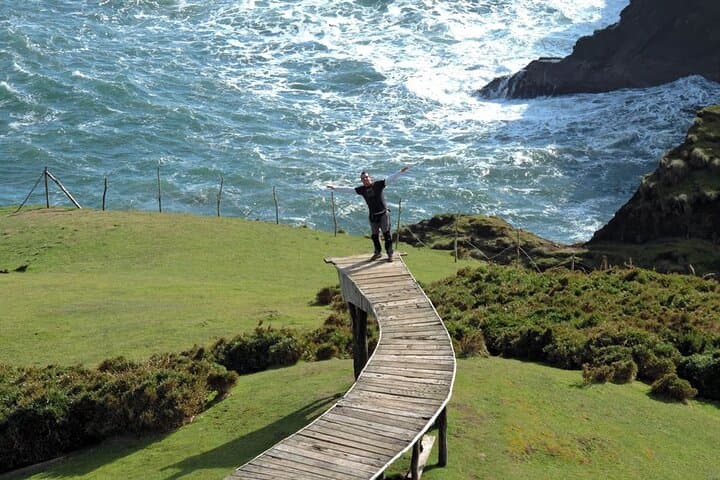
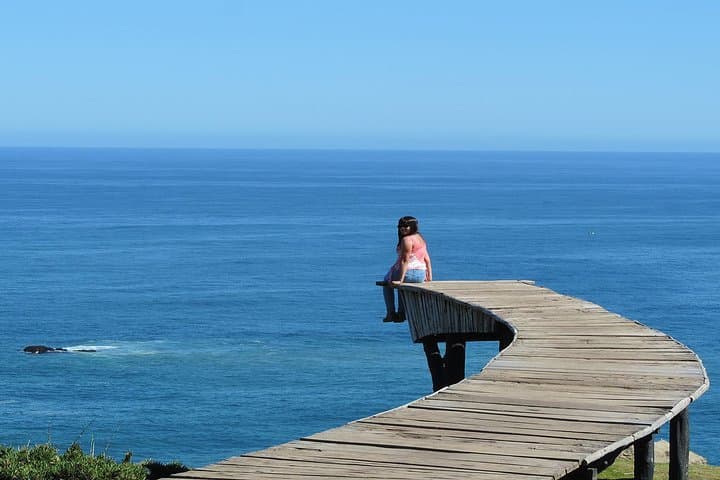
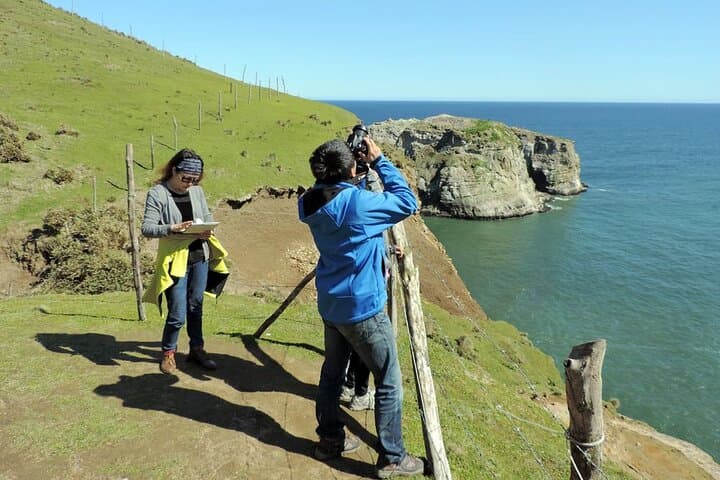
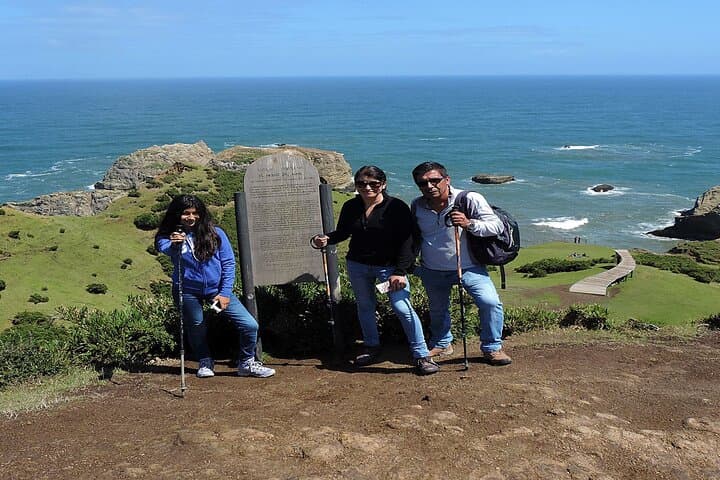
A damp sea wind meets hikers on the headland at Punta Pirulil, salt spray sketching patterns on cliff grass as the sculpted pier—the "Dock of Souls"—leans toward the Pacific like a memory made solid. The trail moves between open coastline and pockets of Valdivian temperate rain forest: ferns clutch the earth, and the surf keeps time below the cliffs.
A damp sea wind meets hikers on the headland at Punta Pirulil, salt spray sketching patterns on cliff grass as the sculpted pier—the "Dock of Souls"—leans toward the Pacific like a memory made solid. The trail moves between open coastline and pockets of Valdivian temperate rain forest: ferns clutch the earth, and the surf keeps time below the cliffs.
This route threads local history into the landscape. Cucao’s chapel, recorded in 1734, marks the island’s long contact with Jesuit missions and indigenous Huilliche communities. Geologically, the coast here is shaped by exposed volcanic rock and glacially sculpted channels; cliffs reveal layered beds that explain why the sea here is restless and dramatic. Culture shows in small agrotourism stops—empanadas and conversation—and in regional crafts sold in Castro, the likely start point for the day.
Expect wildlife glimpses: coastal seabirds wheel over the bay while forest trails hide chucao tapaculos and, very rarely, the island’s shy Darwin’s fox. The national park’s peatlands and lenga stands require care: stay on marked trails and pack out waste.
Practical guidance: the full excursion runs most of the day with several short hikes and a roughly 1–2 hour mixed-terrain trek inside Chiloé National Park. Wear waterproof footwear and layered clothing; be ready for wind and sudden rain. Bring water, camera, and small cash for local stops. Guides handle logistics and park entry—hikers supply steady legs and curiosity. This is a coastal day of contrasts: surf daring you from below, and forest breathing cool shade above.